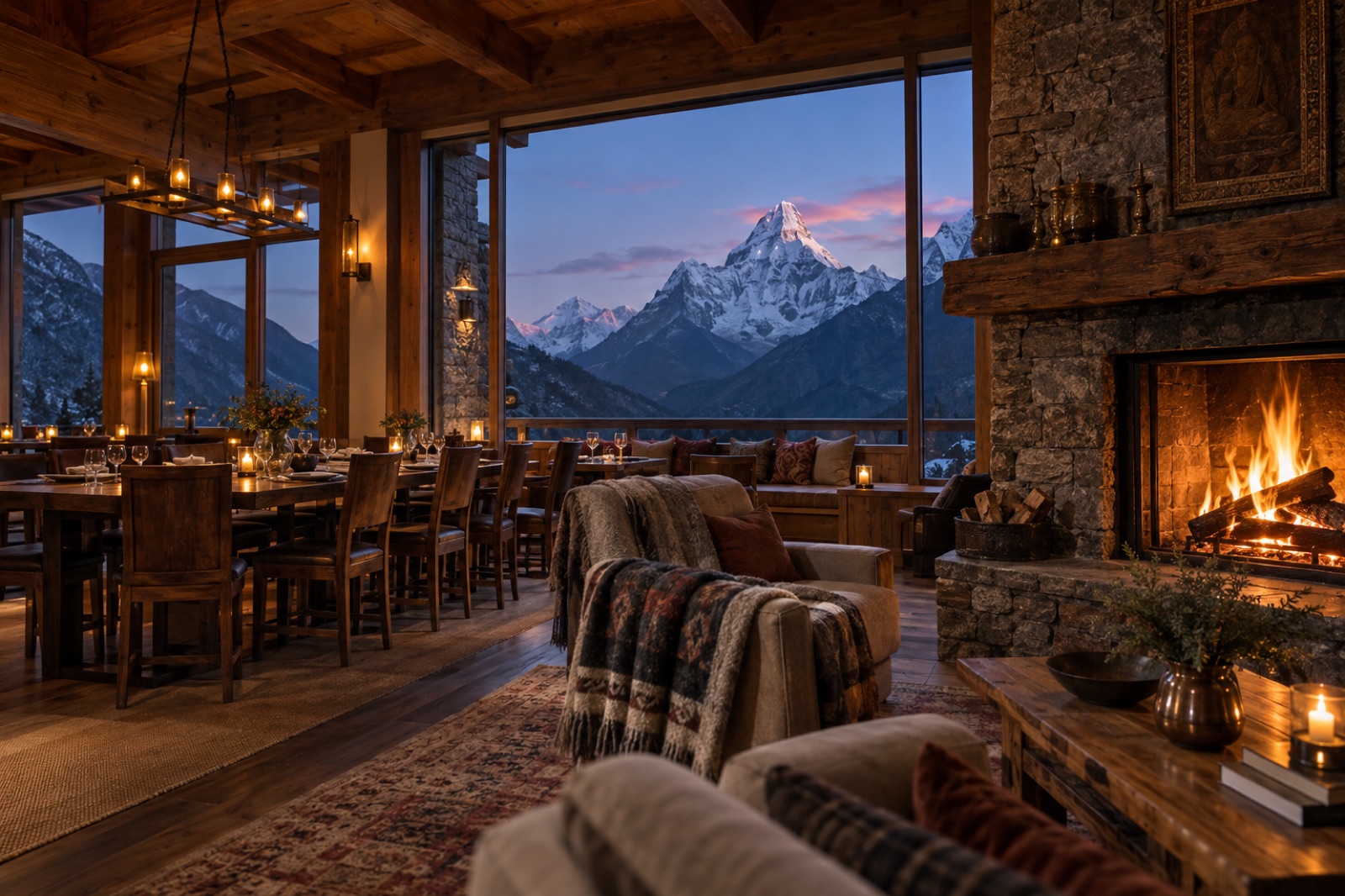
Trekking · Nepal
Teahouse Trekking in Nepal
How lodge-to-lodge trekking works — rooms, meals, dal bhat, hot showers, Wi-Fi, costs and etiquette.
Teahouse trekking is the classic, low-cost way to trek Nepal's popular routes: you walk lodge to lodge, sleeping and eating in simple family-run teahouses rather than carrying a tent and stove. It keeps trekking affordable and is the standard on Annapurna, Everest and Langtang.
The short answer
You pay a small amount for a basic room — often just a few hundred rupees — on the understanding that you eat dinner and breakfast there, which is where the cost really sits. Prices rise the higher you go because everything is portered up. It is far cheaper than luxury lodge treks, and the backbone of the Nepal trekking cost breakdown.
How it works
Each day you walk a stage and arrive at a teahouse, choose a room, and order from a menu shared across the village's lodges. Book ahead or arrive early in peak season, as good teahouses fill up. Your guide usually handles bookings — see the Nepal trekking guide for route planning.
The food
The trekker's staple is dal bhat, the rice, lentil and vegetable set meal that often comes with free refills — filling fuel for big days. Menus also offer noodles, fried rice, momos, pancakes and eggs. Higher up, menus shrink, prices rise, and meat becomes less safe and less available, so vegetarian dal bhat is the reliable choice.
What costs extra
- Hot showers: usually a small per-shower fee, scarcer at altitude.
- Charging: often charged per device high up, where power is limited.
- Wi-Fi: available low down, patchy and paid for higher up — carry a power bank.
- Bottled or boiled water and snacks: all pricier the higher you climb.
Etiquette and altitude
Eat where you sleep, order the evening before in busy lodges, keep noise down at night, and don't waste limited hot water. Because teahouse routes climb high, plan acclimatisation and read the altitude sickness guide. To put nightly costs into a full trek budget, see the Nepal trekking costs hub.
Frequently asked questions
What is teahouse trekking in Nepal?+
Teahouse trekking means walking between simple family-run lodges, called teahouses, where you sleep and eat each night rather than camping. It is the standard way to trek the popular routes such as Annapurna, Everest and Langtang, and it keeps costs low because you carry no tent, stove or food.
How much does a teahouse cost per night?+
A basic teahouse room is often very cheap, sometimes just a few hundred rupees, on the understanding that you eat dinner and breakfast there. The real cost is the food, plus extras like hot showers, charging and Wi-Fi, all of which rise the higher and more remote you go, because everything is carried up by porter or pack animal.
What food do teahouses serve?+
Most teahouses serve dal bhat, the national rice, lentil and vegetable set meal that often comes with free refills, alongside noodles, fried rice, momos, pancakes and eggs. Menus shrink and prices rise at altitude, and meat becomes less safe and less available high up, so vegetarian dal bhat is the trekker's staple.
Do teahouses have hot showers and Wi-Fi?+
Many lower teahouses offer hot showers, charging and Wi-Fi for a small extra fee, but availability thins out at altitude where solar, gas and generators are limited. Carry a power bank, expect to pay per device and per shower high up, and don't rely on a connection on remote sections of the trail.