Lumbini Province, Nepal
Things to do in Lumbini
Lumbini, Nepal is the UNESCO World Heritage birthplace of Siddhartha Gautama, the Buddha — a serene pilgrimage site on the Terai plains of Rupandehi district, near Bhairahawa and the Sunauli border, with the Maya Devi Temple at its heart and a vast zone of international monasteries.
Lumbini, Nepal is the birthplace of Siddhartha Gautama, the Buddha, and one of Buddhism's four great pilgrimage sites — a UNESCO World Heritage Site on the flat Terai plains of Rupandehi district in southern Nepal. It lies about 22 km west of Bhairahawa (Siddharthanagar) and its Gautam Buddha International Airport, and only a short drive from the Sunauli border crossing with India, which makes it a natural first or last stop on many overland routes.
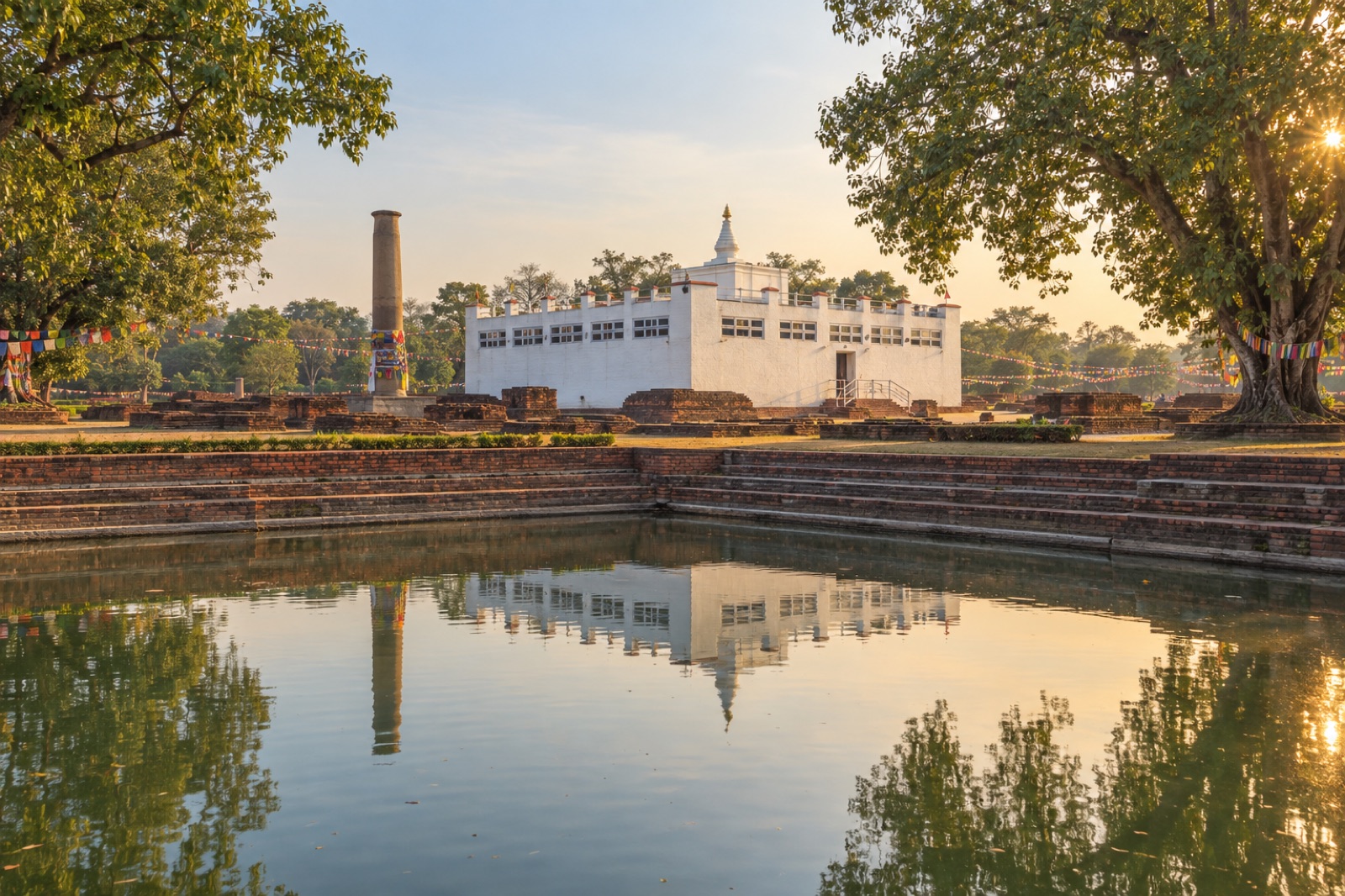
At its heart is the Maya Devi Temple, marking the exact spot where the Buddha was born — traditionally in 623 BCE — beside the sacred pond Puskarini and the ancient Ashoka Pillar, whose 249 BCE inscription identifies the site. From this Sacred Garden, a long canal-and-walkway axis runs north past the Eternal Peace Flame through the vast Monastic Zone, where countries from Thailand to Germany have built temples in their own styles, to the Lumbini Museum and World Peace Pagoda at the far end.
Plan on one full day at minimum, two if you want a quiet sunrise at the temple and a side trip to Tilaurakot, ancient Kapilavastu, where the Buddha grew up. The cool, dry months from October to March are the most comfortable — the Terai turns fiercely hot from April — so check our best time to visit Lumbini guide, and get here by a 35-minute flight from Kathmandu or overland from Pokhara or Chitwan with how to get to Lumbini.
It's a place to slow down: cycle between the monasteries, follow our Lumbini itinerary, and sort out a base with where to stay in Lumbini or our picks of the best hotels. Below are the best things to do in Lumbini.
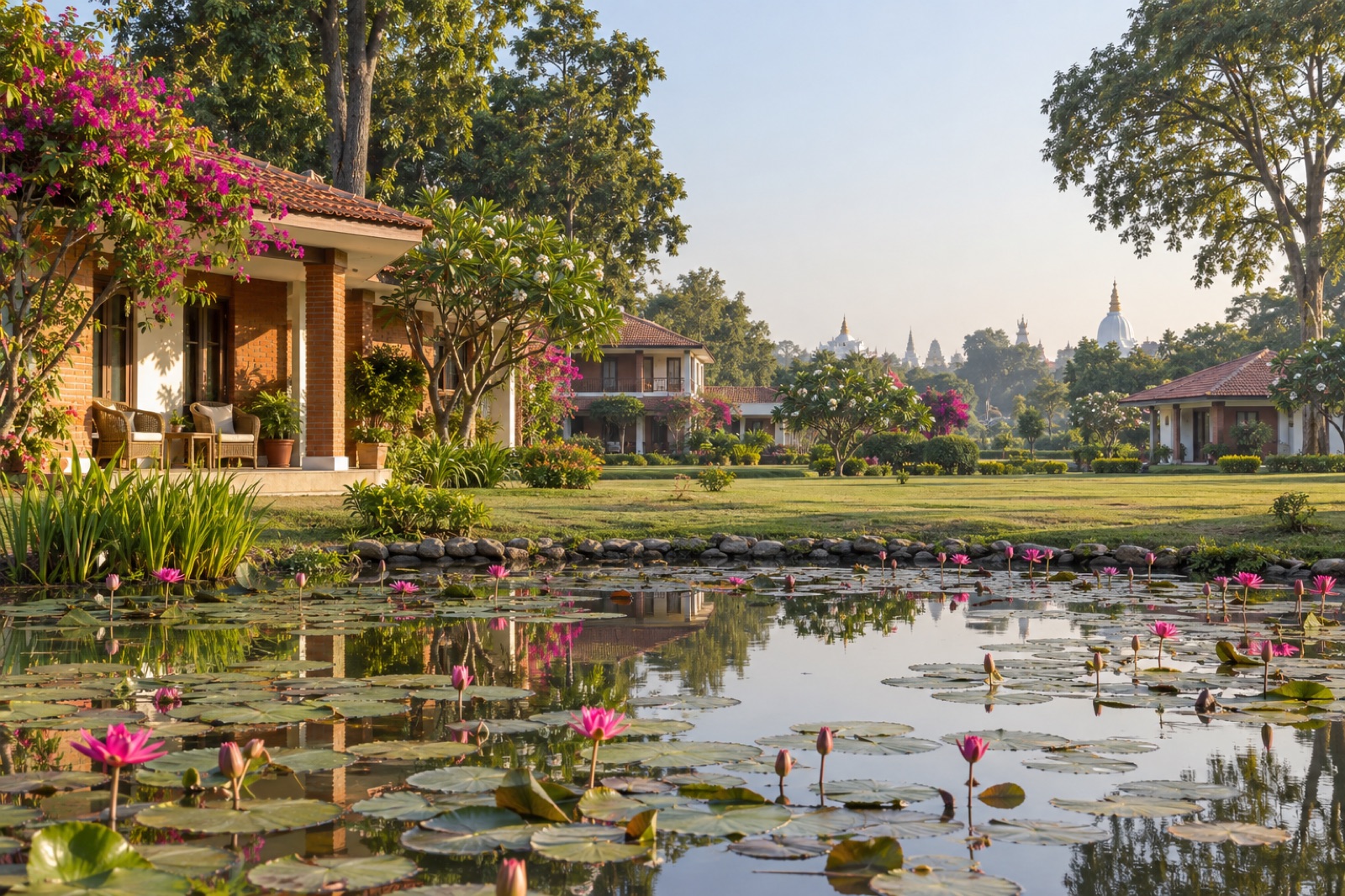
Where to stay in Lumbini

What to do in Lumbini

The Ashoka Pillar at Lumbini
The Best Things to Do in Lumbini
The Best Time to Visit Lumbini
The China Temple at Lumbini
Cycling the Lumbini Monastic Zone
Devadaha and the Buddha's Life
The Eternal Peace Flame
The German Monastery & Great Lotus Stupa
Dae Sung Shakya Korean Temple at Lumbini
The Lumbini Crane Sanctuary
Lumbini Day Trip from Bhairahawa
A Lumbini Itinerary
Lumbini Monastic Zone: The International Temples

Lumbini Museum
Lumbini Pilgrimage & Buddhist History
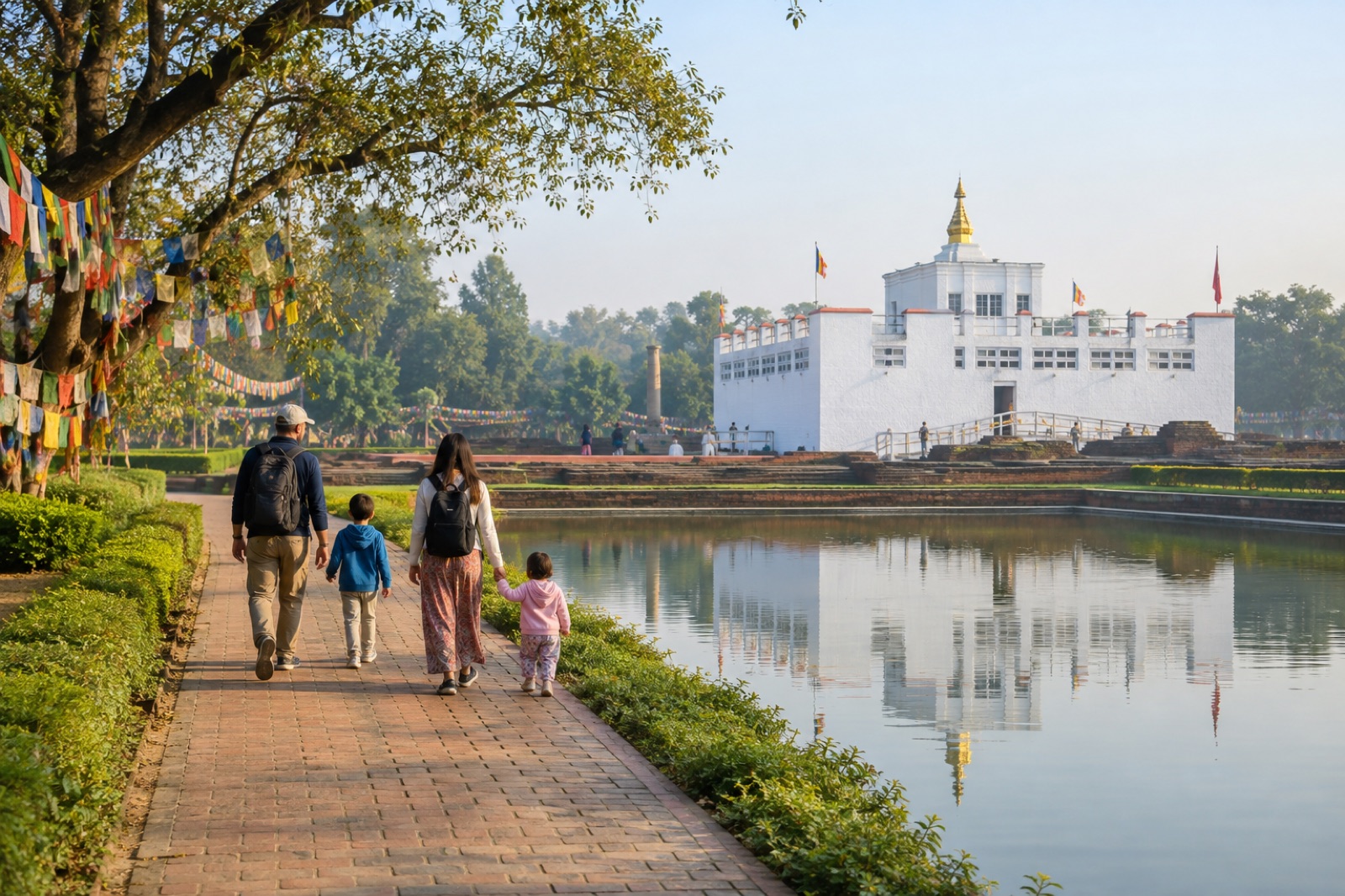
Lumbini with Kids
Maya Devi Temple
The Lumbini Monastic Zone
The Myanmar Golden Temple at Lumbini
Ramagrama Stupa
The Royal Thai Monastery at Lumbini
The Sacred Garden and Puskarini Pond
Tilaurakot and Ancient Kapilavastu
Top Things to Do in Lumbini
Vietnam and France Temples of Lumbini
Visiting the Lumbini Monastic Zone
The World Peace Pagoda at Lumbini
Yoga & wellness in Lumbini

Getting around in Lumbini


Frequently asked questions
Where is Lumbini in Nepal?+
Lumbini lies in Rupandehi district on the Terai plains of southern Nepal, about 22 km west of Bhairahawa (Siddharthanagar) and close to the Sunauli border crossing with India. By road it is roughly 280 km west of Kathmandu and 170 km south of Pokhara.
Why is Lumbini famous?+
Lumbini is the birthplace of Siddhartha Gautama, the Buddha, and a UNESCO World Heritage Site. Pilgrims and travellers come to see the Maya Devi Temple, the sacred garden with the Ashoka pillar, and the international Monastic Zone.
How do you get to Lumbini?+
The nearest airport is Gautam Buddha International at Bhairahawa, about a 30-minute drive away, with short flights from Kathmandu. Lumbini is also reachable overland from Pokhara (roughly 6–8 hours) and Chitwan, and sits close to the Indian border at Sunauli.
How many days do you need in Lumbini?+
One full day covers the Maya Devi Temple, the sacred garden and a cycle or rickshaw tour of the Monastic Zone. Stay overnight if you want a quiet sunrise visit or time at the Lumbini Museum and World Peace Pagoda.
Is Lumbini worth visiting?+
Yes — standing at the documented birthplace of the Buddha is moving even for non-Buddhists, and the international temples of the Monastic Zone, the museum and the flat, cycle-friendly grounds fill an unhurried day or two. It also pairs easily with Chitwan or an onward crossing into India.