
Things to do · Lumbini
Visiting the Lumbini Monastic Zone
Practical guides to the Lumbini Monastic Zone — cycling, kids, lodging, day trips, temples, cranes and retreats.
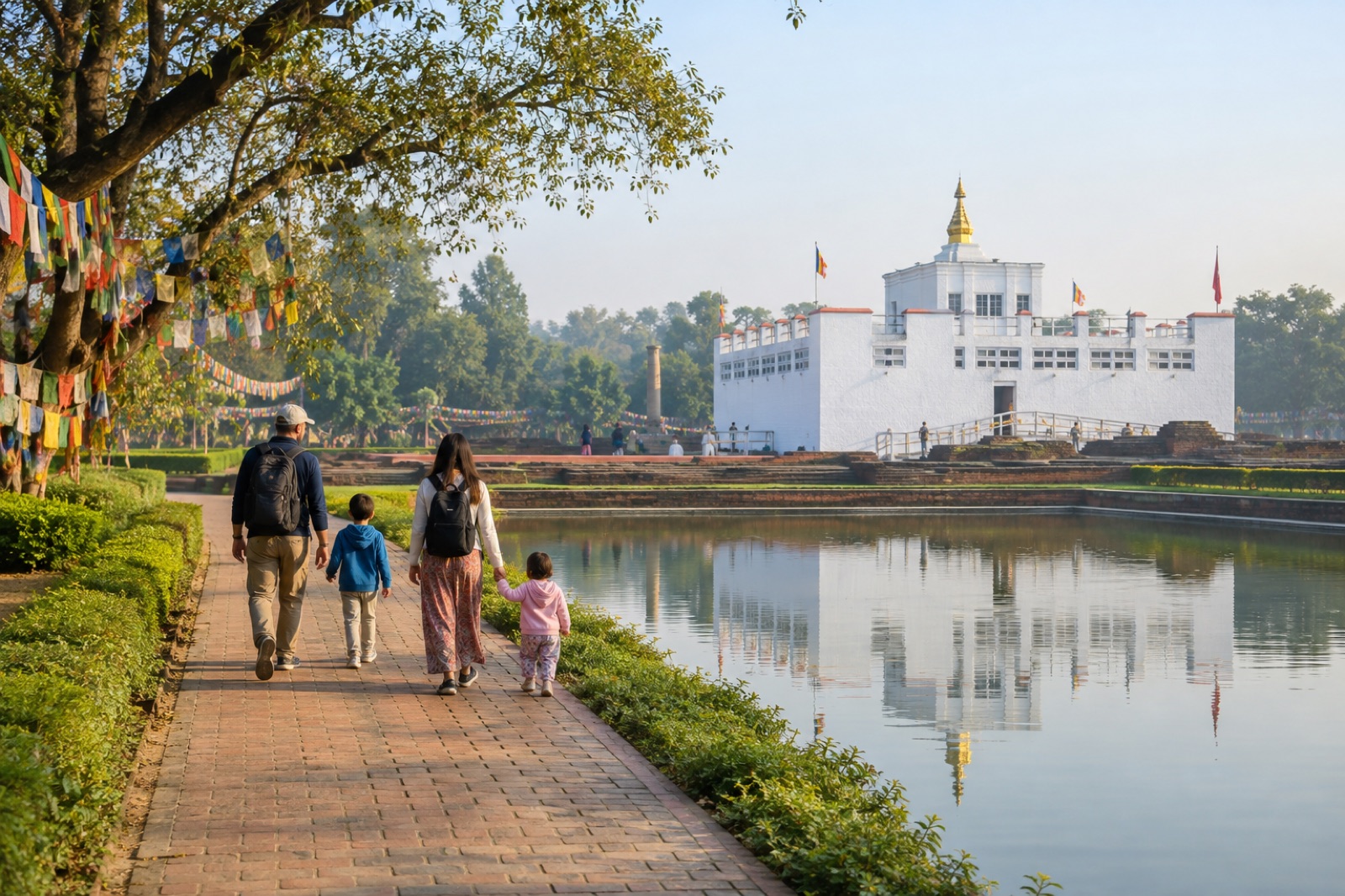
The Lumbini Monastic Zone is the modern soul of the Buddha's birthplace — a flat, garden-like belt around a long central canal where Buddhist nations from Thailand to France have each raised a temple in their own architecture. This collection gathers practical, on-the-ground guides for actually visiting it: how to cycle the zone, how to bring children, where to sleep, how to day-trip from Bhairahawa, which lesser-known temples reward the ride, where to find the cranes, and how to join a meditation retreat. Use these alongside the main Lumbini travel guide to plan a trip that matches the site's slow, contemplative pace.
Start with the layout
The 1970s master plan by Japanese architect Kenzo Tange split the monastic area into two precincts along the canal: an eastern Theravada precinct (Thailand, Myanmar, Sri Lanka) and a western Mahayana and Vajrayana precinct (China, Korea, Germany, France, Vietnam and Tibet). The styles change dramatically as you cross from one side to the other. For the full temple-by-temple overview, read our Lumbini Monastic Zone temples guide, which threads together the standouts including the gilded Royal Thai Monastery and the palatial China Temple.
How to get around and where to begin
Because the zone runs roughly three kilometres from the Sacred Garden to the World Peace Pagoda, transport shapes everything. Our guide to cycling the Lumbini Monastic Zone is the place to start — it covers bicycle rental, the most efficient temple loop and how to beat the heat. If you would rather not pedal, the same flat axis is easily covered by the electric tram or a cycle rickshaw, both detailed in our overview of getting around Lumbini.
Plan the practical side
Two questions come up for almost every visitor. First, where to sleep: our guide to where to stay in Lumbini breaks lodging down by area and budget, from the monastic-zone fringe to nearby Bhairahawa. Second, how to fit it into a tight schedule: if you are based in the city, our Lumbini day trip from Bhairahawa shows how to see the core in a single morning and afternoon. Families travelling with children should read Lumbini with kids, which turns the long, flat zone into an easy, engaging outing.
Go deeper than the headline temples
Beyond the famous monasteries lie quieter rewards. Our guide to the Vietnam and France temples of Lumbini sends you into the western precinct's lesser-visited corners, while the Lumbini Crane Sanctuary adds a wild dimension, sheltering the rare sarus crane in the wetlands on the zone's fringe. And because Lumbini is first and foremost a place of practice, our Lumbini meditation and retreats guide explains how to join the chanting, courses and stays that several monasteries offer.
Where this fits in your trip
Most travellers fold the Monastic Zone into a one- or two-day stop, often combined with the Sacred Garden and Maya Devi Temple at the site's heart. To understand why this ground is sacred at all, see our overview of Buddhism in Nepal, and to time your visit around the comfortable, dry season, read the best time to visit Nepal. With the practical pieces sorted, the zone reveals itself best at an unhurried pace — exactly as the Buddha's birthplace intends.
Where to stay

What to do
Yoga & wellness

Frequently asked questions
What is the Lumbini Monastic Zone?+
It is the planned belt of monasteries around Lumbini's three-kilometre central canal, where Buddhist nations have each built a temple in their own architecture. The eastern half holds Theravada temples; the western half holds Mahayana and Vajrayana temples, all flanking the Sacred Garden where the Buddha was born.
How long do you need to visit the Monastic Zone?+
Allow at least half a day to cycle the main temples without rushing, or a full day to add the Sacred Garden, the World Peace Pagoda and the museum. Staying one night lets you catch the gardens in soft morning and evening light.
What is the best way to get around the Monastic Zone?+
The zone is flat but long, so most visitors cycle, ride the electric tram or hire a cycle rickshaw along the central canal. Walking the full length in Terai heat is the most common mistake first-time visitors make.
Is there a dress code in the Lumbini monasteries?+
Yes. These are active places of worship, so cover your shoulders and knees, remove your shoes before entering shrine halls, keep your voice low and always ask before photographing monks or interiors.
