
Gandaki Province, Nepal
Ghandruk Village: The Complete Travel Guide
Ghandruk village is a stone-built Gurung settlement at 1,940 m in the Annapurna foothills, a jeep ride and a short climb from Pokhara — famous for its head-on view of Annapurna South and Machhapuchhre, its slate-roofed lanes and its place on the Poon Hill and Annapurna Base Camp trails.
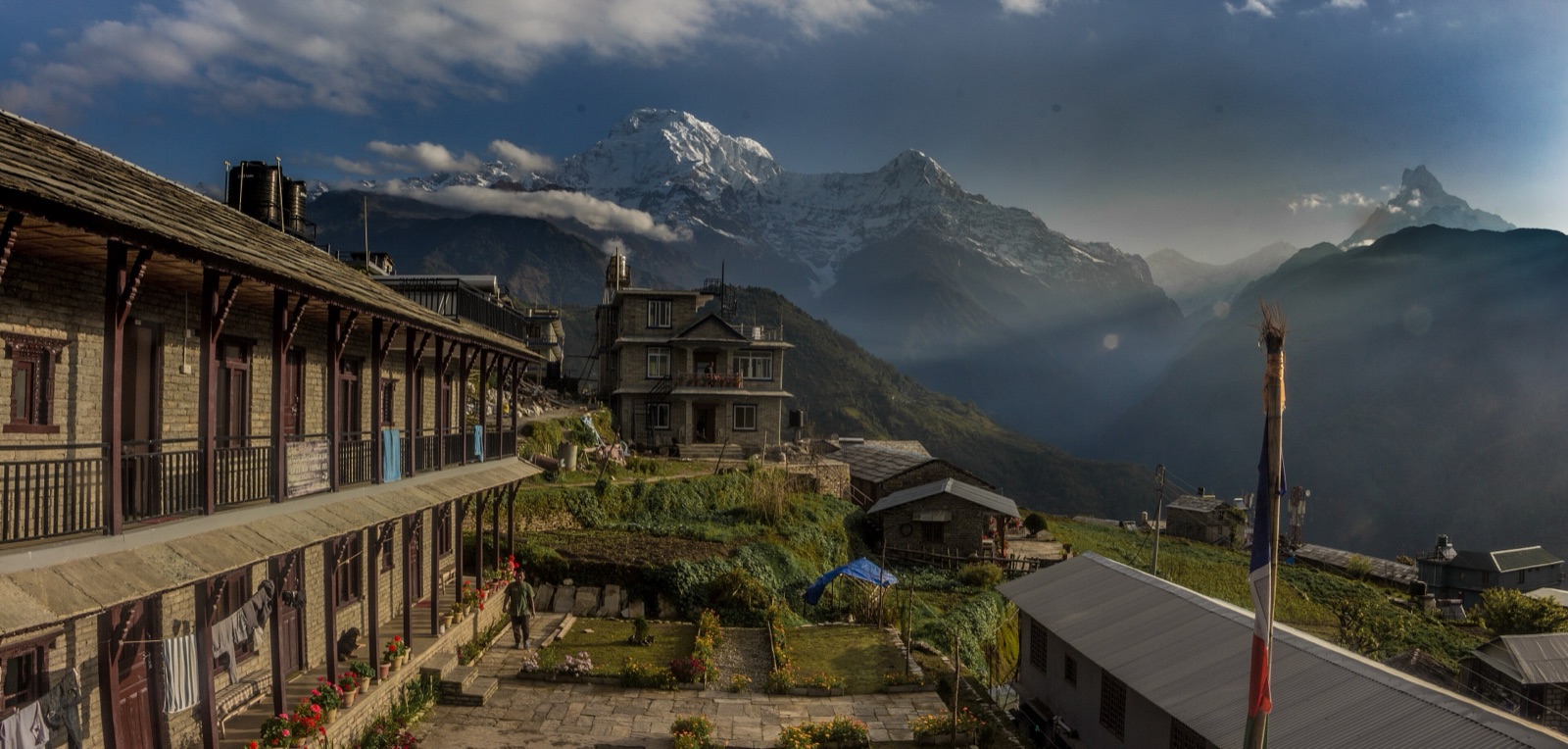
Ghandruk village is a stone-built Gurung settlement at around 1,940 m on the southern slopes of the Annapurna massif in Kaski district — slate roofs, stepped flagstone lanes and terraced fields stacked beneath a head-on view of Annapurna South, Hiunchuli and the twin-spired Machhapuchhre (Fishtail). It is one of the largest Gurung villages in Nepal, one of the easiest places in the country to sleep beneath 7,000 m peaks without a multi-day trek, and the hub where the Poon Hill loop and the Annapurna Base Camp trail meet. This guide covers what makes it worth the detour, how to get there from Pokhara, when to go, where to stay and how to use it as a trek stage.
Ghandruk at a glance
| Fact | Detail |
|---|---|
| Where | Kaski district, Gandaki Province, in the Annapurna Conservation Area |
| Altitude | About 1,940 m (6,360 ft) — no acclimatisation needed |
| From Pokhara | Roughly 55 km: 2–3 hours by jeep or bus to the Kimche road-head, then 1–1.5 hours on foot |
| Headline view | Annapurna South (7,219 m), Hiunchuli and Machhapuchhre (6,993 m) from the upper village |
| Best time | October–November and March–April; winter for clear, quiet mornings |
| Permits | ACAP permit for everyone; TIMS card for trekkers |
| Stay | 1–2 nights in the village; a single night as a trek stage |
| Treks | Ghorepani–Poon Hill loop, Annapurna Base Camp via Chhomrong, Ghandruk–Landruk–Dhampus loop |
What makes Ghandruk worth the trip
The Machhapuchhre view from Ghandruk is the headline. From the open ground above the upper village, the Annapurna front range fills the northern sky: Annapurna South in the centre, Hiunchuli to its left and the sacred, never-officially-climbed Machhapuchhre to the right, close enough that the peaks feel towering rather than distant. Because the village sits directly beneath the range, it is the best low-altitude vantage point for Fishtail in the region — see the Annapurna South and Machhapuchhre viewpoint for the exact spot and timing.
Gurung culture is the second reason. Ghandruk is the cultural heartland of the Gurung (Tamu) people, a community shaped by terrace farming, Buddhist and older Bon traditions, and generations of Gurkha military service whose remittances built the tidy stone village you see. The old stone houses are still lived in, the small Gurung Museum explains them, and our guide to Ghandruk's Gurung culture covers the dress, festivals and etiquette.
It is also a working trailhead. Ghandruk sits where the Ghorepani Poon Hill trek and the route to Annapurna Base Camp meet, so you can walk in over several days or drive up from Pokhara and sleep here with no trekking at all. It is not on the Annapurna Circuit itself — that loop runs from Besisahar over Thorong La to Jomsom — but many travellers pair the two from a Pokhara base.
How to get to Ghandruk
The standard route is from Pokhara by road, then on foot. Jeeps and buses run west from Pokhara to Nayapul and up the Modi Khola valley to the Kimche road-head, about 55 km and two to three hours of driving. From Kimche a stone staircase climbs to the village in one to one and a half hours. In dry weather a rough track continues almost to the village, but it is unreliable, so plan on the walk. Full options, times and tips are in how to get to Ghandruk.
- From Pokhara by jeep: Shared jeeps leave when full and are the cheapest quick option; a private jeep is faster and more comfortable. Allow two to three hours to Kimche, more after rain.
- From Pokhara by bus: Local buses run toward Nayapul and Kimche — slower and less frequent, but very cheap.
- From Nayapul on foot: The classic walk-in via Birethanti and Syauli Bazaar takes around five hours, gaining roughly 900 m to the village.
- From Kimche: The Kimche trailhead is where the road ends for most vehicles; porters can be hired here.
- From Chhomrong or Tadapani: Trekkers on the Annapurna Base Camp or Poon Hill trails arrive over the ridge of Komrong Danda — a long day from Chhomrong, a shorter one down from Tadapani.
Altitude note: at 1,940 m Ghandruk needs no acclimatisation. The climb from Kimche is the only real effort, and it is stone steps rather than exposed trail. Only if you continue toward Annapurna Base Camp (4,130 m) does altitude matter — read altitude sickness in Nepal before you commit.
Best time to visit Ghandruk (Ghandruk weather by season)
Autumn and spring are the clear-sky seasons. Ghandruk weather follows the Himalayan pattern: dry, crisp and clear from October to November, mild and flower-filled in March and April, cold but often brilliantly clear in winter, and wet and cloudy through the monsoon.
| Season | Months | What to expect |
|---|---|---|
| Autumn | October–November | The prime season: post-monsoon skies, sharp views, mild days and cool nights. Peak trekking traffic, so book lodges ahead. |
| Winter | December–February | Freezing nights, occasional snow on the ridges above, but quiet lodges and very clear mornings. Pack a proper down layer. |
| Spring | March–April | The second sweet spot: warming days, generally clear mornings and rhododendron forests in bloom toward Komrong Danda and Tadapani. |
| Pre-monsoon | May–early June | Hot and hazy with building cloud; views are less reliable. |
| Monsoon | June–September | Lush terraces but frequent rain, cloud over the peaks, leeches on the trails and a rough, occasionally blocked road in. The least reliable time for views. |
Mornings are the clearest in every season: cloud tends to build up the valleys by late morning, so plan the viewpoint for dawn. For a month-by-month breakdown and packing advice, see the best time to visit Ghandruk.
Where to stay in Ghandruk
Ghandruk sleeps you in restored stone houses, not hotels. Accommodation ranges from simple family-run teahouses to a handful of comfortable lodges, most built in the traditional slate-roofed style. The choice that matters most is location: upper-village lodges have terraces angled straight at the peaks, while lower-village lodges are quicker to reach on the walk in from Kimche. The two are only minutes apart on foot.
Teahouse or lodge? A teahouse room is a basic twin with a shared or attached bathroom, warm blankets and dal bhat cooked by the family, at a very low nightly rate, with small extras for hot showers, charging and Wi-Fi. A lodge adds en-suite bathrooms, proper beds, heated dining rooms and included meals at a much higher price. Both put you under the same mountains.
Three picks that show the range:
- Ghandruk Village Eco Lodge — a stone-built garden lodge in the village (Ghandruk-4) with mountain-view rooms, home-style dining, solar-warmed water and evening campfires. The mid-range option if you want an eco-minded stay that still feels part of the village.
- Himalaya Lodge (Ker & Downey) — 11 en-suite rooms just above the village, with terraces looking over the slate roofs to the Annapurnas. The heart of Ker & Downey's lodge-to-lodge Annapurna circuit, run on solar hot water and gas cooking; the comfortable choice for couples and older travellers.
- Ghandruk Lodge (Mountain Lodges of Nepal) — 18 en-suite rooms at about 1,980 m with full-board meals, hot-water bottles at night and a library. Best booked as part of a guided lodge trek.
For the rest — how to pick a room with a view, booking in peak season and what to pack — see where to stay in Ghandruk.
What to do in Ghandruk
Sunrise at the viewpoint comes first. Walk up through the upper village before dawn to the open ground above the last houses, where Annapurna South and Machhapuchhre catch the first light while the village stays in shadow. Allow ten to twenty minutes from most lodges and bring a warm layer; by mid-morning cloud often drifts up the valley.
- Wander the old stone village. Stepped lanes, dry-stone walls and split-slate roofs, with drying grain, grazing buffalo and elders in doorways. An hour or two on foot; ask before photographing people. See Ghandruk's old Gurung stone houses.
- Visit the Gurung Museum. A community-run collection of festival dress, tools, instruments and Gurkha medals inside a restored home — twenty to forty minutes, with a small entry fee or donation. See the Gurung Museum.
- Half-day hike to Komrong Danda. About two hours uphill through terraces and rhododendron-oak forest to a ridge with widening Annapurna views and teahouses for tea; turn back whenever you like. See Komrong Danda.
- Day hike to Tadapani. Continue past Komrong Danda to Tadapani (2,630 m), a lodge cluster in the forest with a famous view of Machhapuchhre, Annapurna South and Hiunchuli. Around three to four hours up; sleep there or return the same day.
- Cross the valley to Landruk. Drop to the Modi Khola and climb to Landruk, the Gurung village on the opposite side, in roughly three to four hours — the classic link toward Dhampus and Australian Camp.
Photography: the peaks lie to the north of the village, so the best light is the first hour after sunrise and the last before sunset, when the faces warm up and the terraces fall into soft shadow. A wide lens takes in the whole front range from the viewpoint; a longer lens picks out the ridgelines of Machhapuchhre from lodge terraces. Spring adds rhododendrons in the foreground; autumn gives the sharpest air.
Tap through the top things to do in Ghandruk for timings and fees on each.
Ghandruk as a trek stage
Most Ghandruk treks use the village as either a first night or a last. It sits at the junction of the lower Annapurna trail network, so it slots into three well-worn routes.
- Ghorepani–Poon Hill loop (3–5 days). Walk it clockwise — Nayapul, Ulleri, Ghorepani, the Poon Hill sunrise, then Tadapani and down to Ghandruk before the drive back — or anticlockwise from Ghandruk up through Komrong Danda and Tadapani to Ghorepani. Ghandruk makes the gentler finish, with some of the best teahouses on the circuit. See the Ghorepani Poon Hill trek guide or the ready-made 5-day Poon Hill trek from Pokhara.
- Annapurna Base Camp via Chhomrong (7–10 days). From Ghandruk the trail climbs Komrong Danda, drops to the Komrong Khola and rises to Chhomrong, gateway to the Sanctuary, then threads the Modi Khola gorge past Sinuwa, Bamboo and Deurali to Machhapuchhre Base Camp and Annapurna Base Camp at 4,130 m. See Ghandruk as a trekking gateway and the 10-day Annapurna Base Camp package.
- Ghandruk–Landruk–Dhampus loop (3 days). The easy option for non-trekkers: day one, drive to Kimche and walk up to Ghandruk; day two, cross the Modi Khola to Landruk; day three, continue via Tolka and Pothana to Dhampus or Australian Camp and drive back to Pokhara. Low altitude, big views and comfortable lodges every night — it sits among the best short treks in Nepal.
Ghandruk also links to the Mardi Himal trail via Landruk and Forest Camp for anyone wanting a quieter ridge walk. For the wider picture of routes, permits and seasons, start with the Annapurna region treks overview and the Nepal trekking guide.
Practical info
- Permits. Ghandruk lies inside the Annapurna Conservation Area, so everyone needs an ACAP permit, and trekkers also need a TIMS card. Both are arranged in Pokhara or Kathmandu, and there is a checkpost at Birethanti near Nayapul. Current fees and rules are in Nepal trek permits and costs.
- Guides. Nepal now requires foreign trekkers on the popular conservation-area routes to walk with a licensed guide, which covers the trails out of Ghandruk. Guides and porters are easy to hire in Pokhara.
- Money. There are no ATMs in Ghandruk or on the trails. Carry enough Nepali rupees from Pokhara for lodging, meals, permits and extras.
- Phone and Wi-Fi. Mobile signal reaches the village but is patchy on the trails and in the forest; most lodges offer basic Wi-Fi, sometimes for a small fee. Power can be intermittent, so carry a power bank and a torch.
- Altitude and fitness. At 1,940 m there is no altitude issue. The walk from Kimche is an hour or so of stone steps; the Poon Hill loop suits most reasonably fit walkers, while Annapurna Base Camp needs stamina and acclimatisation.
- Packing. Nights are cool to cold year-round: a fleece and windproof in autumn and spring, a down jacket in winter, a rain shell and quick-dry layers in the monsoon, and grippy shoes for wet stone steps in any season.
- Etiquette. This is a working village: ask before photographing people or entering courtyards, dress modestly, and support family-run lodges and the museum. See responsible travel in Nepal.
Related guides
Base yourself in Pokhara before and after, and combine Ghandruk with the Annapurna Circuit trek or the region's adventure sports in Nepal — paragliding, ziplining and rafting are all staged from the lake city. For more Gurung country, see Gurung and Magar culture and Nepal's most beautiful villages. Below are our picks for what to see and do in Ghandruk.
Where to stay in Ghandruk

Trekking & treks in Ghandruk


What to do in Ghandruk


Getting around in Ghandruk

Plan your trip in Ghandruk

Frequently asked questions
Is Ghandruk worth visiting?+
Yes — Ghandruk is one of the most scenic and accessible Gurung villages in the Annapurna region, with stone-paved lanes, traditional slate-roofed houses and a head-on view of Annapurna South and Machhapuchhre. It rewards both day visitors and trekkers passing through.
How do you get to Ghandruk from Pokhara?+
Drive west from Pokhara via Nayapul to the Kimche road-head — about 55 km and two to three hours by jeep or bus — then walk the stone staircase up to the village in one to one and a half hours. In dry weather a rough track continues almost to the village. Trekkers also walk in from Nayapul, Tadapani or Chhomrong.
How high is Ghandruk?+
Ghandruk sits at about 1,940 metres (6,360 feet) in the Annapurna foothills of Kaski district. The altitude is comfortable for most visitors and needs no acclimatisation, though the trekking routes beyond the village climb much higher.
How many days should I spend in Ghandruk?+
One night is enough to see the village, the Gurung Museum and the sunrise view of Machhapuchhre. Two nights let you add a half-day walk up Komrong Danda or a day hike to Tadapani. Trekkers on the Poon Hill loop or the Annapurna Base Camp route usually spend a single night here at the start or end of the walk.
Can I visit Ghandruk without trekking experience?+
Yes. You can drive from Pokhara to the Kimche road-head and walk about an hour of stone steps up to the village, then stay overnight without doing a multi-day trek. The village itself is easy on foot, and the optional walks to Komrong Danda or Landruk are gentle enough for fit beginners.
What is the best viewpoint for Fishtail Mountain in Ghandruk?+
The open ground above the upper village, reached by a short climb through the last houses. From there Annapurna South, Hiunchuli and Machhapuchhre (Fishtail) fill the northern sky. Go at sunrise, when the peaks catch the first light and before cloud drifts up the valley later in the morning.
What is the weather like in Ghandruk?+
Ghandruk has a mild hill climate with cool to cold nights year-round. October to November is dry, crisp and clear; December to February brings freezing nights, occasional snow on the ridges and very clear mornings; March to April is warm with rhododendron blooms; June to September is the monsoon, with rain, cloud on the peaks and leeches on the trails.
Is Ghandruk safe for solo travellers?+
The village itself is very safe, welcoming and easy to navigate, and many travellers visit alone. For the trekking routes beyond it, Nepal now requires foreign trekkers in the Annapurna Conservation Area to walk with a licensed guide, so solo walkers should hire one in Pokhara. Carry cash, as there are no ATMs.
What treks start or pass through Ghandruk?+
Ghandruk is a key village on the Ghorepani–Poon Hill loop and a popular gateway to Annapurna Base Camp via Komrong Danda and Chhomrong. The easy three-day Ghandruk–Landruk–Dhampus loop also starts here, and a side trail links to the Mardi Himal route via Landruk and Forest Camp.
Do I need a permit to visit Ghandruk?+
Yes. Ghandruk lies inside the Annapurna Conservation Area, so every visitor needs an ACAP permit, and trekkers continuing on the trails also need a TIMS card. Arrange both in Pokhara or Kathmandu before you set out; there is a checkpost at Birethanti near Nayapul.