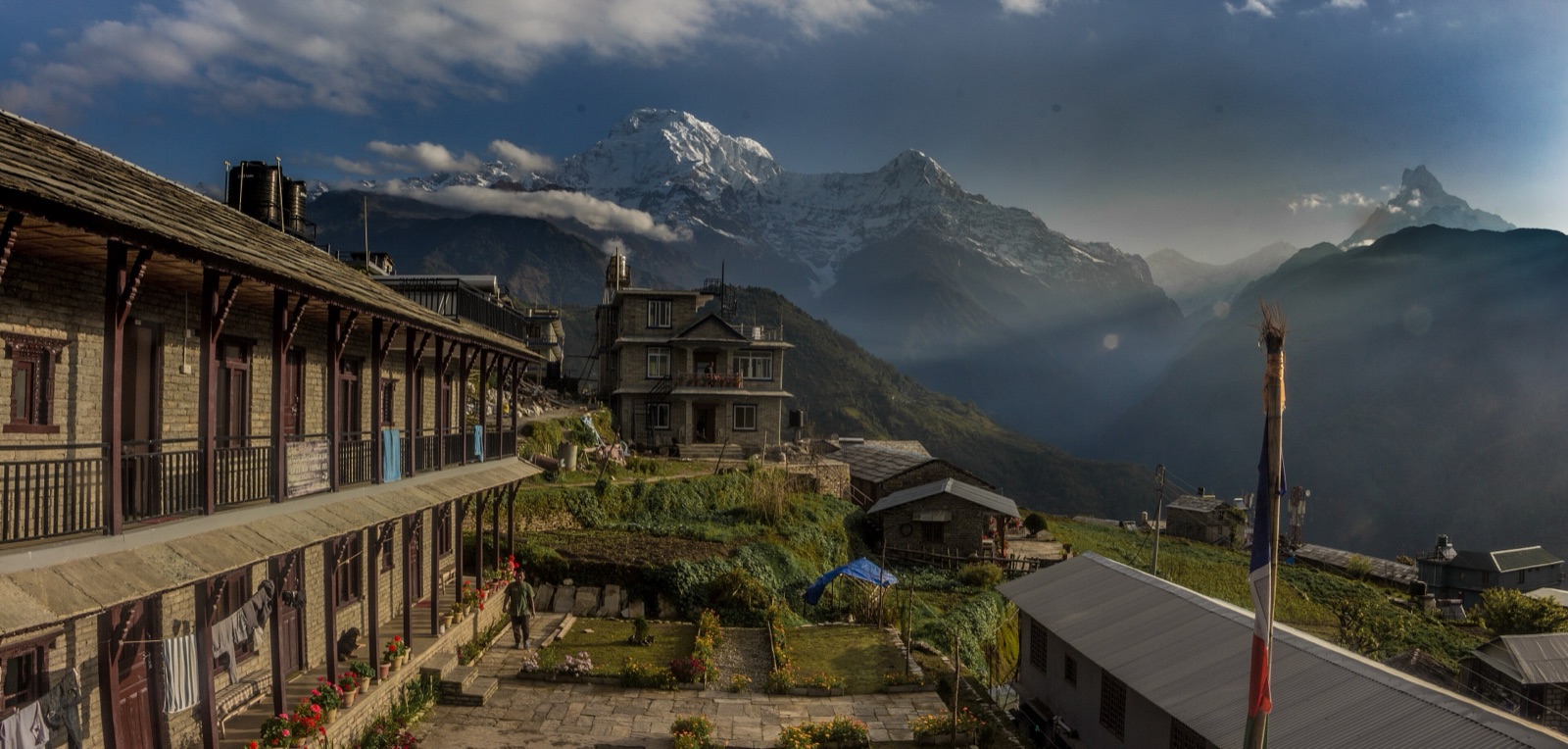
Photo: Utsab Raj Giri, CC BY-SA 4.0 via Wikimedia Commons
Travel tips · Ghandruk
The Best Time to Visit Ghandruk
Autumn and spring bring the clearest Annapurna views in Ghandruk — a season-by-season guide to weather and crowds.
The short answer: visit Ghandruk in autumn (October–November) or spring (March–April) for the clearest Annapurna views, the most reliable weather and the liveliest village atmosphere. Winter rewards those who do not mind the cold with sharp, quiet mornings, while the summer monsoon is green but cloudy and best avoided if mountains are your priority.
Autumn (October–November)
This is the prime season. The monsoon has washed the air clean, leaving crisp, dry days and brilliant skies that show Annapurna South, Hiunchuli and Machhapuchhre at their sharpest from the village viewpoint. Days are mild and nights cool. It is also peak trekking season, so book your lodge ahead and expect company on the trails.
Spring (March–April)
The second sweet spot. Skies are usually clear, days warm steadily, and the rhododendron forests above the village — toward Komrong Danda and Tadapani — burst into red and pink bloom. Spring blends strong mountain views with the region's most colourful scenery, making it a favourite for walkers and photographers alike.
Winter (December–February)
Winter is cold but often stunningly clear, especially in the mornings. Expect freezing nights and the chance of snow on the surrounding ridges, but the village stays accessible and far quieter, with warm lodge stoves and dramatic, empty viewpoints. Pack serious layers and you will have the mountains nearly to yourself.
Monsoon (June–September)
The monsoon turns the hills lush and green, but brings frequent cloud, rain and leeches, with peaks often hidden and the road in rough or occasionally blocked. It is the least reliable time for views, though the terraces are at their most beautiful and crowds are thin.
What to pack for the season
Whatever month you choose, Ghandruk's altitude means mornings and evenings are cool to cold, so a warm layer is essential year-round. In autumn and spring, light layers for the day plus a fleece and a windproof for dawn at the viewpoint are usually enough. Winter calls for a proper down or insulated jacket, hat and gloves for freezing nights, while the monsoon demands a good rain shell, quick-dry clothes and footwear with grip for slick stone steps. A torch is handy in any season, as power can be intermittent in the village.
Quick comparison
- Clearest views: Autumn, then winter mornings.
- Best flowers: Spring (rhododendrons in March–April).
- Fewest crowds: Winter and monsoon.
- Avoid for views: Peak monsoon (July–August).
For the national picture, see the best time to visit Nepal. Then plan the details with how to get to Ghandruk and the top things to do in Ghandruk, or start with the Ghandruk village guide.
Frequently asked questions
When is the best time to visit Ghandruk?+
Autumn (October to November) and spring (March to April) are best, with dry weather, mild days and the clearest views of Annapurna South and Machhapuchhre. These are also the peak trekking seasons, so the village is at its liveliest.
Can you visit Ghandruk in winter?+
Yes — winter (December to February) brings cold but often crystal-clear mornings and far fewer visitors. Nights are freezing and the highest passes nearby get snow, but the village itself stays accessible, with cosy lodges and sharp mountain views.
Is it worth visiting Ghandruk in the monsoon?+
The monsoon (June to September) is the wettest, greenest time, with lush terraces but frequent cloud that hides the peaks and rough, sometimes blocked roads. It is the least reliable season for views, though the countryside is beautiful between showers.
When do the rhododendrons bloom near Ghandruk?+
The rhododendron forests on the ridges above Ghandruk, such as Komrong Danda and toward Tadapani, bloom mainly in March and April, painting the hillsides red and pink. Spring is the best season to combine flowers with mountain views.


