Things to do · Baglung
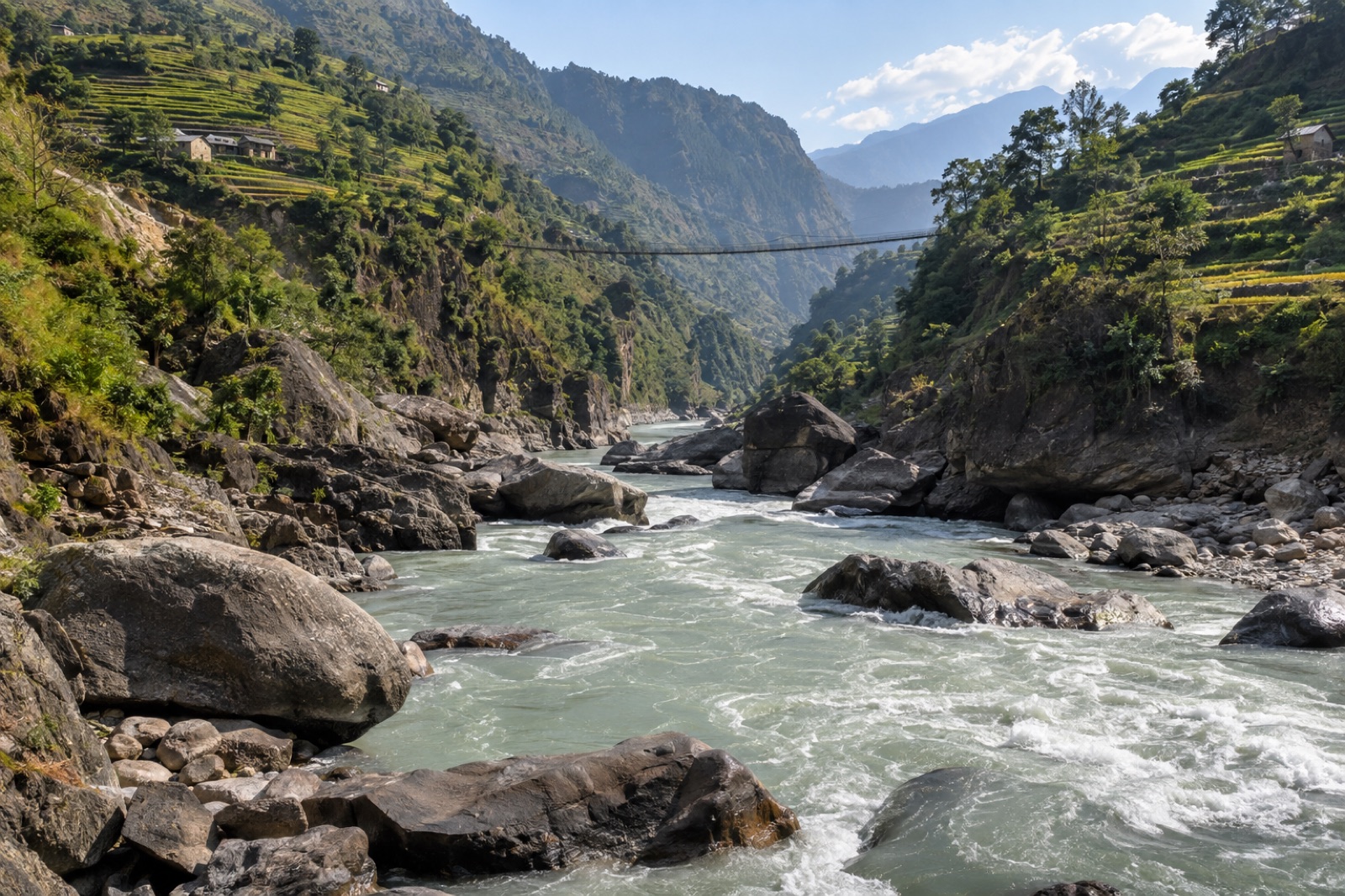
The Kaligandaki River at Baglung
The deep, sacred river gorge below Baglung, famed for shaligram fossils, high bridges and white-water rafting.
The Kaligandaki river carves a deep, sacred gorge below Baglung, one of the most revered rivers in the Himalaya. Rising near the Tibetan border in Mustang and cutting what is often described as the world's deepest gorge between Dhaulagiri and Annapurna, it sweeps past Beni and Baglung through the western hills — a river of pilgrims, fossils, high bridges and white water.
The river in brief
The Kali Gandaki — named after the goddess Kali — is older than the mountains it crosses: the river was already flowing as the Himalaya rose, cutting down as fast as the range pushed up. From its sources near the Tibetan border in Upper Mustang it runs south through the wind-scoured trans-Himalayan desert past Kagbeni and Jomsom, squeezing between the 8,000m massifs of Dhaulagiri I and Annapurna I in the Kali Gandaki Gorge — often described as the deepest on earth, measured from riverbed to the summits either side. It then drops into the green western hills, gathering the Myagdi Khola at the Beni confluence just upstream of Baglung, and flows on to become the Gandaki (Narayani), one of the great tributaries of the Ganges.
What to expect at Baglung
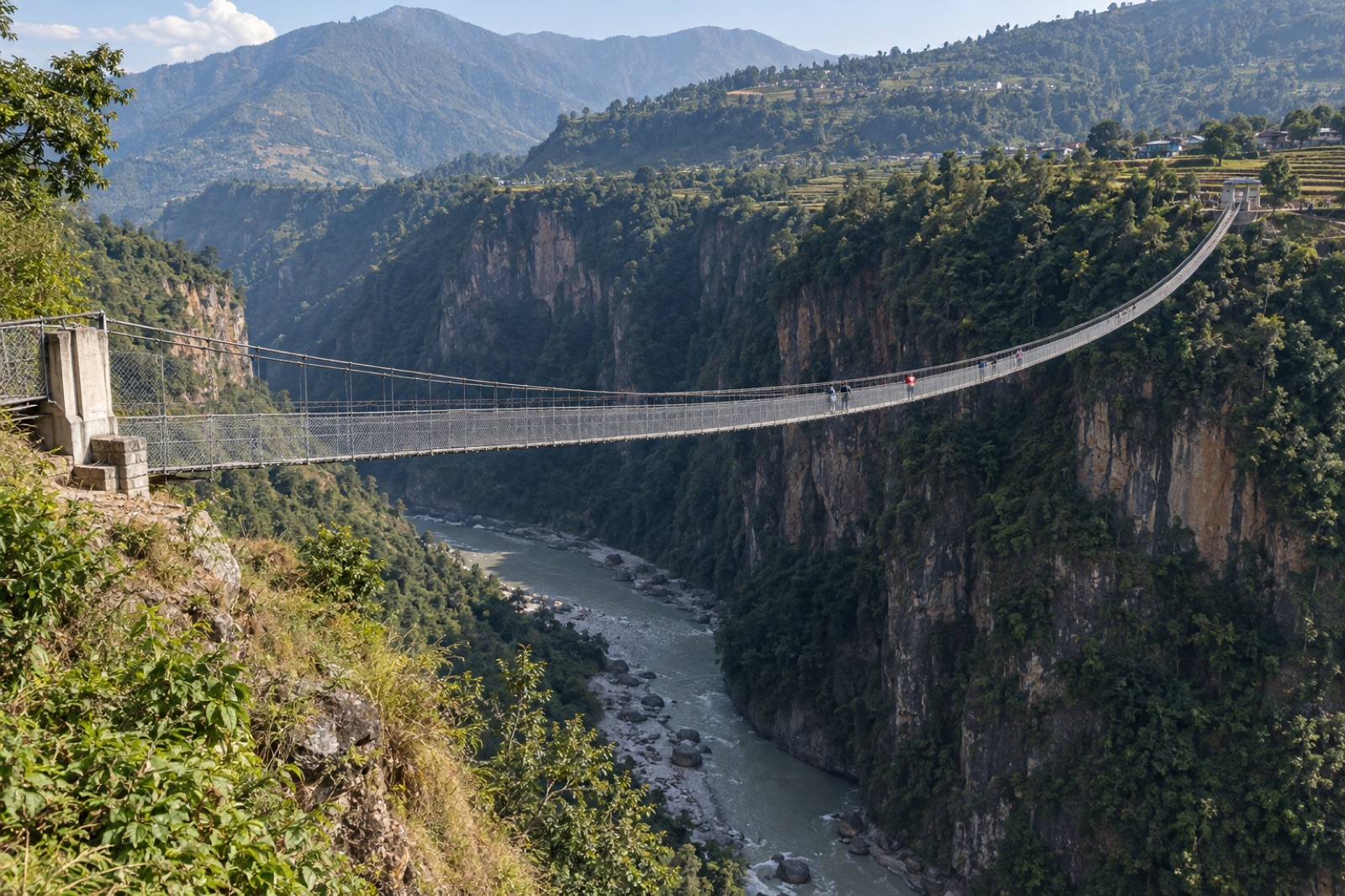
From Baglung the river is a constant presence far below the town, its gorge spanned by long suspension bridges. The Kaligandaki is sacred to Hindus, and its bed is famous for shaligrams (also spelled saligrams) — black ammonite fossils, relics of the ancient sea floor lifted into the mountains, held to embody Lord Vishnu. By tradition, genuine shaligrams come only from this river, and they are gathered for worship in home shrines and temples across Nepal and India — one reason the Kaligandaki counts among the holiest rivers in the Himalaya.
Downstream, the river is a celebrated white-water run: the classic multi-day trip puts in near Beni or Maldhunga, close to Baglung, and runs roughly three days of Grade III–IV rapids through remote, temple-lined gorges — wild and committing rather than a casual day-trip.
Good to know
- Sacred status: Treat the river and its shaligrams respectfully; this is a pilgrimage landscape as much as a scenic one.
- Rafting: Multi-day trips run on remote sections — see Nepal's Kali Gandaki river rafting guide for grades, seasons and access.
- Upstream: The gorge's most dramatic, desert-walled stretch lies north around Jomsom — covered in our Kali Gandaki Gorge guide.
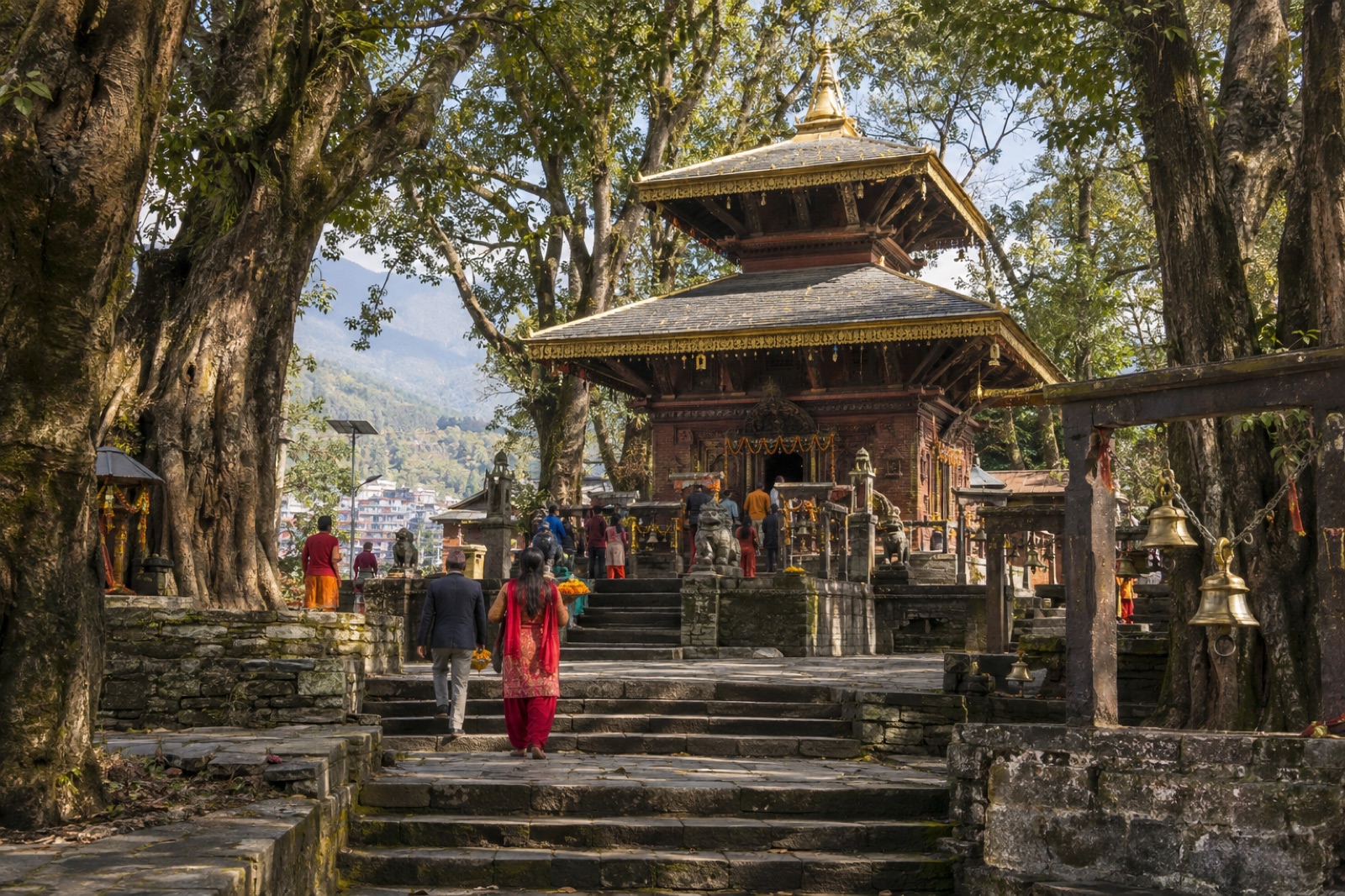
- Nearby: Combine the gorge with the Baglung Kalika temple above town and a bridge crossing, all part of the best things to do in Baglung. The river anchors many of Nepal's sacred sites and pilgrimages.
Featured in
More what to do in Baglung
Frequently asked questions
Why is the Kali Gandaki river famous?+
The Kali Gandaki is famous on three counts: it cuts what is often described as the world's deepest gorge, between the 8,000m massifs of Dhaulagiri and Annapurna; its riverbed yields shaligrams, the black ammonite fossils Hindus revere as forms of Vishnu, making it one of the holiest rivers in the Himalaya; and it offers one of Nepal's classic multi-day white-water rafting expeditions.
What is a shaligram?+
A shaligram (also spelled saligram) is a dark, rounded ammonite fossil found in the Kali Gandaki riverbed — a relic of the ancient sea floor that was pushed up as the Himalaya rose. Hindus revere shaligrams as aniconic forms of Lord Vishnu, and by tradition genuine ones come only from this river, which is why they are worshipped in homes and temples across Nepal and India.
What is special about the Kaligandaki river at Baglung?+
The Kaligandaki carves an exceptionally deep, sacred gorge below Baglung, crossed by long suspension bridges and revered by Hindus. Its riverbed is famous for shaligrams — black ammonite fossils held sacred as embodiments of Vishnu — and the river offers wild white-water rafting downstream.
Can you raft the Kaligandaki near Baglung?+
Yes — the classic multi-day Kali Gandaki rafting trip puts in near Beni or Maldhunga, close to Baglung, and runs roughly three days of Grade III–IV water through remote gorges to a take-out near Mirmi. It is a wild, committing expedition rather than a casual day-trip from town, so trips are arranged through rafting operators with proper logistics.
Where does the Kaligandaki flow?+
The Kaligandaki rises near the Tibetan border in Mustang, cuts between Dhaulagiri and Annapurna through what is often described as the world's deepest gorge, then flows past Beni and Baglung through the western hills before continuing as the Gandaki (Narayani) to join the Ganges in India.


