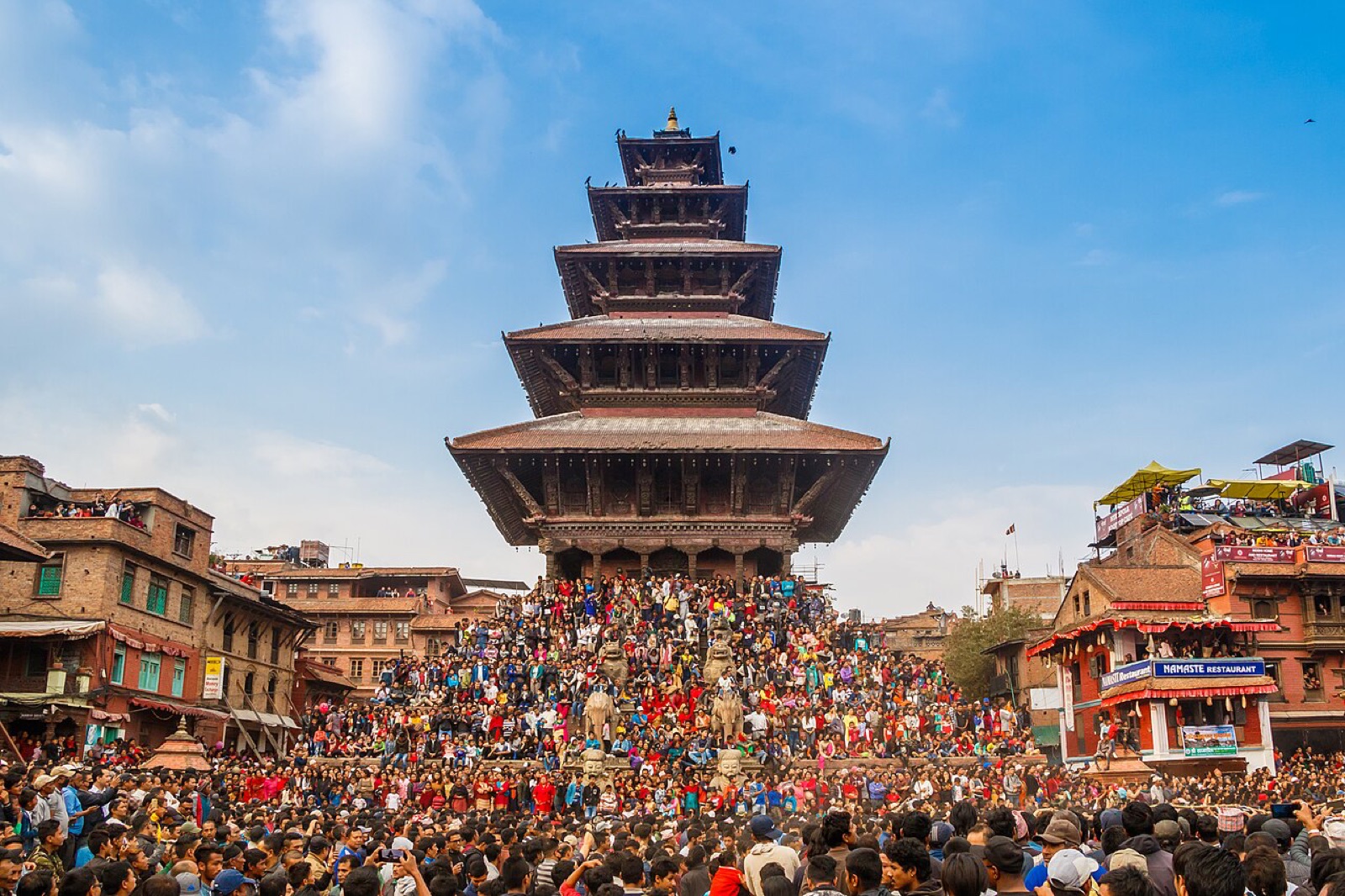
Photo: Nrik kiran, CC BY-SA 4.0 via Wikimedia Commons
Festival · Bhaktapur
Bisket Jatra in Bhaktapur
Bhaktapur's New Year chariot festival — tug-of-war, the towering lingo pole and Newar ritual in mid-April.
Bisket Jatra is Bhaktapur's biggest and most dramatic festival — a week-long celebration of the Nepali New Year that fills the medieval city with chariots, crowds and ancient ritual. If you can time a visit to Bhaktapur for mid-April, this is the spectacle to see: a heavy wooden chariot hauled through brick lanes in a tug-of-war, and a colossal pole raised and felled to mark the turn of the year.
What Bisket Jatra celebrates
Bisket Jatra marks the start of the Nepali (Bikram Sambat) year and, by local legend, the slaying of two serpents that had killed a princess's suitors — the name is often linked to bi (serpent) and syaku (laughter). The festival honours the fierce deity Bhairava and the goddess Bhadrakali, whose chariots are central to the celebrations. It is one of the great expressions of Newar culture and heritage, rooted in Bhaktapur's identity as a Malla-era kingdom.
When it falls
Unlike most Nepali festivals, Bisket Jatra follows the solar calendar, so it falls reliably around mid-April as the month of Baisakh begins, and lasts about a week. That makes it far easier to plan around than lunar festivals — line it up with our best time to visit Nepal guide, when valley weather is warm and clear.
What you'll see in Bhaktapur
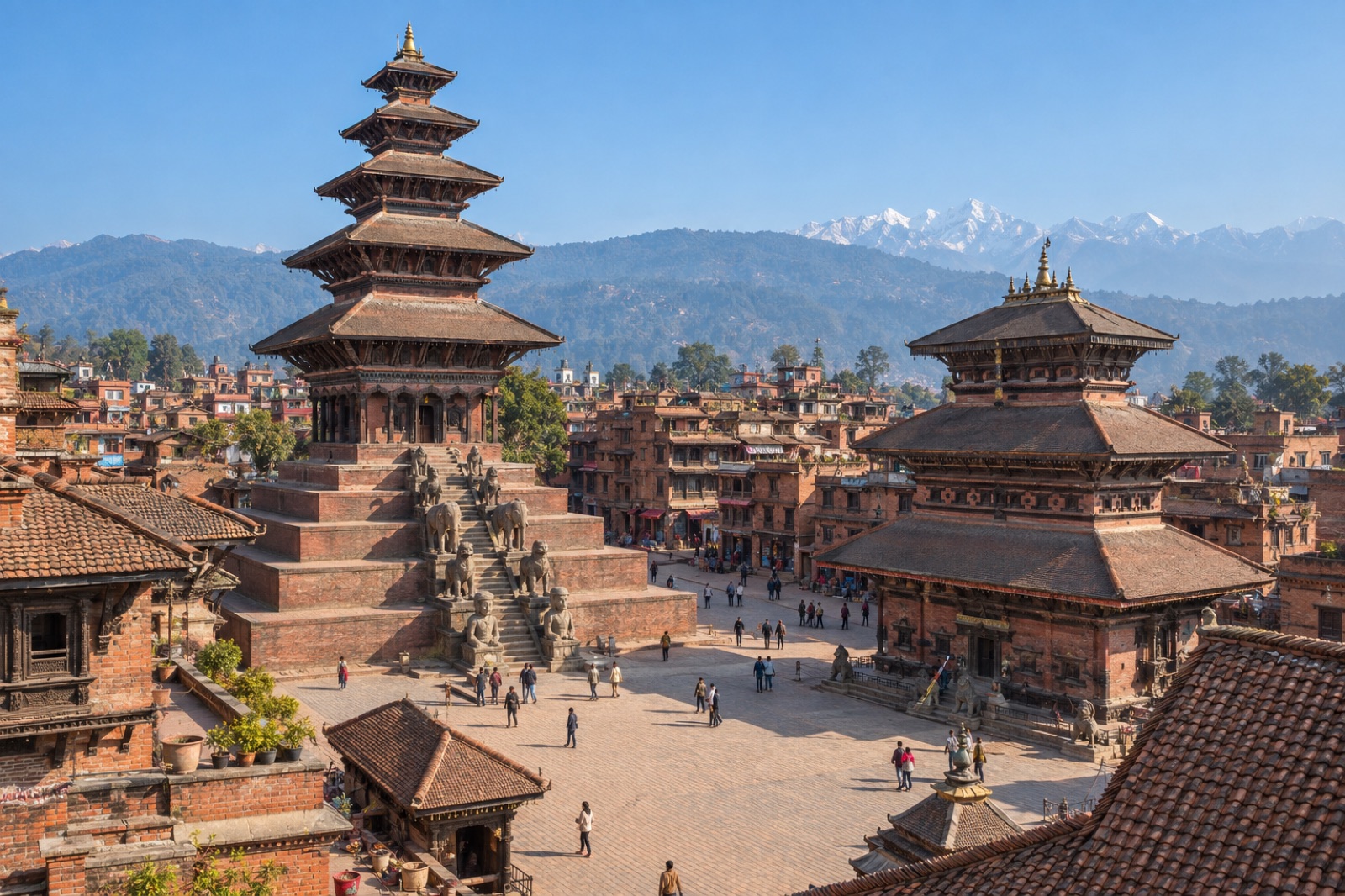
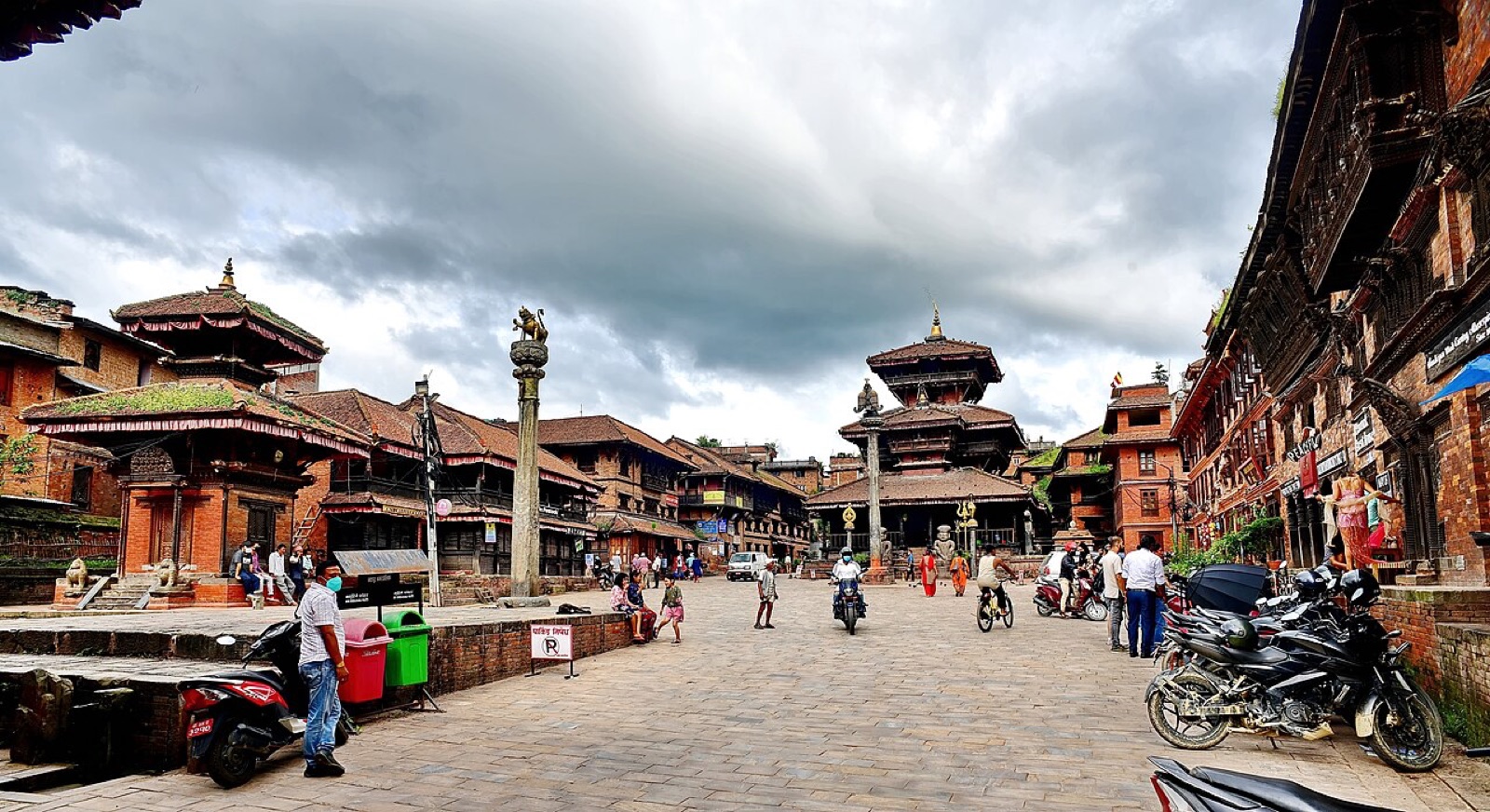
The heart of the festival is Taumadhi Square and the nearby Bhairavnath area. A massive wooden chariot carrying Bhairava is hauled through the streets, and two halves of the city compete in a tug-of-war to drag it toward their side — a heaving, sometimes chaotic contest. The other great moment is the lingo, a towering pole often more than 20 metres tall, raised at the Khalna Tole festival ground near the river and ceremonially toppled on New Year's Day. Smaller chariots of other gods join the procession, and the rebuilt squares fill with music, food stalls and visiting families.
Neighbouring towns add their own rituals: in nearby Thimi, devotees parade dozens of deity palanquins and hurl handfuls of orange sindoor powder at one another, while in Bode a devotee walks through town with an iron spike pierced through his tongue as an act of penance. Within Bhaktapur, the festival is also a fine excuse to wander the quieter Dattatreya Square and the working potters of Pottery Square between the big events.
Tips for visitors
- Stay overnight or arrive early. The town fills fast and transport is busy on the main days.
- Keep back from the chariot ropes. The tug-of-war can turn rough and unpredictable as the crowd surges.
- Watch the lingo from a safe distance — the pole is enormous and its raising and felling draw dense crowds.
- Mind your belongings in the press, and dress modestly around temples — see our Nepal culture and etiquette guide.
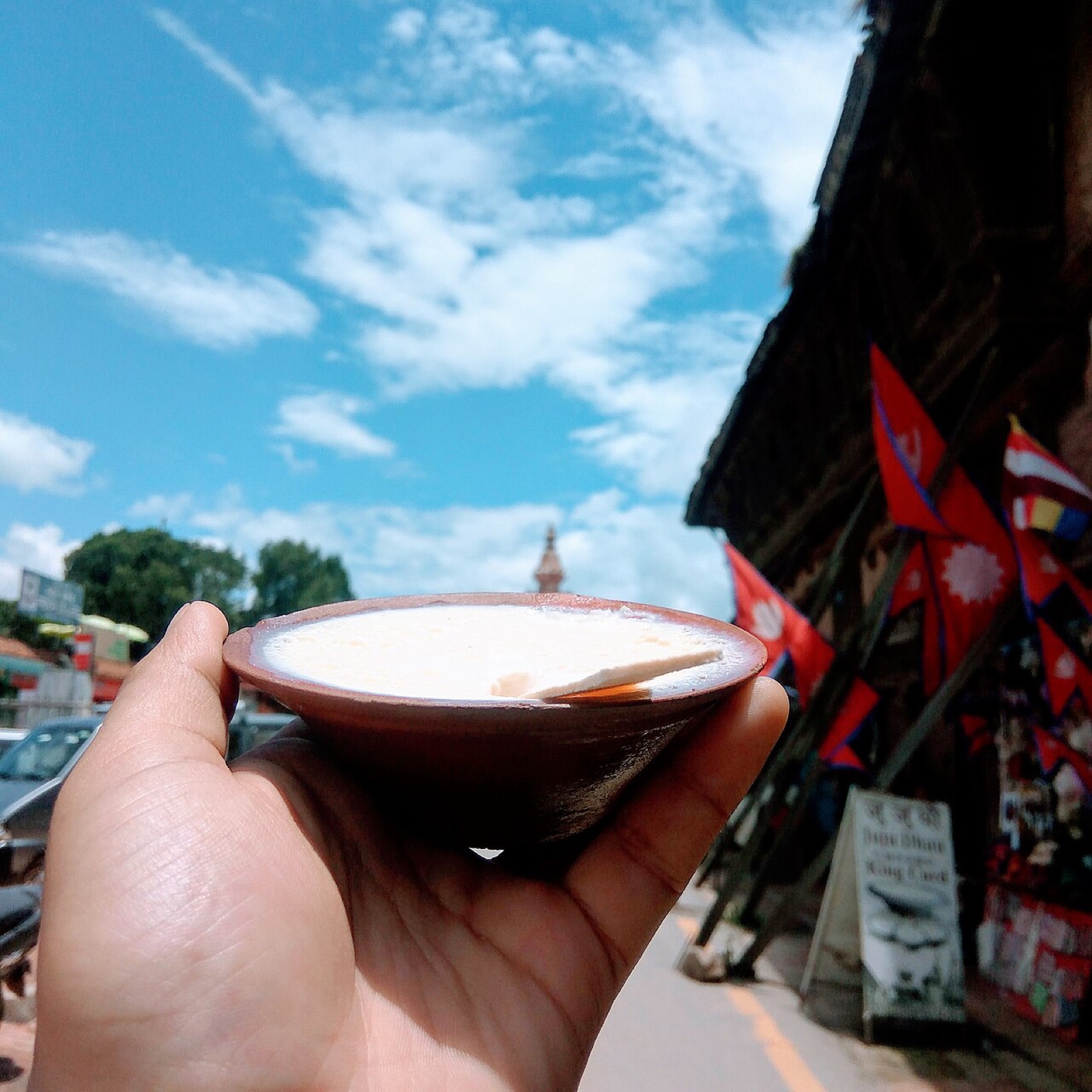
- Cool down with juju dhau. A pot of Bhaktapur's king curd is the perfect festival-day treat.
For the bigger picture, this is the spring counterpart to Kathmandu's autumn festivals — see where it sits in the full festival calendar of Nepal, and explore more of the city's traditions in our Bhaktapur crafts, squares and festivals collection.
Frequently asked questions
When is Bisket Jatra in Bhaktapur?+
Bisket Jatra follows the solar calendar and falls around the Nepali New Year in mid-April, at the start of the month of Baisakh. It runs for about a week, with the main chariot and pole events clustered around New Year's Day, and stays roughly fixed each year.
Where in Bhaktapur does Bisket Jatra take place?+
The main action centres on Taumadhi Square and the Bhairavnath area, with the chariot hauled through the old town's brick lanes and the great lingo pole raised down near the Khalna Tole ground by the river. Crowds gather across the whole heritage zone.
What is the lingo pole at Bisket Jatra?+
The lingo (or yosin) is a towering wooden pole, often more than 20 metres tall, erected at the festival ground. Its ceremonial raising and its felling on New Year's Day are the dramatic highlights, drawing huge crowds to Bhaktapur.
Do I need a ticket to see Bisket Jatra?+
You pay Bhaktapur's standard foreigner heritage entry fee at the city gates to enter the old town, where most of the festival happens. There is no separate festival ticket; the chariot pulling and pole events are free public spectacles within the heritage zone.