Things to do · Janakpur
Janakpur & Mithila Culture
Janakpur's temples and living Mithila culture — sacred ponds, folk painting, Vivah Panchami and the parikrama pilgrimage paths.
Janakpur — known reverently as Janakpurdham — is the temple city of the Terai plains and the spiritual capital of Mithila culture, the distinct civilisation of the Nepal–India lowlands with its own Maithili language, bold folk painting and a religious life woven around the story of Sita and Rama. This cluster gathers the temples, sacred ponds, art and festivals that make the city Nepal's most concentrated experience of living Hindu culture. Start with our main Janakpur travel guide to orient yourself, then dig into the highlights below.
The short answer
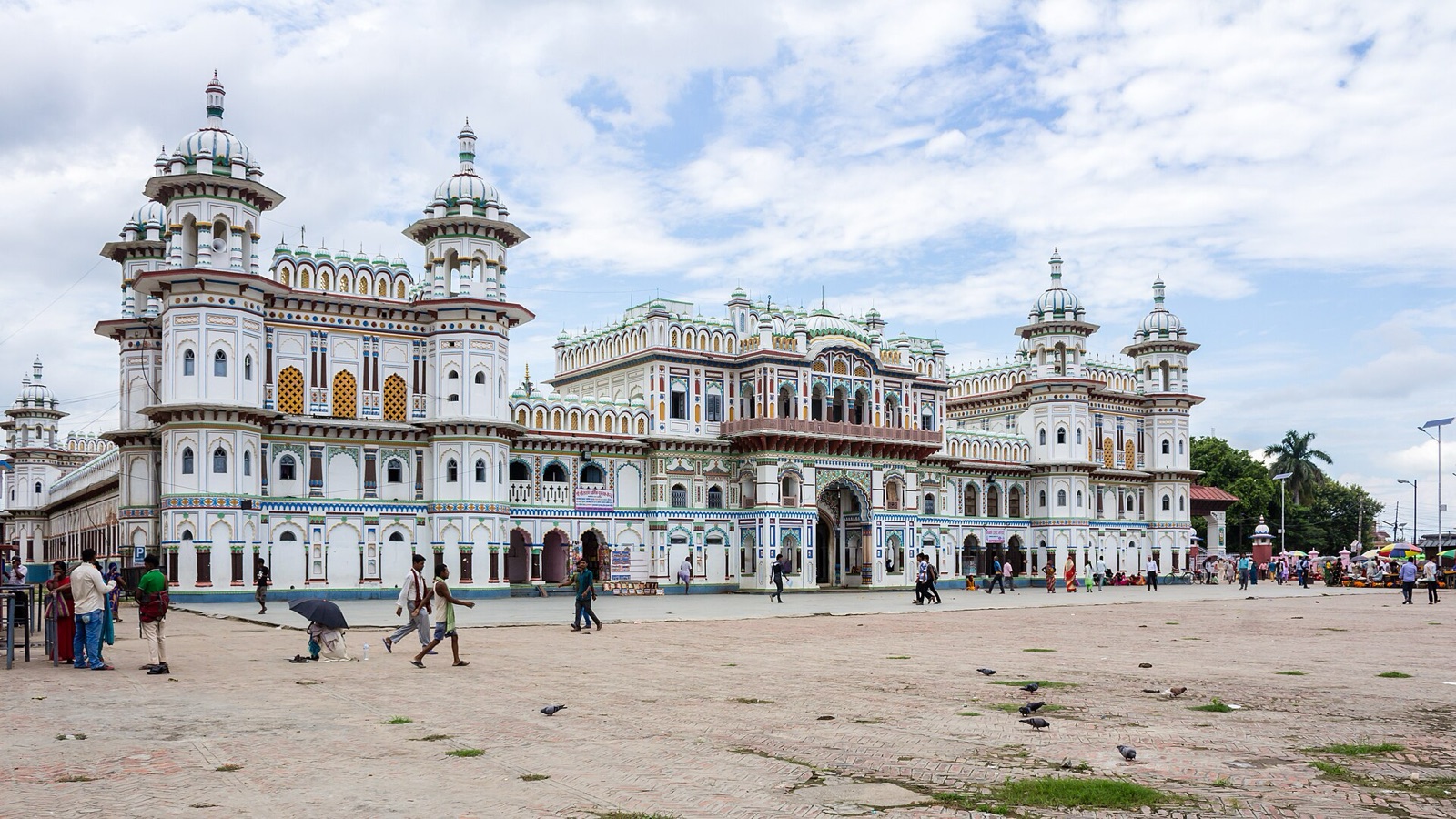
At the centre stands the marble Janaki Mandir, the grand 1910 temple to Sita and the city's defining landmark. Around it cluster the older, pagoda-style Ram Mandir and the twin Dhanush Sagar and Ganga Sagar sacred ponds, where pilgrims bathe at the ghats. The city's living arts and rituals come alive in Mithila art and paintings, the spectacular Vivah Panchami festival and the devotional Janakpur parikrama paths that circle the holy district. A short trip south reaches the underground Shiva shrine of Jaleshwar Mahadev.
Temples and sacred water
Janakpur is sometimes called a city of ponds, and its religious geography maps the Ramayana onto the landscape. The white-and-pink Janaki Mandir marks where Sita is believed to have grown up, while the Ram Mandir — the oldest temple in town — keeps the tiered Nepali pagoda form. Between and around them lie scores of sagar ponds, of which Dhanush Sagar and Ganga Sagar are the most revered, their ghats crowded at dawn with bathers and offerings. For the wider Hindu context, see our overview of Hinduism in Nepal.
Living arts and festivals
What sets Mithila apart is its folk painting, created largely by women on walls, paper and cloth in flat, brilliant colour — peacocks, fish, lotuses and deities drawn from the same legends the temples enshrine. The whole city becomes a stage each year at Vivah Panchami, when the marriage of Sita and Rama is re-enacted with processions and music, and again at Chhath, when devotees worship the sun at the ponds. To place these in the wider calendar, browse the festivals of Nepal. For the most authentic souvenirs, our guide to Nepali handicrafts explains why buying Mithila work from a co-operative matters.
Pilgrim circuits and side trips
Pilgrims have long walked parikrama — circumambulation routes — around the sacred core of Janakpurdham, the most famous being the long Barahabigha and Chaurasibigha circuits walked at festival time. South of the city, the unusual water temple of Jaleshwar Mahadev, where the Shiva lingam lies submerged below ground, rounds out the religious picture with a major Shaiva site to balance the city's overwhelming devotion to Sita and Rama.
How to use this cluster
Each pin below covers what to see, when to visit and how to find it, and links across to its siblings so you can build a route on foot and by cycle-rickshaw. For a ready-made plan, see our roundup of the best things to do in Janakpur. Together these places give you the fullest possible picture of Mithila culture in a single, very walkable city.
What to do


Shopping & markets

Festivals & events

Frequently asked questions
What is Mithila culture?+
Mithila is the historic cultural region straddling the Nepal–India border in the Terai plains, with Janakpur as its spiritual capital. It has its own Maithili language, the bold Mithila or Madhubani painting tradition, distinctive cuisine and a religious life centred on the story of Sita and Rama.
Why is Janakpur the heart of Mithila culture?+
Janakpur, revered as Janakpurdham, is honoured as the birthplace of Sita and the ancient capital of King Janaka's kingdom of Mithila. Its temples, sacred ponds and the great Vivah Panchami festival all preserve episodes from the Ramayana in stone and water, making it the devotional and cultural centre of the region.
How many days do you need to see Janakpur's culture?+
One full day covers the Janaki Mandir, the Ram Mandir and a walk between the sacred ponds. Add a second day to visit a Mithila art co-operative, walk part of a parikrama path and take a half-day trip to Jaleshwar Mahadev.
When is the best time to experience Mithila culture in Janakpur?+
The cool, dry months of October to March are most comfortable in the Terai. For living culture at its most intense, time your trip with Vivah Panchami in late November or early December, when the wedding of Sita and Rama is re-enacted across the city.