Things to do · Mustang
Jharkot Monastery
A striking red-walled Sakya gompa below Muktinath, beneath a ruined dzong and beside a Tibetan medicine clinic.
- Price
- $
- Address
- Jharkot, Mustang, Gandaki Province
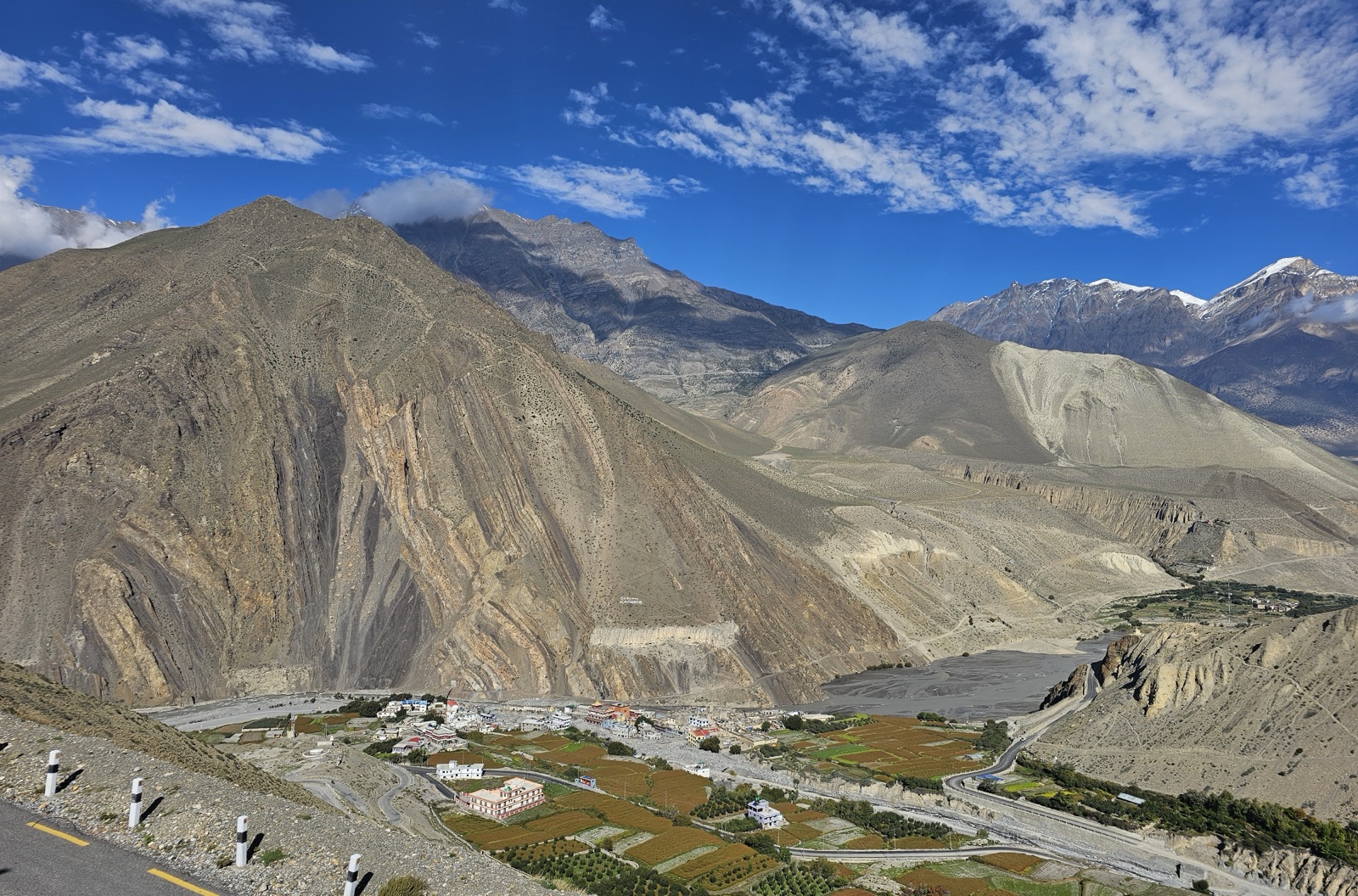
Jharkot Monastery is the standout sight of the fortress village of Jharkot, in the Muktinath valley of Mustang — a striking red-walled gompa of the Sakya school of Tibetan Buddhism, set on a ridge beneath a ruined fort at around 3,550m. Where our Jharkot village guide covers the settlement as a whole, this pin focuses on the monastery, its dzong and the village's traditional medicine.
The red gompa
The monastery's deep ochre-red walls glow against the dun-coloured hills, visible long before you reach the village. Inside, the gompa follows the Sakya tradition — one of the four main schools of Tibetan Buddhism — with butter lamps, painted thangkas and statues in a quiet, lamp-lit prayer hall. Above it stand the crumbling remains of the old dzong, the hilltop fort that once guarded the route to the sacred springs of Muktinath. Together, fort and monastery give Jharkot a fortified, layered silhouette that sets it apart from the plainer roadside settlements nearby.
Tibetan medicine
Jharkot is also known for a long-running Tibetan medicine (Amchi) clinic, where practitioners still prepare herbal remedies from Himalayan plants according to centuries-old methods. Travellers sometimes visit to learn about the tradition; it is a living part of the village rather than a museum piece, and a reminder of how deeply Tibetan culture is woven into this corner of Mustang. For more on the region's religious architecture, see our guide to the monasteries and gompas of Nepal.
Good to know
- Altitude: At about 3,550m the air is thin; take it slowly, especially if you have come up quickly by jeep, and read our altitude sickness in Nepal guide.
- Access: Jharkot is in freely accessible Lower Mustang on the standard Annapurna permit — no special permit needed.
- Etiquette: Remove shoes and hats inside the gompa, ask before photographing, and leave a small donation if you can.
- Nearby: Pair it with the sacred temple at Muktinath above and the quiet fortress hamlet of Jhong just east.
- Plan around it: See where it fits among the Upper Mustang highlights and the wider Mustang hub.
The red monastery of Jharkot is the kind of detail that makes the Muktinath circuit memorable — an atmospheric, working gompa beneath a ruined fort, where Tibetan Buddhism and Himalayan medicine carry on side by side in one small desert village.
Featured in
More what to do in Mustang

Frequently asked questions
What is Jharkot Monastery?+
Jharkot Monastery is a red-walled gompa of the Sakya school of Tibetan Buddhism, set on a ridge in the Muktinath valley below the ruined Jharkot fort. Its deep ochre-red walls stand out vividly against the bare desert hills around it.
Which Buddhist school does Jharkot belong to?+
Jharkot's monastery follows the Sakya tradition, one of the four major schools of Tibetan Buddhism. The village also runs a respected Tibetan (Amchi) medicine clinic, where traditional Himalayan herbal treatments are still practised.
Do you need a permit to visit Jharkot Monastery?+
No restricted-area permit is needed. Jharkot lies in freely accessible Lower Mustang on the standard Annapurna Conservation Area permit. The special Upper Mustang permit is only required north of Kagbeni. Confirm current rules before travelling.
How do you get to Jharkot Monastery?+
Jharkot is reached from Jomsom via Kagbeni by jeep or on foot, sitting a short distance below the Muktinath temple. The monastery is on the upper edge of the village, an easy stop on the way up to or down from Muktinath.