Connectivity · Nepal
Internet Speed in Nepal for Remote Work
Typical fibre and mobile Mbps in Nepal, video-call reliability, upload speeds and how to stay online with backup connections.
For remote work, internet speed in Nepal is good enough in the cities and unreliable in the wild — fibre broadband in Kathmandu and Pokhara typically delivers 30 to 100 Mbps, mobile 4G runs roughly 10 to 30 Mbps, and the real limitation is power stability rather than raw bandwidth. With a fibre connection plus a 4G SIM as backup, video calls, screen sharing and uploads all work fine. The trick is never relying on a single connection. This guide sits at the heart of our working remotely in Nepal collection.
Fibre broadband: the workhorse
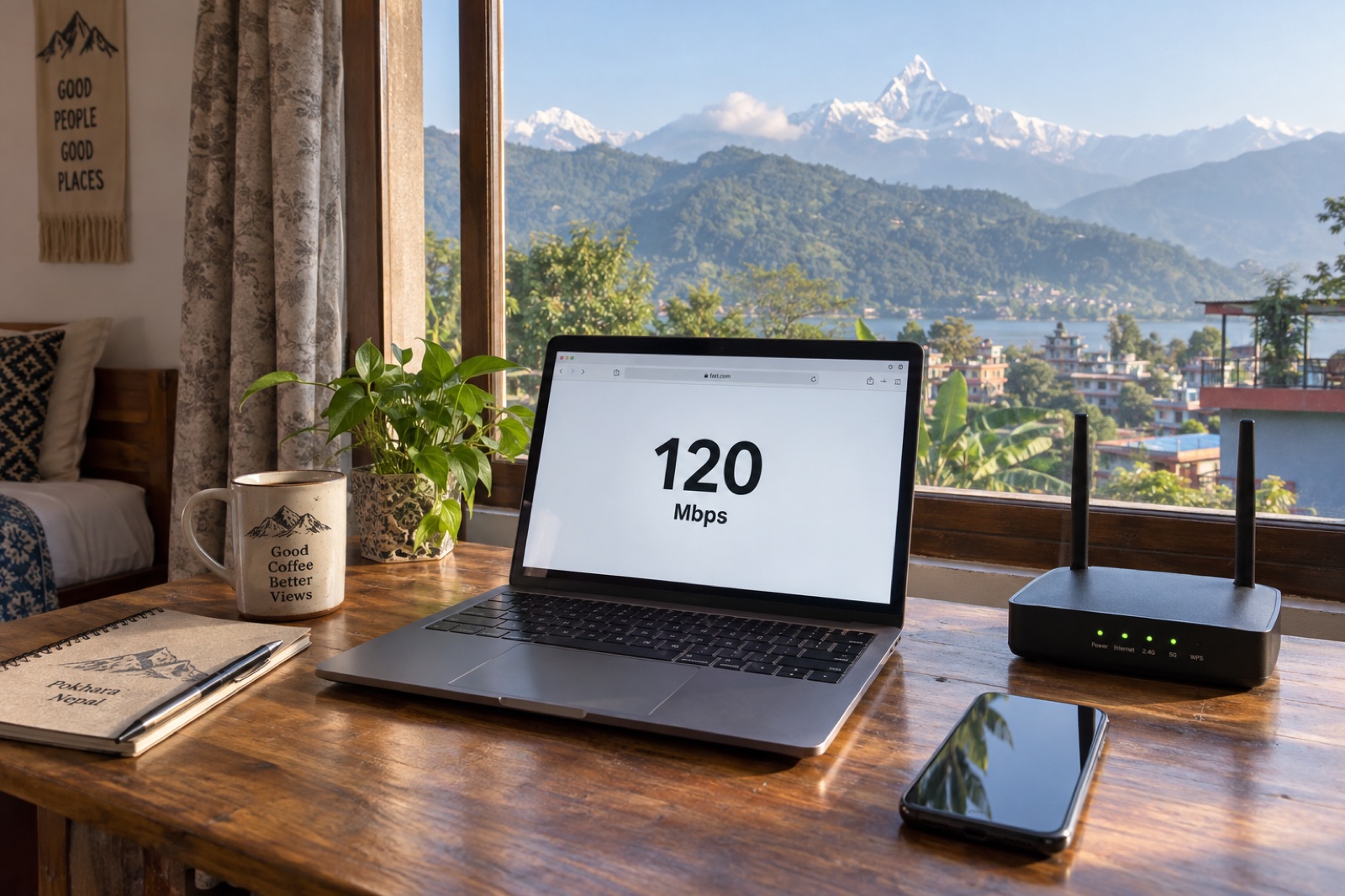
Most serious remote work in Nepal runs on fixed fibre. In Kathmandu and Pokhara, providers like WorldLink, Vianet, Subisu and Nepal Telecom's fibre offer residential and business plans, and the cafes, coworking spaces and mid-range hotels nomads actually use are usually wired into one of them.
Realistic download speeds in these settings land between 30 and 100 Mbps, occasionally higher on premium business lines. Upload speeds are typically lower but still usable — often 5 to 40 Mbps — which is enough for screen sharing, cloud sync and most file transfers. The honest caveat is that advertised speeds and real-world speeds diverge during peak evening hours, so always run a quick speed test before committing your morning to a venue.
Mobile data: your essential backup
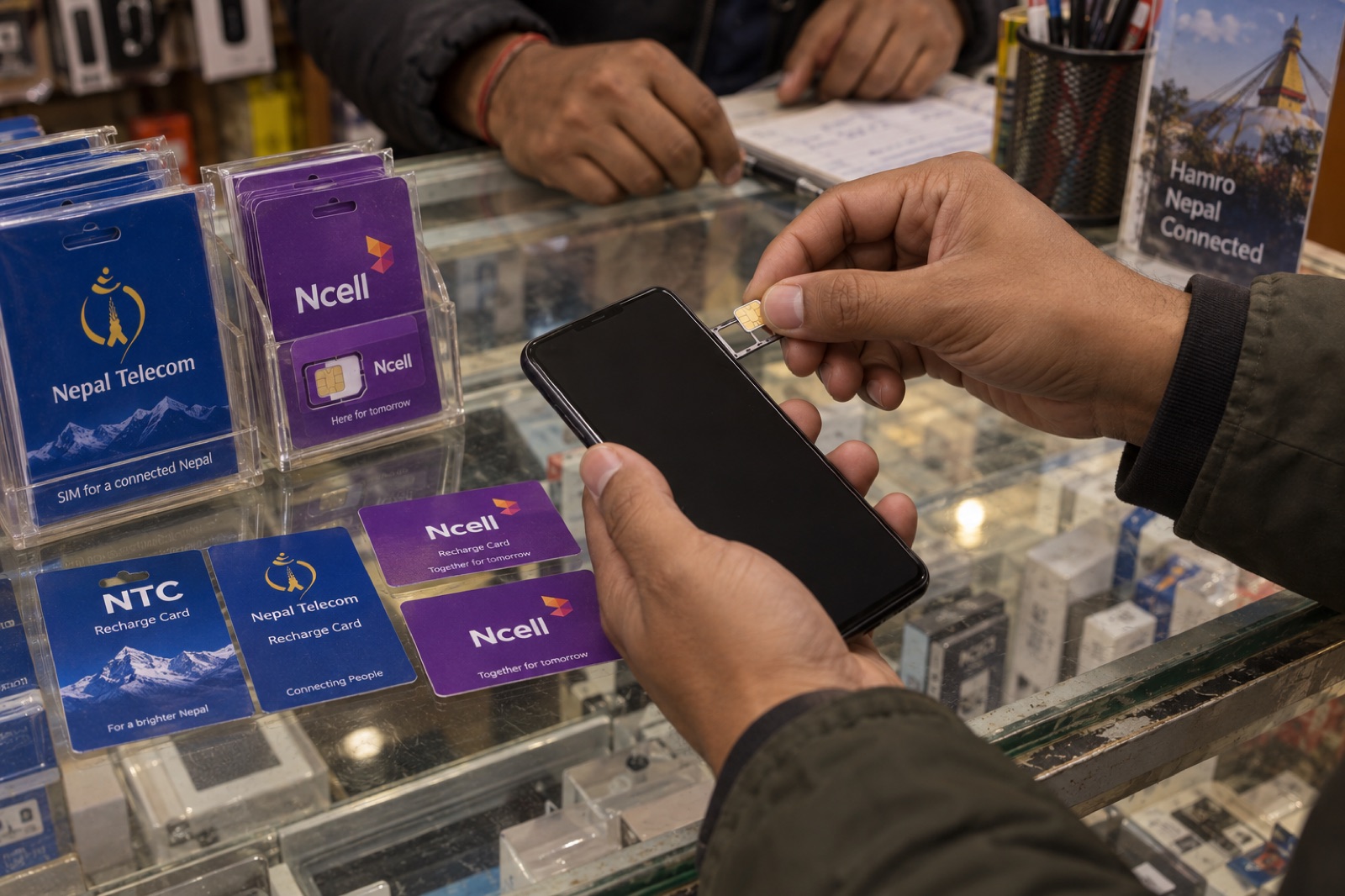
A local SIM is non-negotiable. Ncell and Nepal Telecom (NTC) both offer 4G across the cities and major towns, with typical real-world speeds of 10 to 30 Mbps where coverage is strong. NTC tends to have the broadest rural reach; Ncell is often faster in urban pockets. Data is cheap, and a topped-up SIM means a sudden wifi or power failure does not end your workday. For arrival-day coverage before you reach a shop, compare options in our best eSIM for Nepal guide, then read internet and SIM in Nepal for the full picture on plans and registration.
Video-call reliability
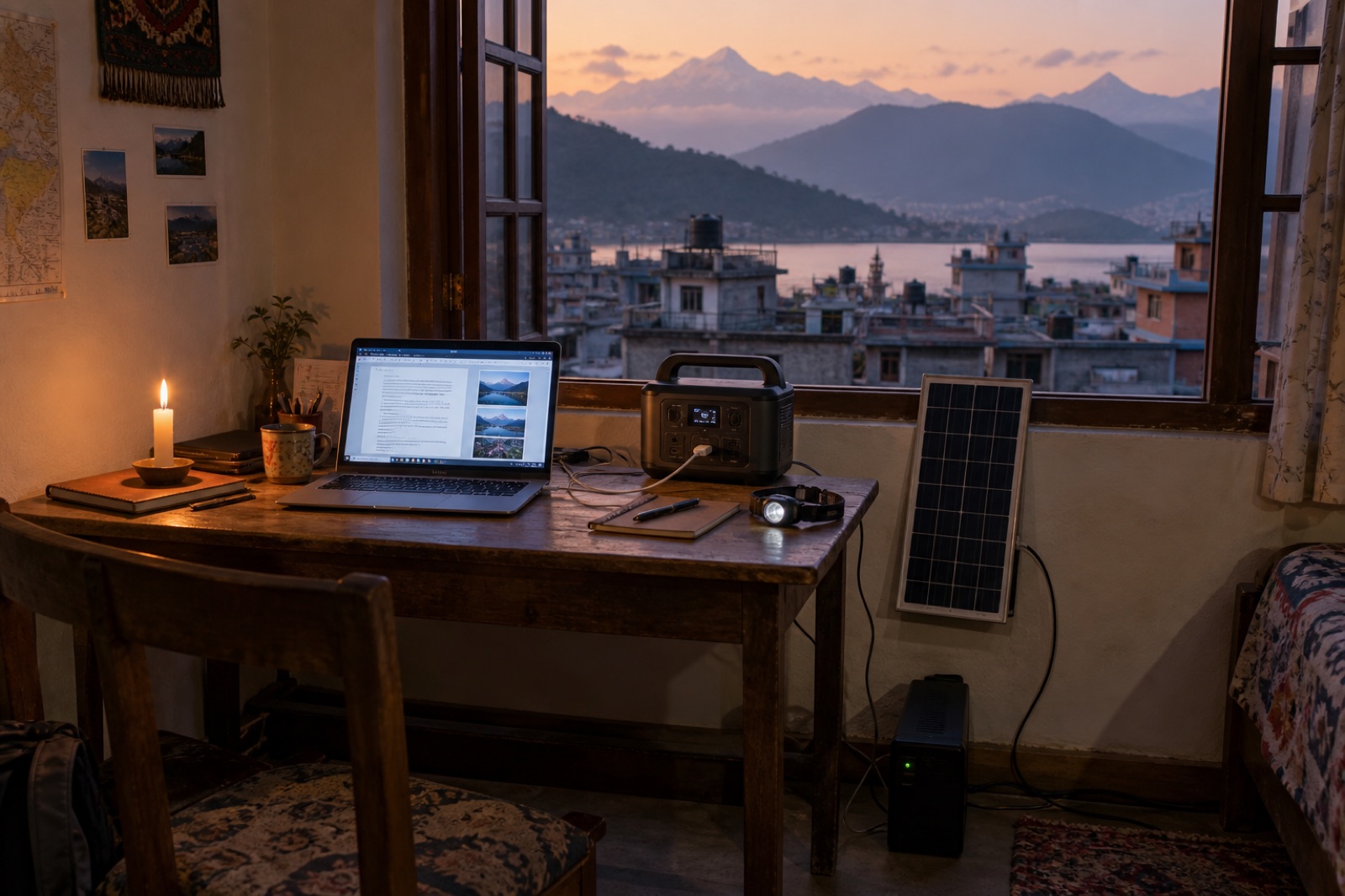
For calls, the bottleneck is rarely speed. Zoom, Meet and Teams all run smoothly on a solid fibre line or a strong 4G signal. What actually disrupts calls is a brief power cut killing the router or a momentary signal drop. The fix is behavioural: keep your phone hotspot ready as an instant failover, and favour workspaces with battery or inverter backup, as covered in our guide to power, load-shedding and backup.
Speeds outside the cities
Beyond Kathmandu and Pokhara, expect a sharp drop-off. Trekking regions and remote districts may have only patchy 3G or 4G, satellite-dependent connections at high lodges, or nothing at all. If your trip mixes work with trekking, plan to be offline on the trail and bank your deadlines for town days. Choosing where to base yourself matters as much as the connection itself, so weigh the best areas for digital nomads before you book.
Frequently asked questions
How fast is the internet in Nepal?+
Fibre broadband in Kathmandu and Pokhara cafes, coworking spaces and decent hotels typically delivers 30 to 100 Mbps download, with some plans higher. Mobile 4G usually runs 10 to 30 Mbps in cities and far less in remote areas. Upload speeds on fibre are often lower than download but generally adequate for calls and file transfers.
Is the internet in Nepal good enough for video calls?+
In cities, yes. Zoom, Google Meet and Teams calls work reliably on most fibre connections and on a strong 4G signal. The bigger risk is not raw speed but power cuts and brief drops, so always have a mobile-data backup ready to keep an important call alive if the wifi falters.
What upload speed can I expect in Nepal?+
On urban fibre, expect upload speeds anywhere from a few Mbps up to 30 or 40 Mbps depending on the plan and provider. That comfortably handles screen sharing and most cloud backups, though very large file uploads or 4K video work can feel slow. Test your specific cafe or apartment connection before relying on it.
Should I rely on wifi or mobile data in Nepal?+
Use both. Fibre wifi is your primary connection for speed and data caps, and a local 4G SIM from Ncell or Nepal Telecom is your backup during outages. This redundancy is the single most important habit for productive remote work in Nepal, where single points of failure are common.