Connectivity · Nepal
Power, Load-Shedding and Backup for Remote Work in Nepal
The real power situation for remote work in Nepal and how to build battery and mobile-data backup to keep working through cuts.
The honest power situation for remote work in Nepal is much improved but not bulletproof — the old era of scheduled all-day load-shedding has largely ended in the cities since hydropower supply grew, yet unplanned cuts from faults, storms and maintenance still happen, so backup is essential. Most outages now are short, but their unpredictability is exactly what threatens a live call or a deadline. Build redundancy and a power cut becomes a non-event. This guide is part of our working remotely in Nepal collection.
Load-shedding then and now
For years Nepal was synonymous with load-shedding — published schedules of hours-long daily blackouts that forced everyone to plan around the grid. As domestic hydropower generation increased, scheduled household load-shedding in Kathmandu, Pokhara and other cities has largely ended. That is a genuine quality-of-life improvement for remote workers.
The important caveat: unplanned outages persist. Storms, equipment faults, scheduled maintenance and local grid issues still cut power, usually for minutes to a couple of hours rather than a full day. Rural and remote areas — including many trekking regions — still see longer and more frequent cuts, so anyone basing themselves outside the cities should plan accordingly.
Why backup matters more than total downtime
Total downtime is now modest in the cities, but the timing is random. A two-minute cut in the middle of a client call or a large upload is disruptive out of all proportion to its length. The goal is therefore not to eliminate outages but to make them invisible to your work through layered backup.
Building your backup stack
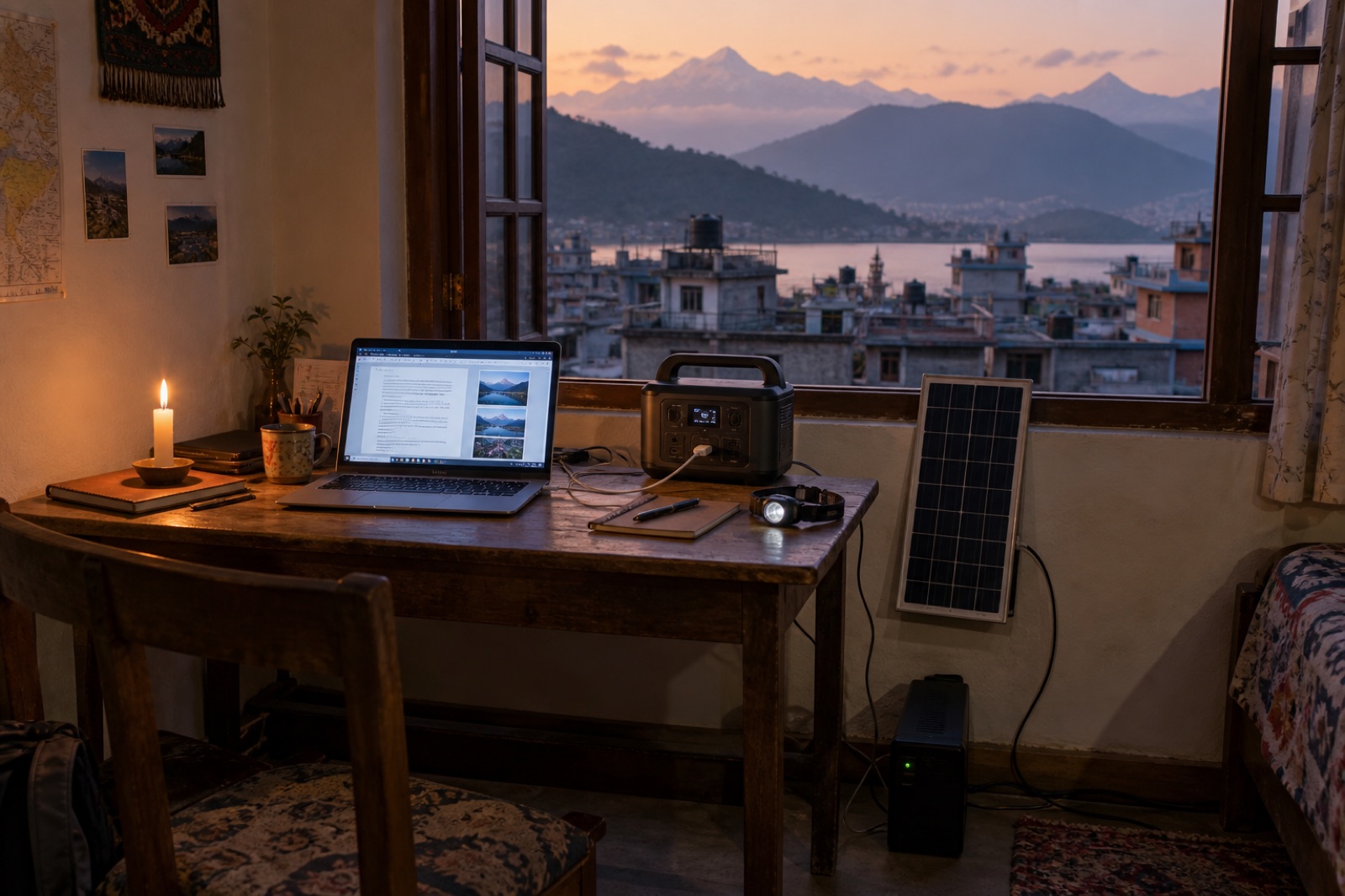
- Laptop battery: Keep it charged so a cut buys you time, not panic.
- Power bank: A high-capacity bank keeps your phone — and therefore your hotspot — alive.
- Mobile-data SIM: When the router loses power, a 4G hotspot from Ncell or Nepal Telecom keeps you online. This is the single most valuable habit; see internet and SIM in Nepal.
- Inverter or generator at your base: The biggest upgrade. An apartment, cafe or coworking space with an inverter battery keeps the wifi router and lights running through short cuts. Always ask before booking, as covered in our monthly stays and long-term rentals guide.
- UPS for a fixed desk: For longer stays, a small UPS that protects your router and laptop is a cheap, worthwhile buy.
Plugs, voltage and devices
Nepal runs on 230 V, 50 Hz, with Type C, D and M sockets common — bring a universal adapter, and check your charger handles 230 V. Voltage can fluctuate during grid stress, so a surge-protected strip is sensible for a fixed setup. Full details are in our power plugs and adapters for Nepal guide.
Putting it together
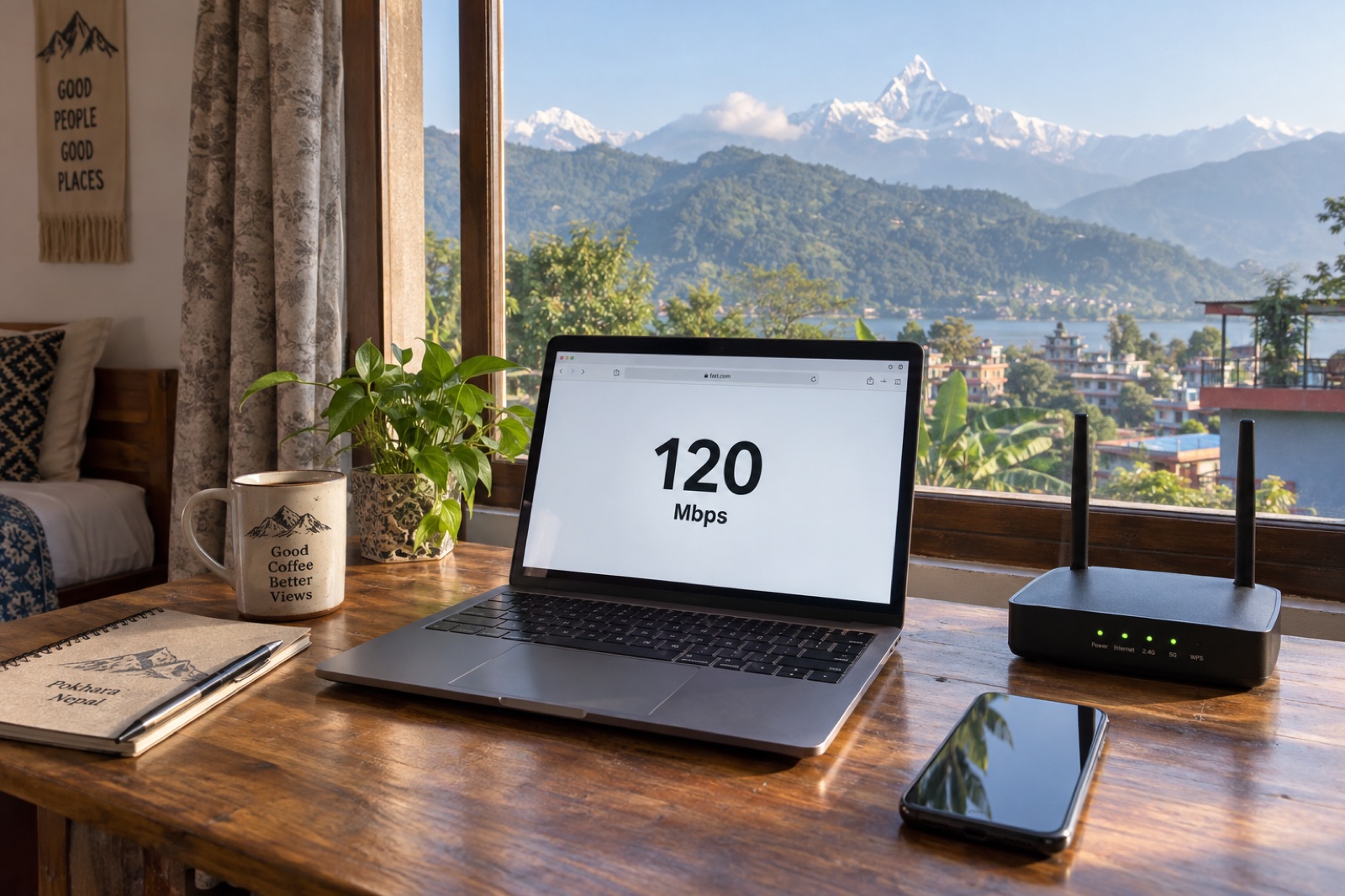
Pair a backed-up base with a 4G SIM and you can work through almost any outage. Combine this with realistic bandwidth expectations from our internet speed in Nepal guide, and the infrastructure that once made Nepal hard for remote work becomes a manageable footnote.
Frequently asked questions
Is there still load-shedding in Nepal?+
Scheduled load-shedding — the long, planned blackouts of the past — has largely ended for households in the cities since Nepal's hydropower supply improved. However, unplanned outages still happen due to faults, storms, maintenance and grid issues, so remote workers should still plan for occasional power cuts rather than assume constant supply.
How long do power cuts last in Nepal now?+
Most unplanned cuts in Kathmandu and Pokhara are short — minutes to a couple of hours — rather than the all-day blackouts of the past. Rural and remote areas see longer and more frequent outages. The unpredictability is the issue for calls and deadlines, which is why backup matters more than total downtime.
How do I keep working during a power cut in Nepal?+
Build redundancy. Keep your laptop charged, use a power bank for your phone, and rely on a 4G SIM hotspot when the wifi router loses power. Choose accommodation and cafes with inverter batteries or a generator so the wifi and lights stay on. With these in place, a brief cut barely interrupts your day.
Do I need a UPS or inverter for remote work in Nepal?+
For a fixed home base, a small UPS or inverter that keeps your router and laptop running through short cuts is a worthwhile investment for serious work. For shorter stays, a good laptop battery, a power bank and a mobile-data SIM usually suffice. Always confirm what backup your apartment or cafe already has.