Travel tips · Nepal
Power Plugs and Adapters for Nepal
Nepal runs on 230V with Type C, D and M sockets — here's the adapter to pack and how to charge on the trail.
Nepal runs on 230 volts at 50Hz and uses three socket types — Type C, Type D and Type M — so the simplest solution is a universal travel adapter that handles all three. Most phone, camera and laptop chargers are already dual-voltage and work with just an adapter, so a voltage converter is rarely needed. On the trail, charging gets pricier and patchier with altitude, making a power bank essential. Get this sorted before you fly and you will never be caught with a dead phone. For the broader picture, see our Nepal electricity, plugs and power cuts guide.
Sockets and plug types
Nepal's outlets accept three plug shapes, and you may meet any of them:
- Type C — two round pins, the common European style.
- Type D — three large round pins in a triangle, the old Indian style.
- Type M — three large round pins, the South African style.
Some sockets are multi-fit and grip more than one plug shape, but rather than gamble on what a given guesthouse has, pack a universal travel adapter. Add one to your bag using our full Nepal packing list.
Voltage: do you need a converter?
Nepal's supply is 230V, 50Hz. Check the small print on each of your chargers: almost all modern phone, tablet, camera and laptop chargers read "100–240V", meaning they are dual-voltage and need only a plug adapter. A voltage converter is only necessary for single-voltage appliances rated around 110–120V — typically older hair dryers, straighteners or travel kettles brought from North America. For those, it is usually easier to buy a dual-voltage version than to lug a heavy converter.
Power cuts and reliability
Nepal's grid has improved, but outages still happen, especially in the dry season and in rural areas. Hotels in the cities often run inverters or generators to cover gaps, while smaller places may simply go dark for a spell. Keep devices topped up when power is available, and read our Nepal electricity, plugs and power cuts guide for how to cope when the lights flicker.
Charging on the trek
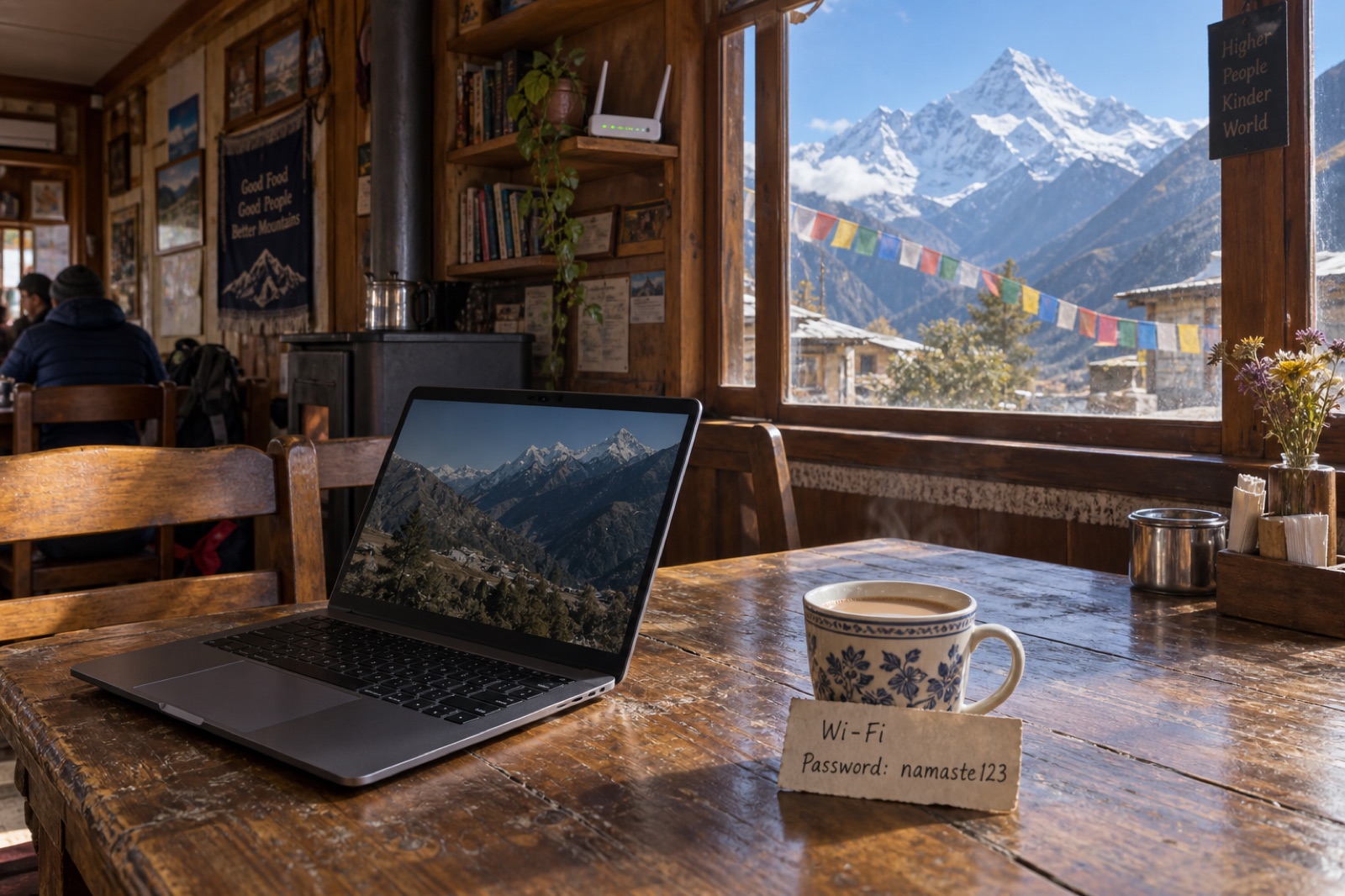
Up in the mountains, electricity is a service you pay for. Most teahouses offer charging, but commonly for a per-hour or per-device fee that climbs with altitude, and supply can be intermittent. To stay powered:
- Carry a power bank and charge it whenever you reach mains power.
- Consider a small solar charger on remote routes.
- Bring spare camera batteries, as cold drains them fast at altitude.
Plan your electronics around your route with our Nepal trekking guide, pair this with the wifi in Nepal guide for staying connected, and see the Nepal practical travel essentials collection for the rest of the day-to-day basics.
Frequently asked questions
What plug adapter do I need for Nepal?+
Nepal uses Type C, Type D and Type M sockets, so a universal travel adapter that covers all three is the safest choice. Type C is the two round-pin European style, while Type D and Type M both have three large round pins. Some sockets are multi-fit and accept several plug shapes, but a universal adapter spares you the guesswork wherever you stay.
What voltage and frequency does Nepal use?+
Nepal supplies 230 volts at 50Hz. Most modern phone, tablet, camera and laptop chargers are rated for 100–240V, so they work directly with just a plug adapter. Only single-voltage devices with heating elements — some hair dryers, straighteners or travel kettles from 110V countries — would need a voltage converter, which is rarely worth carrying.
Do I need a voltage converter in Nepal?+
Usually not. Check the label on each charger: if it reads 100–240V it is dual-voltage and needs only a plug adapter. Bring a converter only for older single-voltage appliances rated around 110–120V, and even then it is often easier to buy a cheap dual-voltage version of the device instead.
How do I charge devices while trekking in Nepal?+
Most teahouses offer charging, but often for a small per-hour or per-device fee that rises with altitude, and supply can be unreliable. Carry a power bank, charge fully whenever you have mains power, and consider a small solar charger on remote routes. Bring spare camera batteries, since cold drains them quickly at altitude.