Connectivity · Nepal
WiFi in Nepal: Hotels, Cafes and on the Trek
Wifi is solid in Nepal's city hotels and cafes but patchy on the trail — here's where to find it and when to use data.
WiFi is reliable and free in Nepal's city hotels, guesthouses and cafes, but patchy and usually paid on the trekking trail. In Kathmandu, Pokhara and other tourist hubs you can count on wifi for messaging, browsing and email, while video calls and big uploads are hit or miss. On the trail, teahouses increasingly sell wifi by the day, but speeds fade with altitude, so most trekkers lean on a local SIM. The smart approach is to combine wifi with mobile data — see our internet and SIM cards in Nepal guide for the full picture.
WiFi in hotels and guesthouses
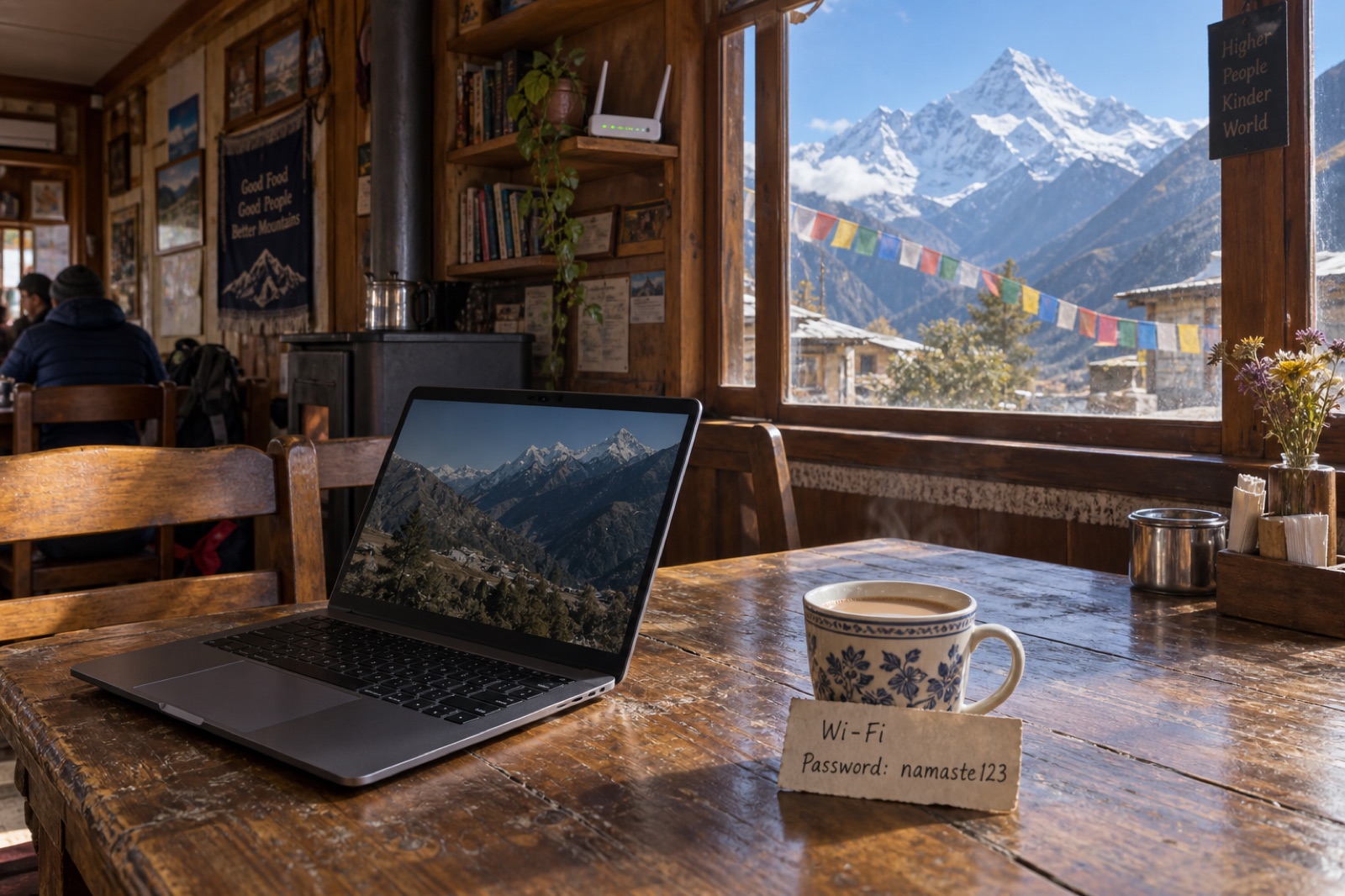
Across the cities and tourist areas, free wifi is standard in hotels, guesthouses and hostels. It is generally fine for the everyday — chatting, email, social media and light browsing — though speeds depend on the property and the time of day, and budget places can be slow. For anything bandwidth-heavy, such as work video calls or large uploads, it pays to test the connection and keep mobile data as a backup.
Cafes and coworking
Cafes and restaurants in Thamel, Lakeside and other hubs almost all offer free wifi, making them easy spots to catch up online over a coffee. Remote workers will find dedicated coworking spaces in Kathmandu and Pokhara with sturdier connections and backup power, which matters during outages — keep your devices charged using the tips in our plugs and adapters for Nepal guide.
WiFi on the trek
In the mountains, wifi is a paid extra and the experience varies a lot:
- Teahouse wifi is increasingly sold by the day or device, often through a prepaid system, on the Annapurna and Everest routes.
- Speeds drop with altitude, and connections can cut out entirely on high or remote sections.
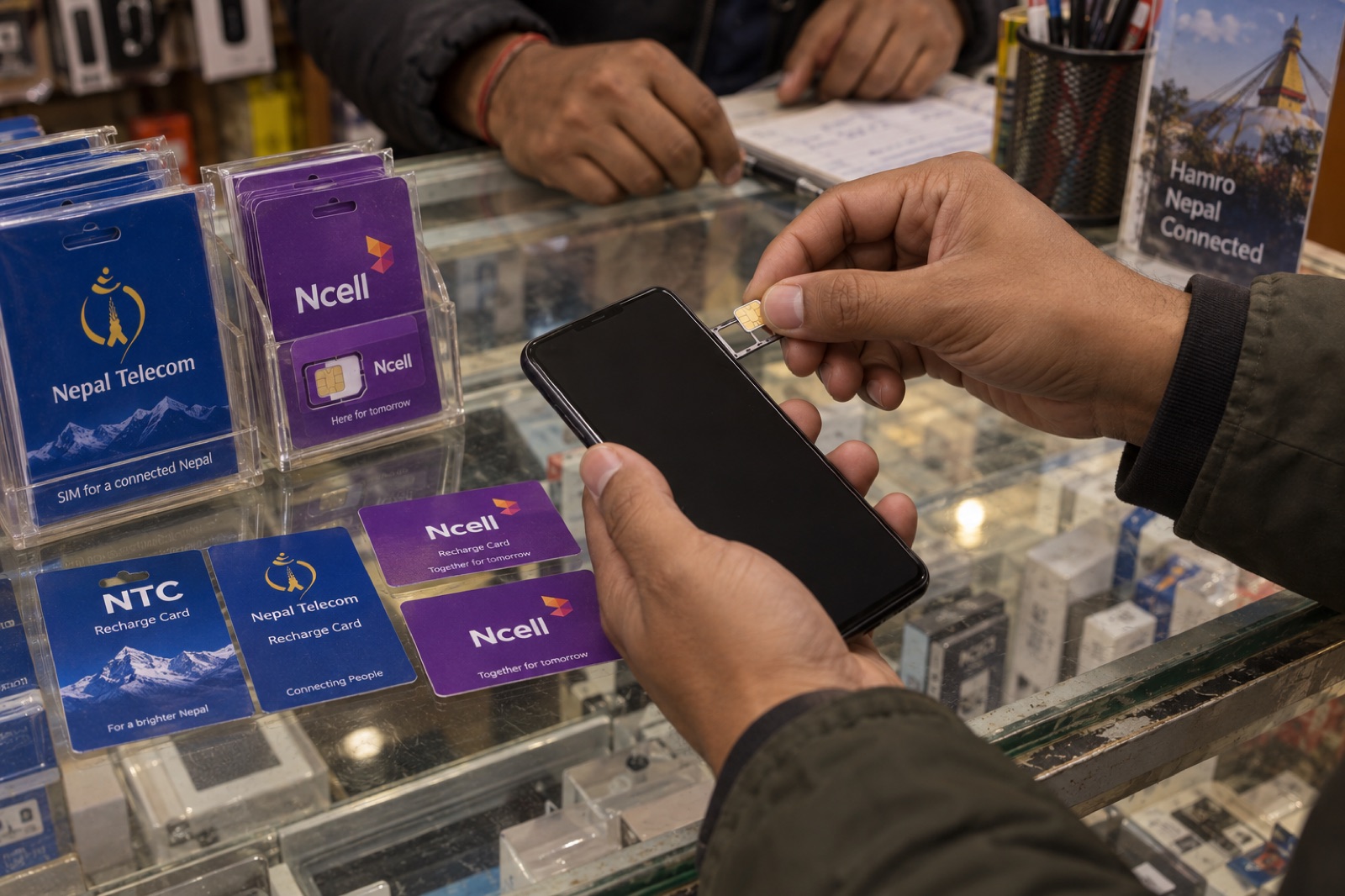
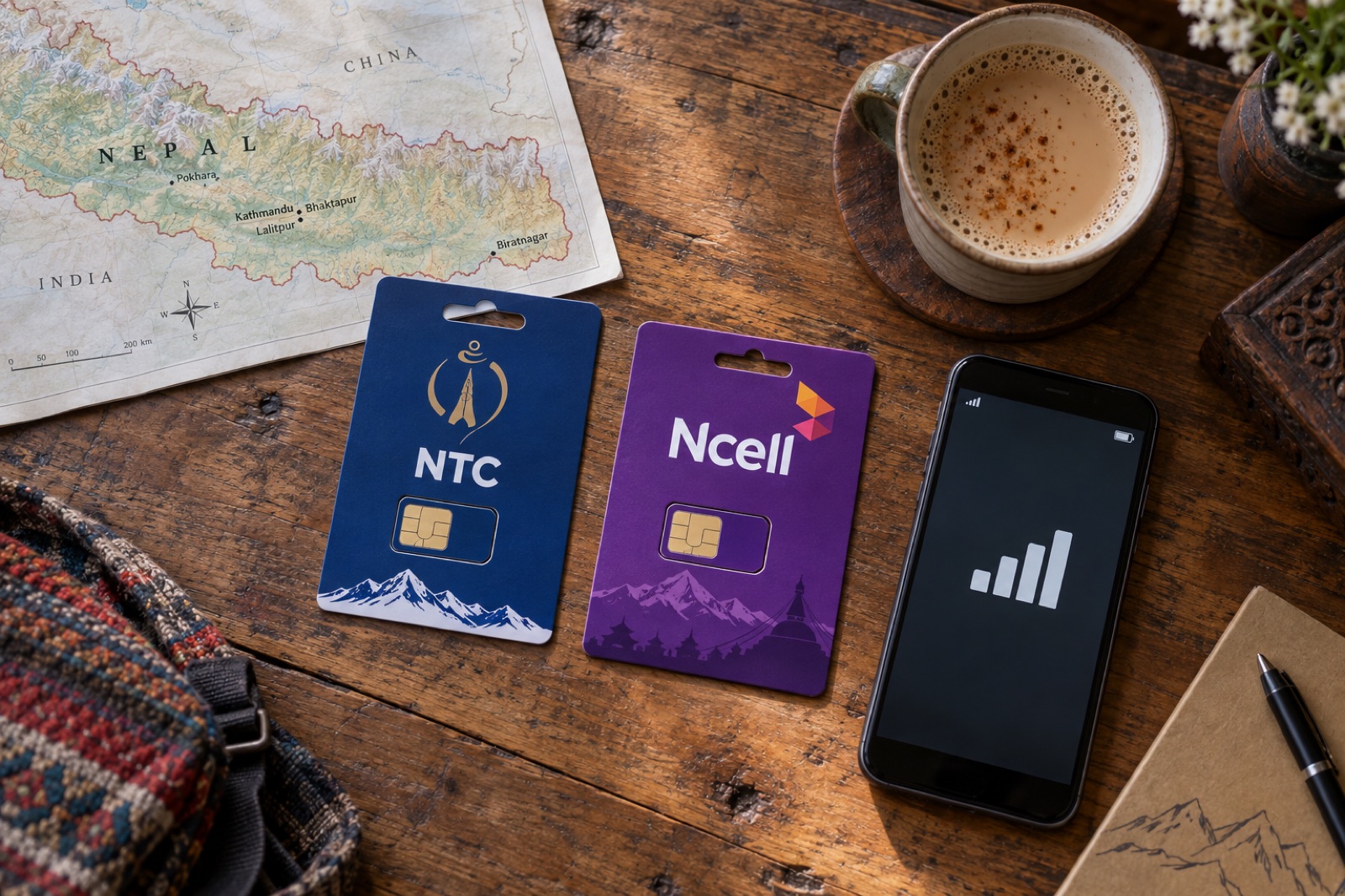
- Mobile data on NTC frequently outperforms teahouse wifi at altitude, which is why many trekkers carry a local SIM.
Plan your connectivity around your route with our Nepal trekking guide, and download maps and content before you set off.
WiFi versus mobile data
The winning strategy is to use both. Lean on free city wifi for the bulk of your browsing to save data, and keep a local SIM or eSIM for maps, ride-hailing and messaging when you are on the move or where wifi is weak — our best eSIM for Nepal guide compares the options. For the rest of the day-to-day essentials, from power to water, browse the Nepal practical travel essentials collection.
Frequently asked questions
Is wifi widely available in Nepal?+
In the cities and tourist areas, yes. Hotels, guesthouses, restaurants and cafes across Kathmandu, Pokhara and other hubs almost always offer free wifi, and it is generally fine for messaging, browsing and email. Speeds vary by place and time of day, and video calls or large uploads can be unreliable, so a local SIM or eSIM is a useful backup for heavier or on-the-move use.
Is there wifi while trekking in Nepal?+
Increasingly, yes, but it is paid and patchy. Many teahouses on the Annapurna and Everest routes sell wifi by the day or device, often via a prepaid system, and speeds drop as you climb. Free, fast wifi is rare on the trail, so most trekkers rely on a local SIM with NTC's wider high-altitude coverage and treat wifi as a bonus.
Should I rely on wifi or mobile data in Nepal?+
Use both. City wifi is great for the bulk of your browsing and saves data, while a local SIM or eSIM keeps you online for maps, ride-hailing and messaging when you are out and about or where wifi is weak. For trekking, mobile data on NTC often beats teahouse wifi for reliability at altitude.
How fast is the internet in Nepal?+
In cities, fibre and 4G deliver perfectly usable speeds for messaging, browsing, streaming and most video calls, though performance dips at busy times and in budget accommodation. Out in rural areas and on high trekking routes, connections are slower and less stable, so set expectations lower and download maps and content in advance.