Things to do · Chitwan
The Best Time to Visit Chitwan
October to March is best for cool weather and wildlife — here's what each season offers.
The best time to visit Chitwan is October to March, when the Terai is cool and dry and the cut grasslands make wildlife easy to spot. Here's how the seasons break down so you can plan around the weather and your chances of seeing rhinos and tigers.
October to December (autumn)
The classic high season. After the monsoon, skies clear, temperatures are pleasant and the jungle is green. Excellent for a safari in Chitwan National Park, canoe trips and birdwatching, with comfortable days and cool nights. This is also the busiest stretch, so book lodges and guided activities well ahead if you're travelling in the peak autumn weeks.
January to March (winter to early spring)
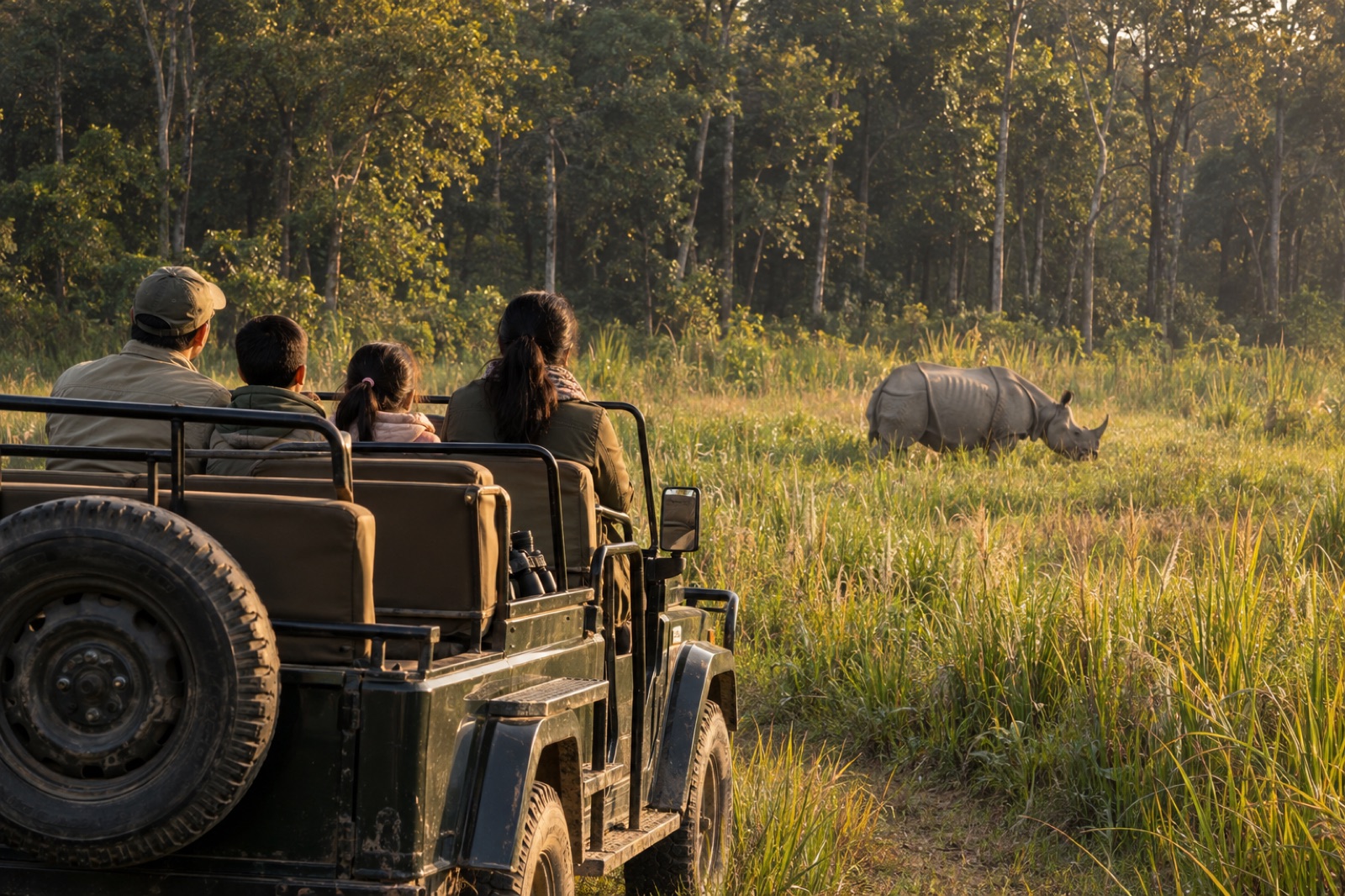
Cool, dry and arguably the best for wildlife. By February and March the tall elephant grass is cut, opening up sightlines so rhinos and deer are much easier to see. Mornings can be misty and chilly, so pack a warm layer for early canoe trips and jeep safaris — the mist usually lifts by mid-morning.
April to May (hot, dry season)
Very hot — often above 35°C — but animals concentrate around shrinking waterholes, so sightings can still be rewarding if you brave the early-morning heat. The pattern that works best is to start at dawn, rest through the midday heat, then head back out in the late afternoon.
June to September (monsoon)
Hot, humid and wet, with possible flooding and trail closures. Lodges are cheapest and the landscape is lush, but it's the toughest time for safaris. Rivers run high, so canoe trips and jungle walks may be cancelled at short notice, and leeches are common on the trails.
How the season shapes your safari
Your experience changes a lot with the calendar. In the cool months you get long, comfortable game drives and clear river views; in the hot months you trade comfort for animals clustering around water. Grass height matters most of all — Chitwan's elephant grass grows tall through the monsoon and is cut back in late winter, which is why late-season visits give you the best sightlines for spotting rhinos, deer and, if you're lucky, a tiger.
Festivals and cultural timing
For a cultural angle, an annual elephant festival is usually held in Sauraha around late December, coinciding with the start of the high season. Tharu communities also perform cultural programmes throughout the year, so you can pair any season with a Tharu cultural show or a village visit rather than timing your trip around a single event.
What to pack for the season
Bring neutral, muted clothing for safaris, a warm layer for misty winter mornings, and lightweight, breathable clothes plus sun protection for the hot months. Insect repellent is worth carrying whatever the season, and a light waterproof is essential if you travel during the monsoon.
Getting there and planning your stay
Most visitors reach Chitwan by road from Kathmandu or Pokhara, typically a few hours by tourist bus or private vehicle, arriving into the main tourist hub of Sauraha. Whenever you go, try to build in at least two nights so you can fit in both a morning and an afternoon of activities and improve your odds of good wildlife sightings.
Once you've picked your dates, line up the best things to do in Chitwan and a stay from our best jungle lodges in Chitwan guide. Travelling with little ones? See our Chitwan with kids guide, or browse the full Chitwan travel guide.
Frequently asked questions
What is the best month to visit Chitwan?+
October to March is the sweet spot, with cooler, drier weather and the best wildlife viewing. February and March are especially good once the tall grass has been cut, making rhinos and deer easier to spot.
Is Chitwan worth visiting in the monsoon?+
It's possible but harder — June to September is hot, humid and prone to flooding, which can close trails and limit safaris. Lodges are cheaper and the jungle is lush, but wildlife viewing is tougher.
When is it too hot to visit Chitwan?+
April and May are the hottest months in the Terai, often above 35°C. Wildlife still gathers near water, so sightings can be good, but midday safaris are uncomfortable in the heat.