Things to do · Janakpur
Vivah Mandap
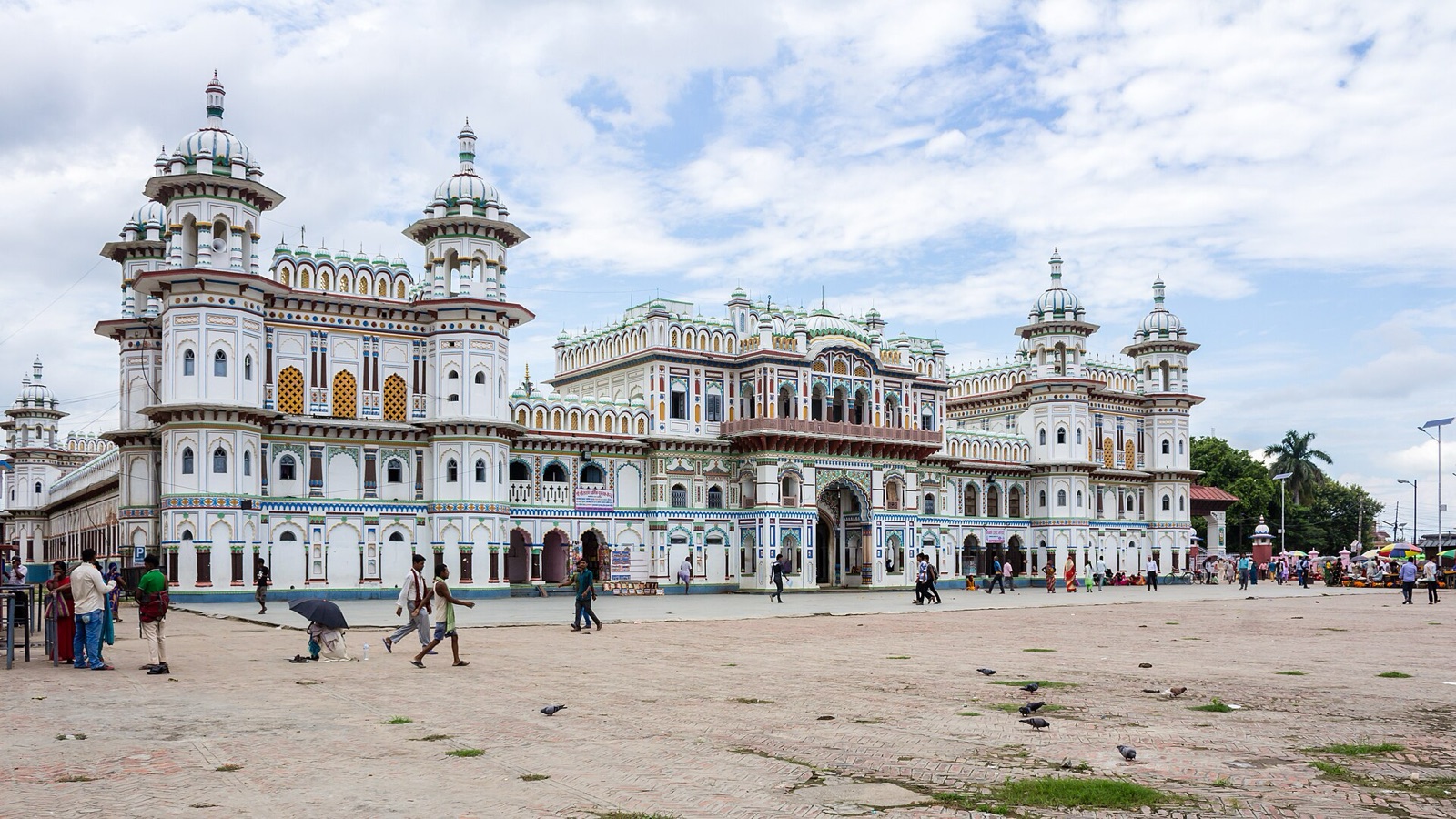
The marble wedding pavilion beside Janaki Mandir, marking the legendary spot where Sita and Rama were wed.
- Address
- Vivah Mandap, beside Janaki Mandir, Janakpur, Madhesh Province
Vivah Mandap is the marble wedding pavilion that marks the spot where Sita is believed to have married Rama — one of the most sacred places in all of Janakpur. It stands a short walk southwest of the Janaki Mandir, and the two are almost always visited together.
What to expect
The pavilion is built in pale marble with sturdy pillars, elegant arches and domes that echo the grand temple beside it. At its centre, the legendary wedding is depicted in sculpture: idols of Sita and Rama sit together on a raised pedestal, while sages and the couple's parents are seated on parallel pedestals facing one another, recreating the moment the marriage was sealed.
For pilgrims, this is not just a monument but the literal setting of one of the most beloved episodes of the Ramayana. The mandap fills with devotees, lamps and song, and the atmosphere is at its most intense during the festival season.
The story behind it
Janakpur is revered as the ancient kingdom of Mithila, ruled by King Janaka, and as the place where his daughter Sita grew up. The marriage of Sita to Rama is one of the central events of the Ramayana, and Janakpur preserves the geography of that story in stone and water: the ground where the bow was broken, the ponds where the couple are said to have bathed, and here, the mandap where the wedding itself took place. Visiting the pavilion gives the abstract legend a precise location, which is exactly what draws pilgrims from across Nepal and India. Many circle the structure, pause before the wedding idols and leave offerings, treating the visit as a blessing for their own marriages and families.
Good to know
- Etiquette: Cover your shoulders and knees and remove your shoes before entering. It is an active shrine, so be quiet and respectful around those praying.
- When to go: Early morning or evening for a calmer visit; during Vivah Panchami for the full devotional spectacle, when the wedding is re-enacted with processions across the city.
- How long: Fifteen to twenty minutes is enough to take in the pavilion, though many linger to watch the worship.
How to find it
The Vivah Mandap sits within the Janaki Mandir complex on its southwestern side, in the heart of old Janakpur. The whole area is compact and walkable, and cycle-rickshaws can drop you at the temple gates if you are coming from your hotel.
The pavilion pairs naturally with the sacred Dhanush Sagar and Ganga Sagar ponds a few minutes away, and with the bold folk painting at the Janakpur Women's Development Center. To understand the festival that brings the mandap alive, read our guide to Chhath and Vivah Panchami in Janakpur.
The story enshrined here is the same one celebrated at the marble Janaki Mandir next door — see how the two fit together in our roundup of more things to do in Janakpur.
Featured in
More what to do in Janakpur


Frequently asked questions
What is the Vivah Mandap in Janakpur?+
The Vivah Mandap is a marble wedding pavilion just southwest of the Janaki Mandir, marking the spot where Sita is believed to have married Rama. Inside, idols of the couple sit on a raised pedestal with sages and parents seated around them, recreating the legendary wedding scene.
How is the Vivah Mandap different from the Janaki Mandir?+
The Janaki Mandir is the grand 1910 marble temple to Sita, while the Vivah Mandap is a smaller, separate pavilion beside it dedicated specifically to the marriage of Sita and Rama. Most visitors see the two together, as they stand only a short walk apart.
Is there an entry fee for the Vivah Mandap?+
There is no charge to enter the Vivah Mandap. As an active place of worship, visitors should dress modestly, remove their shoes before going inside and be respectful of pilgrims paying their respects to the wedding idols.
When is the Vivah Mandap busiest?+
It is busiest during Vivah Panchami in late November or early December, when the wedding of Sita and Rama is re-enacted across the city and the pavilion becomes a focal point. Mornings and evenings are quieter at other times of year.