Things to do · Mustang
Lower Mustang & Jomsom
The villages around Jomsom on the Kali Gandaki — Marpha, Lubra, Dhumba Lake and old Thini, all freely accessible.
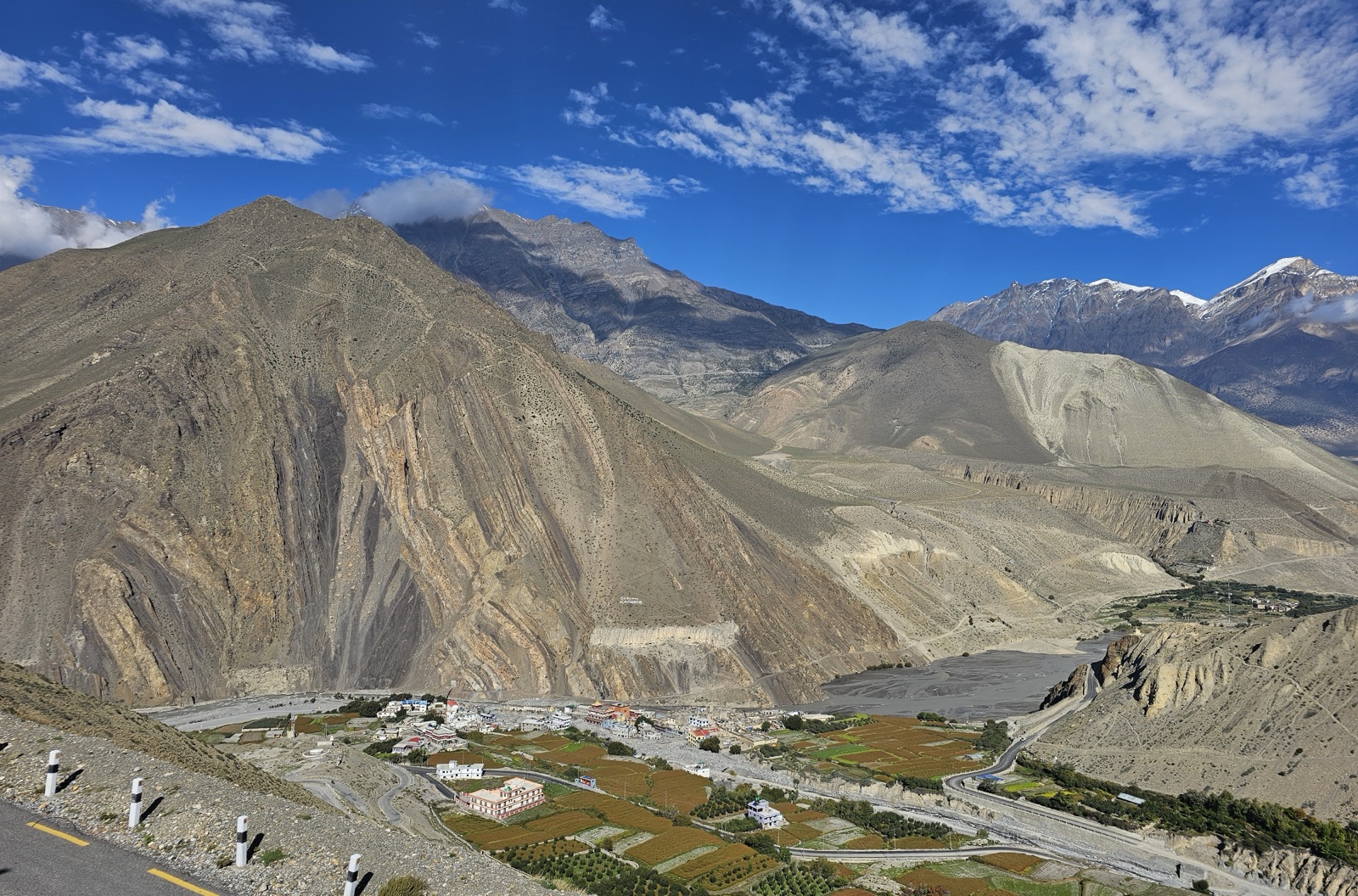
Lower Mustang is the freely accessible southern half of Mustang, strung along the Kali Gandaki between the Annapurna and Dhaulagiri massifs and centred on the windy hub of Jomsom. Within a short walk or jeep ride of town lie whitewashed Thakali villages, apple orchards, a hidden turquoise lake and centuries-old gompas — all reachable on the standard Annapurna permit, with no restricted-area paperwork. This cluster pulls the headline villages and sights around Jomsom into one place so you can plan a two-to-four-day loop.
The short answer
Base yourself in Jomsom at 2,700m, the airstrip and jeep hub on the gorge floor. From there the apple capital of Marpha lies a short way south, the rare Bon village of Lubra sits up a red-rock side canyon, the quiet Dhumba Lake hides in a glacial cradle below Nilgiri, and the old village of Thini holds one of the area's oldest monasteries. Tap any pin below for what to expect, how to get there and what it costs. Beyond these, the medieval gateway of Kagbeni and the sacred temple at Muktinath mark the route north.
Why these villages
What unites Lower Mustang is Thakali culture and the old salt-trade route up the Kali Gandaki. The Thakali were traders who carried Tibetan salt south and Nepali grain north, and their neat, prosperous villages — flat-roofed stone houses, flagstone lanes and watered orchards — still line the valley. Layered over this trading heritage is a deep religious patchwork: Tibetan Buddhist gompas in most villages, and at Lubra one of Nepal's last living Bon communities, keeping the pre-Buddhist faith of the Himalaya. Add the rain-shadow desert scenery — eroded ochre cliffs, prayer flags and snow peaks rearing overhead — and even short village walks feel like crossing into the Tibetan plateau.
How to combine them
Most of these sights link into a single, easy loop on foot or by jeep. A classic two-to-three-day plan flies or drives into Jomsom, spends a night in Marpha among the orchards, and uses day walks to reach Dhumba Lake and Thini, both just across the valley. Lubra makes a quiet half-day detour off the main route between Jomsom and Kagbeni. With more time, continue north from Kagbeni up to Muktinath, or carry on into the restricted high desert. For the bigger picture and the routes that string these together, see more things to do in Mustang and the full Mustang itinerary.
Getting here and when to go
Lower Mustang is reached from Pokhara, either on the short, scenic flight into Jomsom or by jeep up the rough Kali Gandaki road through Beni and Tatopani. Because Mustang sits in the Himalayan rain shadow, it stays dry while the rest of the country is under monsoon, so the season is unusually long — broadly March to November, with spring and autumn giving the most settled weather. Flights and longer walks are best done in the calm of early morning before the famous afternoon valley wind builds. For the wider picture on seasons, see our guide to the best time to visit Nepal.
Good to know
- Permits: Lower Mustang needs only the standard Annapurna Conservation Area permit and a TIMS card — no special permit south of Kagbeni.
- Base: Jomsom for services and transport, Marpha for charm; many travellers split nights between the two.
- Up to the hub: See where this fits in the wider Mustang travel guide and its arid, Tibetan-influenced north.
- Going further: Continue north to Kagbeni and the temple at Muktinath, or into Upper Mustang on a special permit.
Whether you have a single full day or several, the villages around Jomsom reward slow travel — an apple orchard here, a turquoise lake there, a Bon monastery up a side canyon — all in one of the most accessible corners of the trans-Himalaya.
Popular in Mustang
More in Mustang

Frequently asked questions
What is Lower Mustang?+
Lower Mustang is the freely accessible southern half of Mustang district, running up the Kali Gandaki from around Beni to Kagbeni. Centred on the hub town of Jomsom, it covers Thakali villages, apple orchards and high-desert scenery, all visitable on the standard Annapurna Conservation Area permit without the special Upper Mustang permit.
Do you need a special permit for Lower Mustang?+
No. Lower Mustang — Jomsom, Marpha, Lubra, Thini, Dhumba Lake and Kagbeni — lies within the Annapurna Conservation Area and only needs the standard ACAP entry permit and a TIMS card. The separate, more expensive restricted-area permit applies only north of Kagbeni in Upper Mustang. Confirm current rules before you travel.
How many days do you need around Jomsom?+
Two to four days is enough to enjoy the villages around Jomsom. Many travellers base themselves in Jomsom or Marpha and make day trips to Dhumba Lake, Thini and Lubra, then continue to Kagbeni and Muktinath. With limited time, a single full day still covers Marpha and a nearby village walk.
Which Lower Mustang village is best to stay in?+
Jomsom has the most services and is the transport hub, while whitewashed Marpha is the prettiest overnight and the centre of apple country. Quieter Kagbeni suits travellers heading toward Muktinath. Many people split nights between Jomsom or Marpha and Kagbeni to see the most on foot.