
Things to do · Nepal
Famous Hindu Temples of Nepal
Nepal's great Hindu temples — Pashupatinath, Muktinath, Manakamana and the sacred shrines of the valley.
Nepal's most famous Hindu temples form a sacred map across the country, from the cremation ghats of Pashupatinath in Kathmandu to the high, windswept shrine of Muktinath in Mustang and the wish-granting hilltop of Manakamana in Gorkha. Around these three great sites cluster the valley's ancient Vishnu and Shiva temples — Changu Narayan, Budhanilkantha, Dakshinkali, Doleshwor Mahadev and Sankhu Vajrayogini — each a living place of devotion rather than a museum piece. This guide ties them together so you can plan a pilgrimage route or simply understand why each one matters.
The short answer
If you visit only one temple, make it Pashupatinath, Nepal's holiest Hindu shrine, the UNESCO-listed Shiva temple on the Bagmati River where pilgrimage, ritual and cremation continue every day. For the mountains, the 3,800-metre pilgrimage temple of Muktinath in Mustang is sacred to Hindus and Buddhists alike, famous for its 108 water spouts. For an easy, scenic day trip, ride the cable car to the wish-fulfilling Manakamana temple in Gorkha. To understand the faith behind them all, read the overview of Hinduism in Nepal.
Temples of Kathmandu and the Bagmati
The Kathmandu Valley is the heart of Hindu Nepal. At its centre stands Pashupatinath, where the Bagmati aarti and the riverside cremation ghats make for one of the most intense religious experiences in Asia. Just north of the city, the black-stone Sleeping Vishnu at Budhanilkantha reclines in a recessed water tank at the foot of Shivapuri — a fifth-century carving and one of the valley's most striking images. To the south, the fierce mother goddess Kali is worshipped at the Dakshinkali temple below Pharping, a major animal-sacrifice shrine set in a forested gorge.
Ancient Vishnu temples of the valley
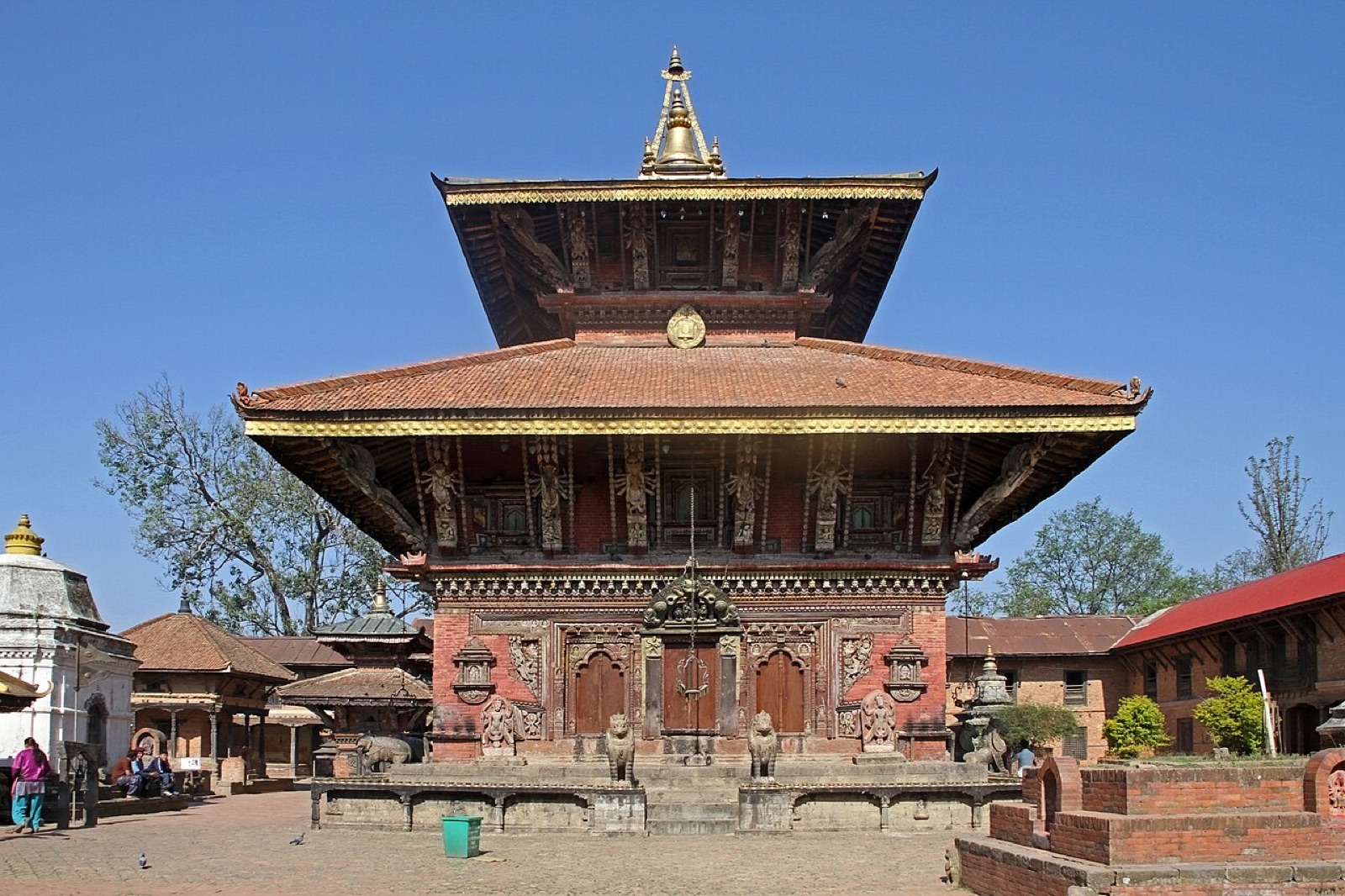
Nepal's oldest temples honour Vishnu, the preserver. On a wooded ridge near Bhaktapur, the ancient hilltop Vishnu temple of Changu Narayan is counted among the oldest in the country and forms part of the Kathmandu Valley UNESCO listing, its courtyard packed with Licchavi-era stone sculpture. The Sleeping Vishnu at Budhanilkantha is its companion in devotion, the two together mapping the valley's deep Vaishnava roots.
Shiva and the mother goddess
Shiva is everywhere in Nepal, above all at Pashupatinath, but pilgrims also travel east of Bhaktapur to the Doleshwor Mahadev temple, the lost head of Kedarnath, believed to complete the great Kedarnath shrine in India. The valley's tantric goddess tradition centres on shrines like Dakshinkali and the Vajrayogini temple above Sankhu, an ancient hillside complex sacred to both Hindus and Buddhists in the valley's distinctive shared way.
Mountain pilgrimage
Beyond the valley, the great journeys lead to Muktinath, set high in the arid Kali Gandaki valley behind the Annapurnas, and to Manakamana, whose ridge-top goddess draws crowds up Nepal's most famous cable car. Both reward travellers as much for the landscape as for the shrine.
Planning a temple trip
Most valley temples can be combined over two or three days by taxi; the mountain shrines need their own itineraries. Time your visit to a festival for the fullest experience, and check the best time to visit Nepal and the guide to getting around Nepal before you set out. Dress modestly, remove shoes where asked, and observe quietly — these are working places of worship first and sights second.
Popular in Nepal


More in Nepal

Frequently asked questions
What is the most important Hindu temple in Nepal?+
Pashupatinath in Kathmandu is Nepal's holiest Hindu temple, a UNESCO World Heritage site dedicated to Shiva on the banks of the sacred Bagmati River. It is the spiritual centre of Hindu Nepal, famous for its riverside cremation ghats, ash-covered sadhus and the atmospheric evening Bagmati aarti.
Which Hindu temples in Nepal can non-Hindus enter?+
Most temple complexes welcome visitors of all faiths into their grounds, but inner sanctums are often reserved for Hindus. At Pashupatinath non-Hindus view the main pagoda from across the river; at Muktinath, Changu Narayan, Budhanilkantha and Dakshinkali everyone can explore the wider site, while worship inside the shrine is for Hindus.
What are the Char Dham temples in Nepal?+
Muktinath in Mustang is the Nepalese member of the wider Char Dham pilgrimage circuit revered across South Asia. Within Nepal, pilgrims also speak of important Vishnu and Shiva shrines such as Changu Narayan and Budhanilkantha as part of the valley's sacred geography.
When is the best time to visit Nepal's Hindu temples?+
Temples are busiest and most colourful during major festivals such as Maha Shivaratri at Pashupatinath, Dashain at the goddess shrines, and the spring pilgrimage season at Muktinath. For comfortable weather, the autumn and spring months are ideal across the Kathmandu Valley and the mountains alike.


