Travel tips · Nepal
Nepal Digital Nomad Visa Explained
Nepal has no dedicated nomad visa — here's how remote workers actually use the 90-day tourist visa instead.
There is no Nepal digital nomad visa. As of 2026 the country offers no dedicated remote-work or nomad visa, so essentially every remote worker here uses the standard tourist visa and simply works online during their stay. That works well in practice, but it sits in a legal grey area and comes with hard time limits, so it pays to understand exactly how the tourist visa behaves before you build a long stay around it.
What visa nomads actually use
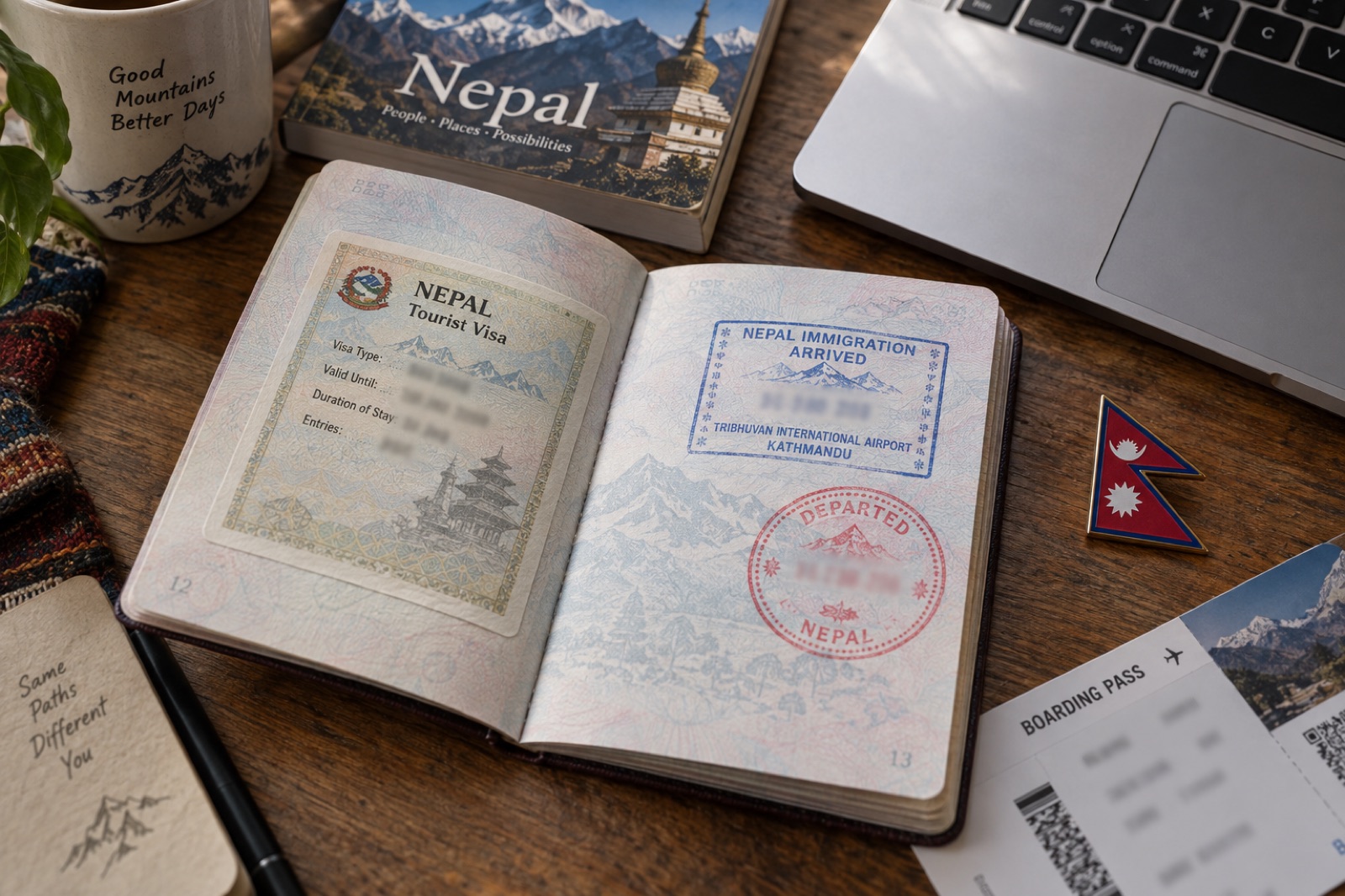
The tourist visa is the only realistic option, and it is easy to get. You can apply on arrival at Kathmandu's Tribhuvan International Airport and at land borders, or in advance at a Nepali embassy. It is issued in 15, 30 or 90-day durations, with the total tourist stay capped at 150 days per calendar year. The fee scales with duration. For the full mechanics of applying, see our national Nepal visa guide.
The 150-day reality
The annual cap is the key planning constraint. You can combine and extend visas up to 150 days in one calendar year, after which you must leave the country until the next year begins. Many nomads structure a multi-month base around this — for example a 90-day visa extended toward the cap, then a break in a neighbouring country. Build your stay around that ceiling rather than assuming open-ended residence.
Extensions, step by step
Extensions are straightforward but bureaucratic. They are handled at the Department of Immigration in Kathmandu (Kalikasthan) and the immigration office in Pokhara, two cities most nomads already favour. Expect:
- A per-day extension fee, charged in tiers, with a minimum number of days per extension.
- Your passport and a passport photo, plus the relevant form.
- Queues — arrive early in the day to avoid the worst of them.
The legal and tax grey area
Working online for a foreign employer or your own overseas clients on a tourist visa is a grey area in many countries, and Nepal is no different. You are not taking a Nepali job, but you are not formally authorised to work either. Most nomads do it quietly without issue. Treat your own tax residency as the more important question, and get advice if you stay long enough for it to matter.
Internet, cafés and where to work
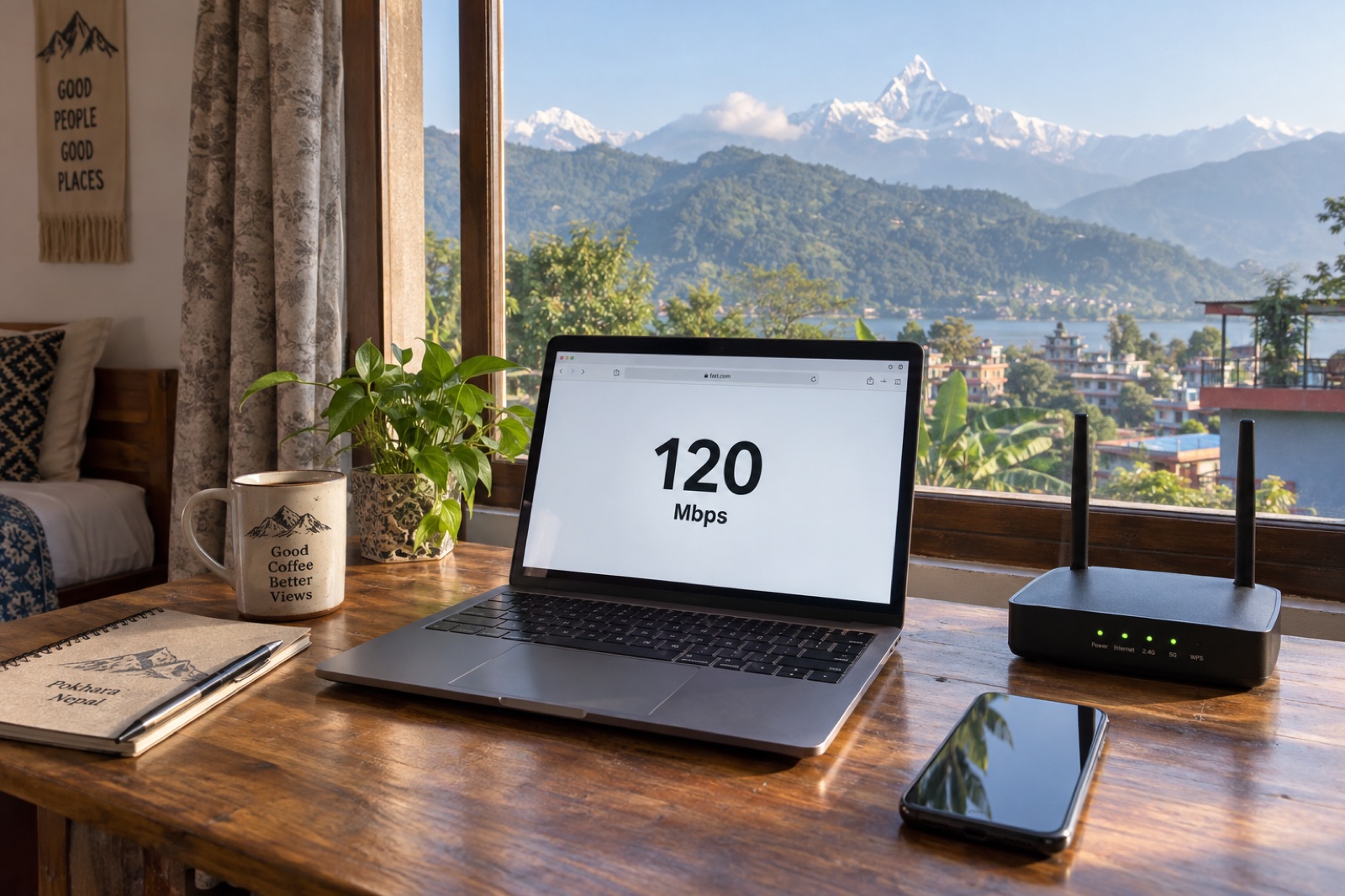
Connectivity is better than most first-timers expect. City fibre broadband (WorldLink, Vianet, Subisu) typically runs 30–100 Mbps — fine for video calls — and 4G mobile data is a solid backup; for real numbers, upload speeds and which calls hold up, see internet speed in Nepal for remote work and sort a SIM or eSIM via staying connected in Nepal. Scheduled load-shedding has largely ended in the cities, but the occasional cut still happens — power, load-shedding and backup for remote work covers the kit (power bank, second SIM, UPS).
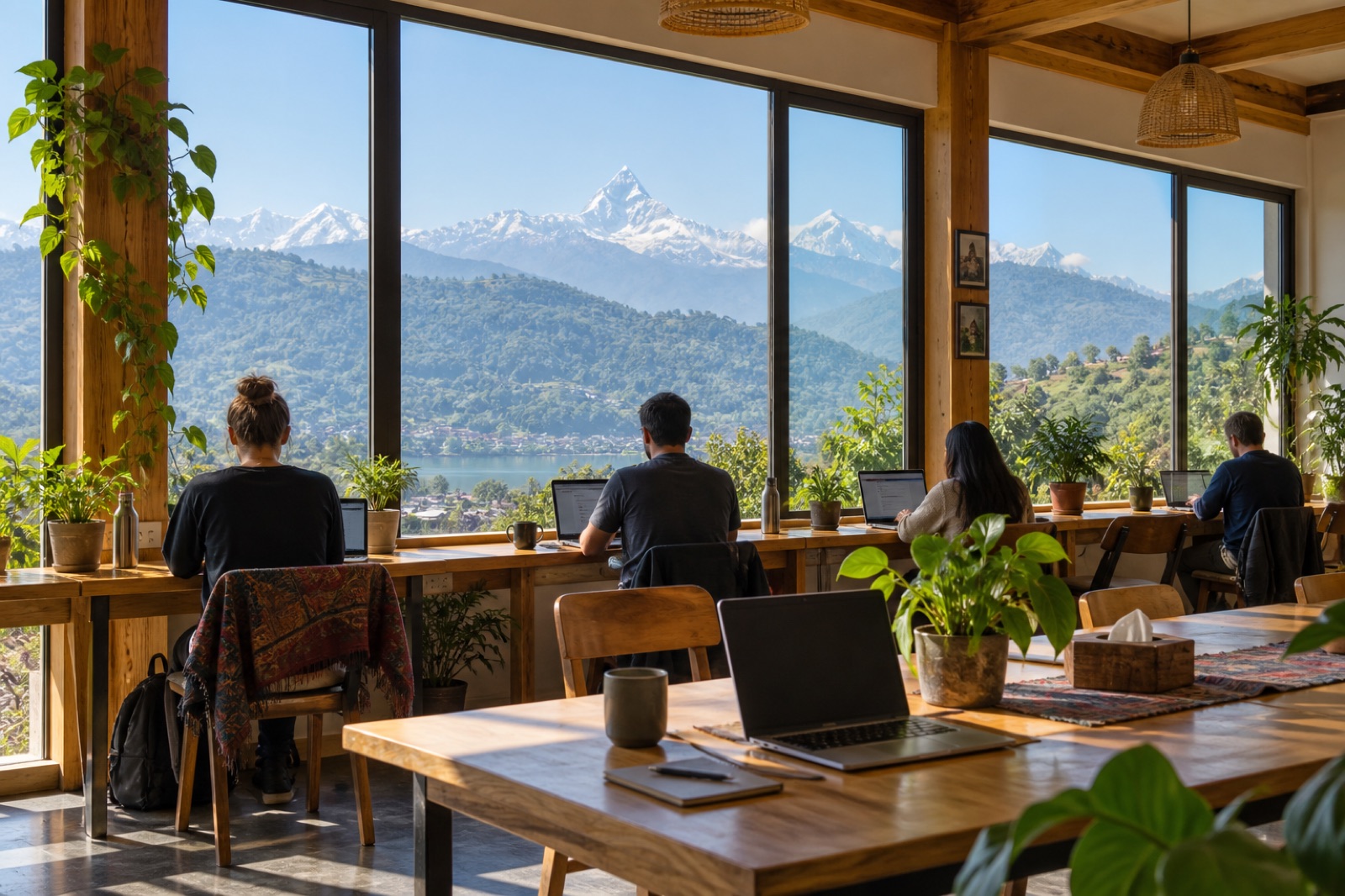
Most remote workers base in Pokhara's Lakeside or Kathmandu's Jhamsikhel, Boudha or Lazimpat — weigh them up in the best areas for digital nomads in Nepal. For a proper desk and fast wifi, use a coworking space in Kathmandu or Pokhara; to work over coffee, browse the laptop-friendly cafés in Kathmandu and in Pokhara. For a multi-month base, line up monthly stays and long-term rentals, and remember Nepal runs on UTC+5:45 — the overlap windows with the US, Europe and Asia are mapped in time zone and working hours for nomads. For everything in one place, see our working remotely in Nepal guide and the wider Nepal for digital nomads overview.
Plan a compliant, comfortable stay
Pair the visa picture with the practical side: budget realistically with the cost of living for digital nomads in Nepal, line up a desk and reliable wifi via the best coworking spaces in Pokhara, and read the broader Nepal for digital nomads overview for lifestyle context. The whole theme sits inside our Nepal stays, wellness and digital nomads hub. Go in clear about the rules, and Nepal makes a wonderfully affordable, scenic remote-work base within its limits.
Frequently asked questions
Does Nepal have a digital nomad visa?+
No. As of 2026 Nepal has no dedicated digital nomad or remote-work visa. Almost all remote workers enter on the standard tourist visa, which is available on arrival or in advance, and simply work online during their stay. Any change to this would come through the Department of Immigration, so check current rules before relying on it.
How long can I stay in Nepal on a tourist visa?+
The tourist visa is issued for 15, 30 or 90 days, and the total stay is capped at 150 days within a single calendar year. You can start with a shorter visa and extend it through the immigration offices in Kathmandu or Pokhara, up to that annual limit, after which you must leave for the rest of the year.
Is it legal to work remotely in Nepal on a tourist visa?+
Working remotely for a foreign employer or your own overseas clients while on a tourist visa is a legal grey area in many countries, and Nepal is no exception. You are not taking a local job, but you are also not formally authorised to work. Most nomads do it discreetly; confirm current rules and consider your own tax residency.
Can I extend my Nepal tourist visa?+
Yes, up to the 150-day annual cap. Extensions are handled at the Department of Immigration in Kathmandu (Kalikasthan) or the immigration office in Pokhara, usually with a per-day fee that rises in tiers. Bring your passport and be prepared for queues; arriving early in the day helps.