Travel tips · Pokhara
Where to Stay in Pokhara
Lakeside (Baidam) is the place to base yourself — here's how its areas and price tiers compare.
First time in Pokhara? Stay in Lakeside Central. Want the lake without the bar noise? Lakeside North. On a budget, or after a more local feel? Damside. Curious about pre-tourism Pokhara? The Old Town has the heritage, though almost nobody sleeps there. For nearly every visitor the answer starts with Lakeside (Baidam), the strip along the eastern shore of Phewa Lake — the most walkable, scenic and convenient base in town. Here's how the areas compare so you can pick your exact spot.
Pokhara areas compared
| Area | Best for | Vibe | Typical price band (as of 2026, varies by season) | Downsides |
|---|---|---|---|---|
| Lakeside Central | First-timers, nightlife, convenience | The busy heart: cafes, bars, shops, night market | ~US$15–70, lakefront resorts US$90+ | Evening music and street noise on the strip |
| Lakeside North | Quiet stays, longer visits | Leafier, slower, thinning toward the rice fields | ~US$12–60 | 15–30 min walk to the central action |
| Damside (Pardi) | Budget travellers, a local feel | Calm, residential, open dam-and-hill views | ~US$10–40 | Fewer cafes and shops; less lake access |
| Old Town / Old Bazaar | Heritage curiosity, not overnights | Newar shophouses, temples, workaday bazaar | Very few tourist rooms | Far from the lake; almost no visitor amenities |
Prices are rough per-night guides for double rooms and climb in the October–November and spring high seasons — always check current rates.
Lakeside Central — the main hub
Central Lakeside is the heart of tourist Pokhara. The lake promenade, the Lakeside cafes, restaurants, bars, gear shops and the evening street market are all here, and you can step straight onto a boat on Phewa Lake. It is the best base for first-time visitors who want everything on their doorstep, and the natural hub for a night out — see the Pokhara nightlife guide. For the full anatomy of the strip, block by block, read the Pokhara Lakeside guide.
Lakeside North — quieter, greener, still walkable
Toward the north, the strip thins out into a leafier, more relaxed stretch where guesthouses sit among gardens and the crowds fade. You keep the lake and a scattering of good cafes but lose the amplified music — ideal for couples, longer stays and anyone who wants calm without giving up walkability. Keep going and the road trails off toward the rice fields and rural cafes of Pame at the quiet end of the lake. The trade-off is a 15-to-30-minute walk (or a short taxi) back to the central restaurants each evening.
Damside — quieter and more local
At the southern end near the dam, Damside (Pardi) has a slower, more residential feel and some of the best-value rooms in town. It is closer to the bus park and to the southern sights — Davis Falls, Gupteshwor Mahadev Cave and the International Mountain Museum — and offers open views toward the dam and hills, though with fewer cafes and less buzz than central Lakeside.
The Old Town — heritage, not hotels
North-east of the lake, Pokhara's Old Town along the old bazaar is where the city lived before tourism: Newar shophouses, small temples and a workaday market street. It is well worth a wander — see the Pokhara Old Bazaar guide and the Bindhyabasini Temple at its northern end — but it holds almost no tourist accommodation and sits a few kilometres from the lake, so treat it as a half-day outing from a Lakeside base rather than a place to stay.
Choosing by budget
| Tier | Typical price/night (as of 2026) | What you get |
|---|---|---|
| Budget | US$10–25 | Simple guesthouse rooms, often set back from the lake |
| Mid-range | US$30–70 | Comfortable hotels, many with gardens or partial lake views |
| Lakefront / resort | US$90–200+ | Lake-view rooms, pools, spas and prime promenade access |
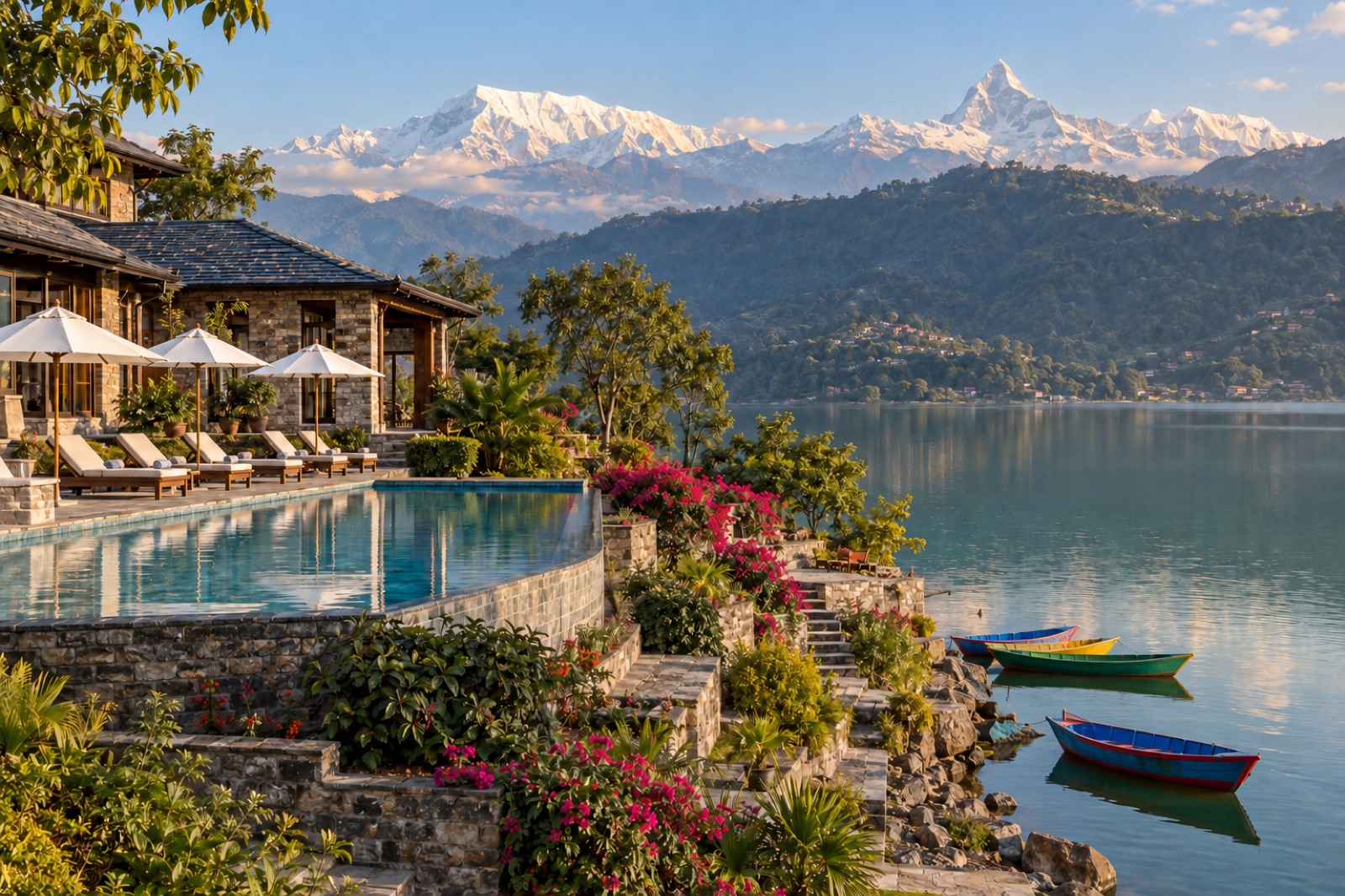
Budget travellers do well on the streets one or two blocks back from the water, where guesthouses are clean, friendly and cheap — see the best budget hotels in Pokhara. Mid-range hotels offer the best balance of comfort and value. For a splurge, the luxury hotels and lakefront resorts deliver direct views of Phewa Lake and the Annapurnas — our best hotels in Pokhara guide compares standouts across all three tiers.
Where not to stay
A few honest cautions. Rooms directly above the bar-heavy blocks of the central strip can thump until late in high season — if you're a light sleeper, book a street one or two blocks back, a higher floor, or head north. Hotels out along the main highway near the tourist bus park are cheap and convenient for a dawn departure, but the traffic noise and dust make them a poor base for an actual stay — you'd be taxiing to the lake every day. And skip anywhere advertising itself on distance to a single sight: Pokhara's attractions are spread out, so a pleasant Lakeside base beats proximity to any one of them.
Practical tips
- Book ahead in autumn (October to November) and spring, the busiest seasons.
- Lakefront rooms can be slightly noisier in the central strip; a higher floor or a street-side room helps.
- Most of Pokhara's sights are a short taxi or scooter ride from Lakeside, so location within the strip matters more than which sight you plan to see.
- Trekkers will find agencies, gear shops and permit offices clustered around Lakeside.
Once you have a base, plan your days with the Pokhara itinerary, browse the top things to do in Pokhara, and use the Pokhara hub for the rest of your trip.
Frequently asked questions
Where is the best place to stay in Pokhara?+
Lakeside, known as Baidam, along the eastern shore of Phewa Lake, is the best place for almost every visitor. It is walkable to cafes, boat hires, shops and the night market, with the best lake-and-mountain outlook. The central strip is liveliest; Lakeside North is quieter; Damside is calmer and cheaper.
Is Lakeside the best area in Pokhara?+
For the vast majority of visitors, yes. Lakeside concentrates the hotels, restaurants, gear shops and lake access in one flat, walkable strip, and nowhere else in Pokhara matches that convenience. The main reasons to look elsewhere are a tighter budget or a quieter local feel, which Damside and the Old Town offer.
How many days in Pokhara is enough?+
Two days covers the headline sights — a boat on Phewa Lake, Sarangkot sunrise and the Peace Pagoda — and three lets you add the caves, Davis Falls and the Mountain Museum without rushing. Trekkers typically add a rest day on either side of an Annapurna-region trek.
Is Pokhara walkable?+
The Lakeside strip is — it is flat and walkable end to end in under half an hour, with the lake promenade alongside. The wider city is more spread out: the Old Town, the caves, Davis Falls and the viewpoints are best reached by taxi, scooter or bicycle, all easy to arrange from Lakeside.
Which is better, Pokhara or Kathmandu?+
They do different jobs, and most trips include both. Kathmandu is the cultural heavyweight — temples, durbar squares and living heritage — but busy and chaotic. Pokhara is the relaxed one: lake mornings, mountain views and adventure sports at an easier pace. If you only want one, sightseers lean Kathmandu and relaxers lean Pokhara.
How much do hotels in Pokhara cost?+
As of 2026, budget guesthouses typically run from around US$10 to 25 a night, comfortable mid-range hotels US$30 to 70, and lakefront resorts US$90 to 200 or more. Prices rise in the autumn and spring trekking seasons, so book ahead and check current rates.
Should I stay on the lakefront or set back from the lake?+
Lakefront rooms cost more but offer direct lake views and quick access to boats and the promenade. Streets one or two blocks back are quieter and cheaper while still within easy walking distance of everything in Lakeside.
Is Lakeside or Damside better in Pokhara?+
Lakeside (Baidam) is the main hub with the most cafes, shops and nightlife, ideal for first-time visitors. Damside, at the southern end near the dam, is calmer, cheaper and more local in feel, suiting travellers who want a quieter base and don't mind fewer doorstep options.
Where should trekkers stay in Pokhara?+
Lakeside is convenient for trekkers, with gear shops, agencies, permit offices nearby and easy transport to trailheads. Many people book a comfortable Lakeside hotel for a rest day on either side of an Annapurna-region trek.