Things to do · Syabrubesi
Rasuwagadhi–Kerung Border
The Nepal–Tibet road crossing north of Syabrubesi, beside a historic fort on the Bhote Koshi.
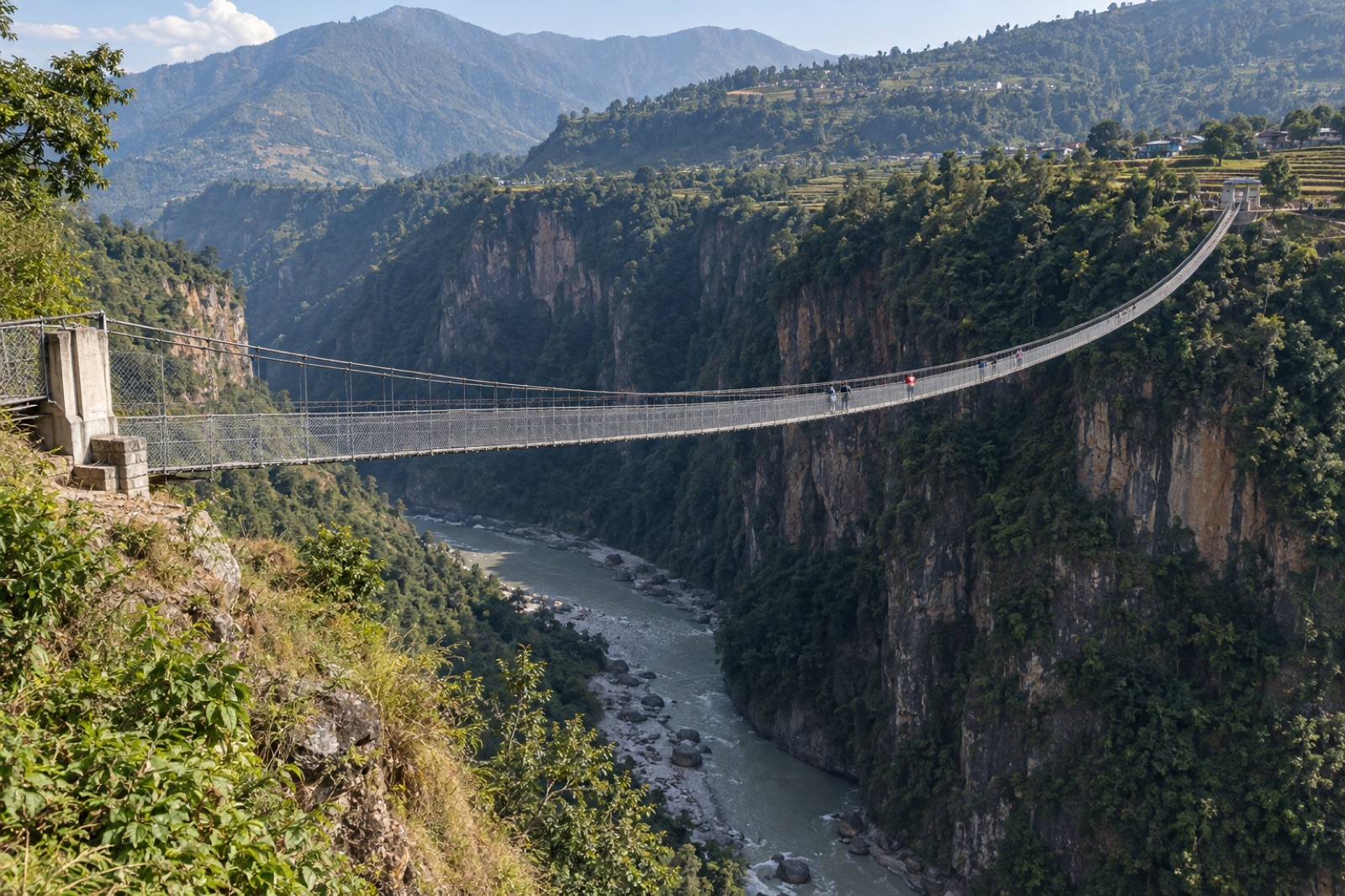
Rasuwagadhi is the Nepal–Tibet border post north of Syabrubesi, set in the deep Bhote Koshi gorge where Nepal meets Kerung (Gyirong) on the Chinese side. Named for a historic hill fort that once guarded this Himalayan trade route, it is today an official road crossing — a frontier scene of customs buildings, a friendship bridge and trucks rolling between the two countries, about 16km up the valley from town.
Why it matters
This has been a strategic gateway to Tibet for centuries, part of a salt-and-grain trade corridor over the Himalaya, and the old Rasuwagadhi fort marked Nepal's northern defences along the route. The crossing was badly damaged in the 2015 earthquake and has since been rebuilt and reopened as a key trade artery between Nepal and China, now one of the country's main overland links with Tibet. For travellers, the appeal is the dramatic frontier setting — the narrow gorge, the friendship bridge over the Bhote Koshi and the sense of standing at the edge of the high plateau, where the landscape turns abruptly drier and more Tibetan to the north.
How to visit
Rasuwagadhi is reached by road up the Bhote Koshi gorge from Syabrubesi bazaar — roughly an hour by jeep, depending on conditions. Some visitors make a short out-and-back excursion to see the border and the fort site while waiting to start a trek, often combining it with the riverside village of Timure on the way, where an old trade and pilgrimage route once crossed. The river you follow up is the same Bhote Koshi you see at the confluence in Syabrubesi, here squeezed into a steep, dramatic canyon.
It is worth stressing that this is a functioning international frontier, not a tourist site, so access to the immediate crossing can be restricted and the mood is businesslike. Most travellers treat the trip as a scenic add-on rather than a destination in its own right, pairing it with a night in Syabrubesi before or after their trek.
Good to know
- You cannot casually cross — entering Tibet needs a Chinese visa and a Tibet Travel Permit via an authorised agency; rules change often.
- It is a sensitive frontier zone — carry your passport, follow officials' instructions and avoid photographing checkpoints.
- Roads can be rough in and after the monsoon; see getting around Nepal.
Plan the journey with our guide to how to get to Syabrubesi, and see the full Syabrubesi travel guide for the overview.
Featured in
More what to do in Syabrubesi
Frequently asked questions
What is Rasuwagadhi?+
Rasuwagadhi is the Nepal–Tibet border point in Rasuwa district, on the Bhote Koshi north of Syabrubesi. It is named for a historic hill fort that guarded this trade route to Tibet, and today it is a road crossing linking Nepal with Kerung (Gyirong) on the Chinese side.
Can tourists cross at Rasuwagadhi–Kerung?+
The Rasuwagadhi–Kerung crossing is an official Nepal–China trade and travel point, but foreign tourists cannot simply walk across. Entering Tibet requires a Chinese visa plus a Tibet Travel Permit arranged in advance through an authorised agency, and rules change often, so check current requirements before planning.
How far is the border from Syabrubesi?+
Rasuwagadhi lies roughly 16km north of Syabrubesi by road, up the Bhote Koshi gorge — about an hour by jeep depending on conditions. Some travellers take a short out-and-back trip from Syabrubesi to see the frontier and the old fort site.
Is there anything to see at Rasuwagadhi?+
The draw is the frontier setting: the deep Bhote Koshi gorge, the friendship bridge to Tibet, customs and immigration buildings, and the remains and rebuilding of the historic Rasuwagadhi fort. It is more of an atmospheric border excursion than a sightseeing attraction in the usual sense.