Trekking · Gosaikunda
Gosaikunda Trekking Routes
Every main way to the sacred Gosaikunda lakes — Dhunche, Sundarijal, the Helambu pass, plus permits and safety.
The sacred Gosaikunda lakes can be reached by three main trekking routes: the short, standard climb from Dhunche in Rasuwa, the longer southern approach from Sundarijal through Helambu, and a combined trek with the Langtang Valley from Syabrubesi. All three end in the same austere alpine basin at about 4,380m in Langtang National Park, where the holy lake lies among more than a hundred smaller tarns. This cluster gathers every route, plus the permits, timing and safety planning you need, so you can pick the walk that fits your time and fitness.
Choosing your route
The differences come down to length, drive time and acclimatisation. If you want the most direct line to the lakes, walk up from Dhunche via Sing Gompa: a 7-to-8-hour drive from Kathmandu, then two to three climbing days. If you would rather avoid the long mountain drive and build altitude slowly on foot, the Sundarijal and Helambu approach starts on the edge of the Kathmandu Valley and climbs gradually over the Lauribina La pass.
Many trekkers combine the two ends into a traverse. Walk up from Dhunche, then cross the pass and descend south on the Gosaikunda to Helambu trek, finishing near Sundarijal rather than retracing your steps. For the fullest trip, the Gosaikunda with Langtang Valley trek links the glacier-fringed valley beneath Langtang Lirung with the holy lakes in one ten-to-fourteen-day loop.
Plan the practicalities
Whatever the route, the planning is similar. Sort out your Gosaikunda permits and cost in Kathmandu — the Langtang National Park entry fee and the now-required licensed guide. Set your dates with the best time to visit Gosaikunda, aiming for autumn or spring when the pass is reliably open and the views are sharpest. And read the Gosaikunda altitude and safety tips before you go, because every route reaches well above 4,000m where altitude sickness is a real risk. Allow time to acclimatise, carry enough cash for the cash-only teahouses, and book lodges ahead around the August pilgrimage, when the trail fills with devotees.
The reward at the top
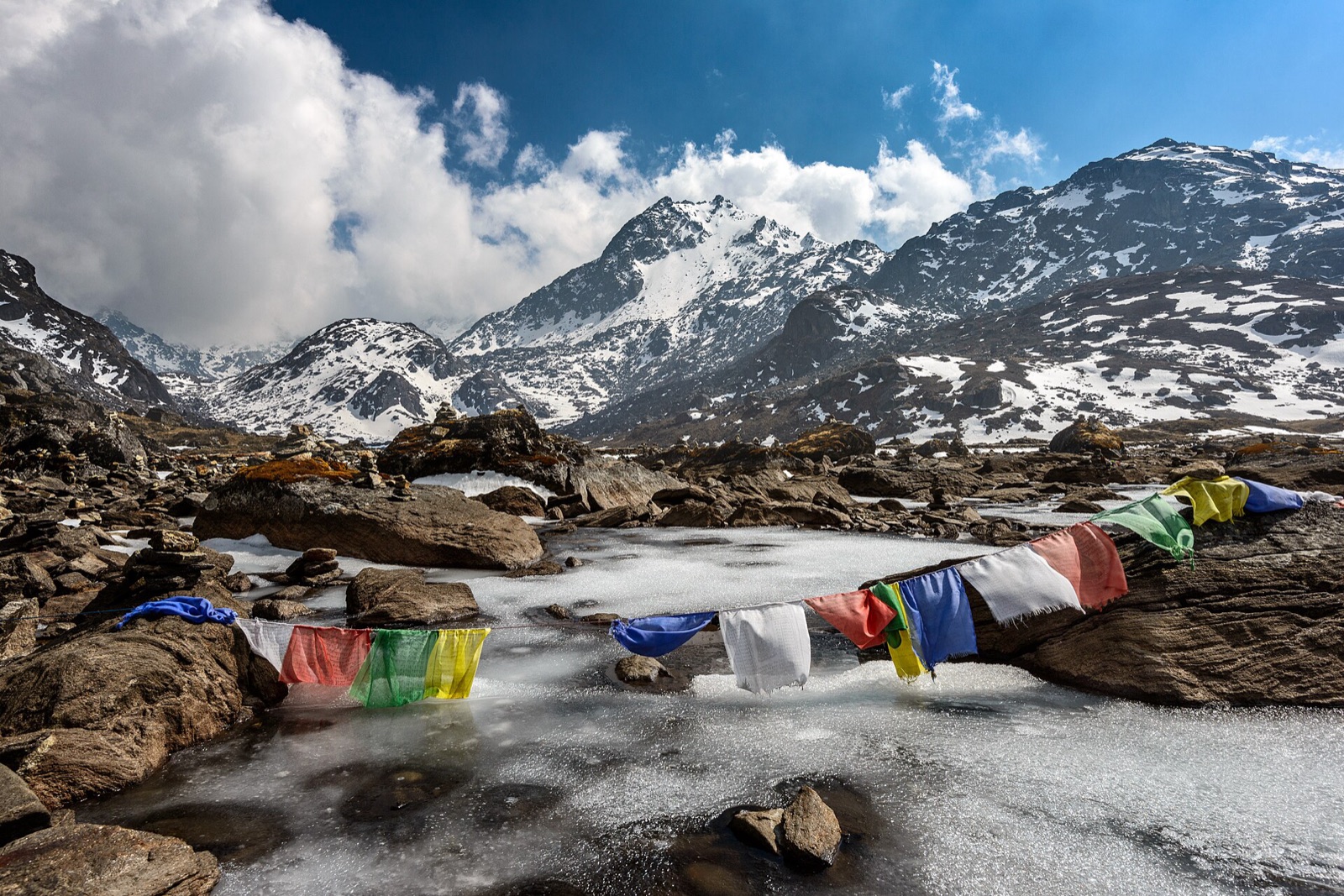
The lakes themselves are the centrepiece. The revered Gosaikunda lake is sacred to both Hindus and Buddhists, surrounded by more than a hundred smaller tarns and named holy pools, and it is the focus of the dramatic Janai Purnima pilgrimage each August, when thousands climb up for a holy dip in the icy water. Tradition holds that the lake was created by Shiva, which is why pilgrims and shamans make the high climb despite the altitude. The key trailside village of Sing Gompa (Chandanbari), with its cheese factory and monastery, is the acclimatisation hub for the Dhunche route and a highlight in its own right. On a clear autumn morning the basin opens out to views of Langtang Lirung and the Ganesh Himal — the reward for every route described here.
A region, not just a lake
Gosaikunda sits at the heart of the wider Langtang region treks, a network of trails that includes the Langtang Valley, the Helambu trek and the Tamang Heritage Trail. It is one of Nepal's most accessible high sacred lakes, reachable in roughly a week from the capital rather than on a long expedition.
For the full picture of trails, villages and seasons, browse the Gosaikunda travel guide. And for kit, fitness and permit rules across the country, read the essential Nepal trekking guide before you lace up your boots for the climb to the lakes.
Trekking & treks


Plan your trip

Frequently asked questions
What are the main routes to Gosaikunda?+
There are three main approaches. The standard route climbs from Dhunche in Rasuwa via Sing Gompa; the southern route starts low at Sundarijal and comes up through Helambu over the Lauribina La pass; and a longer combined trek links the Langtang Valley with the lakes from Syabrubesi. Most trekkers walk up from Dhunche and either return the same way or cross to Helambu.
Which Gosaikunda route is easiest?+
The Dhunche approach is the shortest and most direct, reaching the lakes in two to three climbing days with an acclimatisation night at Sing Gompa. The Sundarijal and Helambu routes are longer but build altitude more gradually, while the Langtang combination is the most substantial at ten to fourteen days.
Do you need a guide and permits for Gosaikunda?+
Yes. Gosaikunda lies inside Langtang National Park, so you need a national park entry permit and, as of recent rules, a licensed guide for the trek. There is no TIMS card requirement specific to Langtang, but the park fee and guide arrangements are made in Kathmandu before you set out.
When is the best time to trek to Gosaikunda?+
Autumn (October to November) brings the clearest skies and most stable weather, with spring (March to May) a close second. Winter freezes the lakes and often blocks the Lauribina La pass, and the monsoon brings cloud and rain except during the August Janai Purnima pilgrimage.