Wildlife · Nepal
Himalayan Monal (Danphe), Nepal's National Bird
Nepal's iridescent national bird — where to see the Himalayan monal, or danphe, in the high mountain forests.
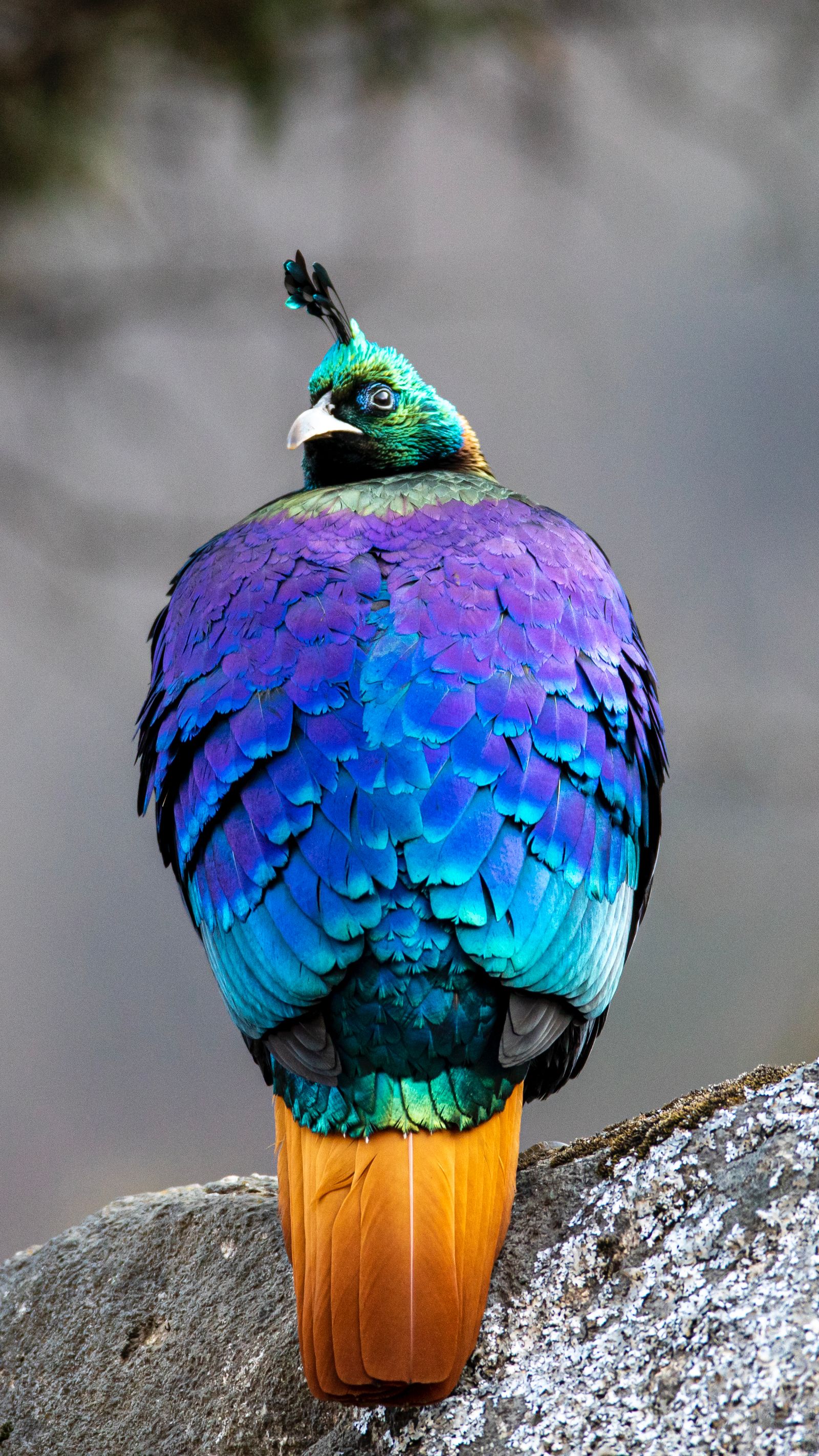
The Himalayan monal (Lophophorus impejanus), known in Nepali as the danphe, is the country's national bird and one of the most spectacular birds in the Himalaya. The male's plumage shimmers with metallic green, blue, copper, purple and gold, a living jewel against the high mountain landscape, and a thrilling sight for trekkers and birdwatchers.
Description
The male monal is a large, stocky pheasant with iridescent multicoloured plumage, a metallic-green crest and a white rump that flashes in flight. The female is far plainer — a mottled, streaky brown that camouflages her on the ground while nesting. Monals are ground feeders, using their strong bills to dig for roots, tubers, seeds and insects, and are often seen foraging on open slopes and in forest clearings in the early morning.
Where to see it in Nepal
The monal lives in high oak, rhododendron and conifer forests and alpine meadows, typically between around 2,500 and 4,500 metres. It is widespread across Nepal's trekking regions, including Langtang National Park, Sagarmatha National Park, the Annapurna region, the Kanchenjunga area and Makalu Barun National Park. Trekkers regularly encounter monals along forest trails and on open ridges, often in pairs or small groups.
Conservation status
The Himalayan monal is listed as Least Concern on the IUCN Red List, reflecting its broad Himalayan distribution. As Nepal's national bird it enjoys protected status. Even so, habitat loss from forest clearance and grazing, and localised hunting, can reduce numbers in some areas, so protected national parks and conservation areas remain important strongholds.
Best regions and season
Almost any high-altitude trek through forested terrain offers a chance. Spring (March to May) and autumn (October to November) combine stable trekking weather with active birds, while in winter monals descend to lower forests and are often easier to spot in the cold, clear mornings. Walk quietly on forest sections, scan open slopes at first light, and listen for the male's loud, far-carrying call.
Behaviour and ecology
The monal is a hardy, altitude-loving bird that follows the seasons up and down the mountain. In summer it ranges high into the alpine zone, while in winter, when snow blankets the meadows, it drops to lower forests in search of food, which is why cold-season treks can offer such good views. It is a powerful digger, churning up the soil with its bill in search of roots, tubers and grubs, and these foraging patches are easy to spot on open slopes. The male's iridescence is structural colour, created by the microscopic structure of his feathers rather than pigment, so the bird seems to change hue as it turns in the light. Outside the breeding season monals often gather in small groups, and at dawn the male's loud, plaintive whistle echoing across a ridge is one of the classic sounds of the Nepali high country.
Viewing notes
Move slowly and keep noise down on the trail to avoid flushing the birds, and use binoculars for the best view of the male's iridescence. Stay on established paths to protect ground-nesting habitat, scan open slopes and forest clearings at first light, and enjoy this national emblem in its wild setting.
The monal shares the high forests with the red panda and lives below the snowline patrolled by the snow leopard, while down in the rivers swims the Gangetic dolphin. Explore the full wildlife of Nepal collection and the national parks of Nepal.
Frequently asked questions
What is Nepal's national bird?+
Nepal's national bird is the Himalayan monal, known locally as the danphe. The male is a spectacularly iridescent pheasant with metallic green, blue, copper and purple plumage, while the female is a mottled brown for camouflage.
Where can you see the Himalayan monal in Nepal?+
Monals live in high oak, rhododendron and conifer forests and alpine meadows across the Himalaya. Trekking regions such as Langtang, Sagarmatha, Annapurna, Kanchenjunga and Makalu Barun all offer good chances of seeing them.
What is the conservation status of the Himalayan monal?+
The Himalayan monal is listed as Least Concern on the IUCN Red List, with a wide Himalayan range. As Nepal's national bird it is protected, though habitat loss and hunting can pressure local populations.
When is the best time to see the Himalayan monal?+
Spring (March to May) and autumn (October to November) are best, when trekking weather is stable. In winter the birds move to lower forests, making them easier to spot in the cold mornings on Himalayan trails.
What does the danphe eat?+
The Himalayan monal feeds on roots, tubers, seeds, shoots and insects, often digging in the soil with its strong bill. It is frequently seen foraging on open slopes and forest clearings, especially early in the morning.


