Wildlife · Nepal
Khaptad National Park
A rolling far-western plateau of grassy meadows, oak forest and pilgrimage sites — serene, little-visited and wild.
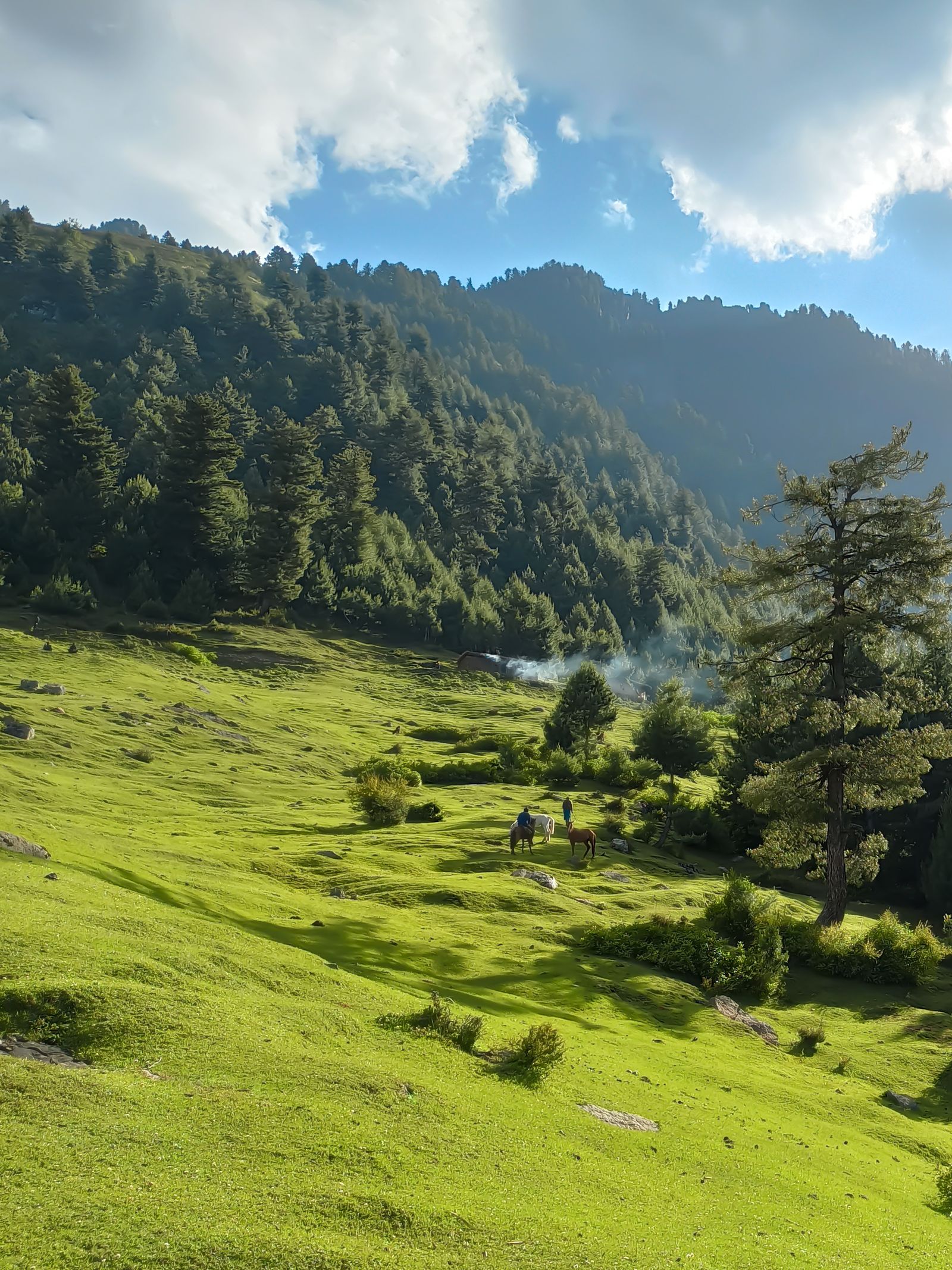
Khaptad National Park is the serene highland of Nepal's far west — a rolling plateau of grassy meadows, oak and rhododendron forest and quiet pilgrimage sites, far from any tourist trail. Established in 1984 and named for the revered ascetic Khaptad Baba, it protects one of the last near-pristine stretches of mid-mountain grassland in the region and is as much a place of spiritual retreat as a wildlife reserve.
Location and landscape
The park spreads across roughly 225 square kilometres, ringed by a buffer zone of similar size, on a plateau shared by four far-western districts — Bajhang, Bajura, Achham and Doti. It climbs from about 1,400 metres on its forested flanks to around 3,300 metres on the open tops, and its defining feature is the string of some 22 patans (grassy meadows) that ripple between stands of oak, fir, birch, hemlock and rhododendron. Springs, small streams and the sacred Tribeni confluence rise here, feeding rivers across the far west. The gentle, pastoral character of the Khaptad plateau is unusual among Nepal's more dramatic, peak-focused parks.
Wildlife, birds and plants
Khaptad is about subtle beauty rather than headline megafauna. Its forests shelter leopard, Himalayan black bear, barking deer, wild boar, ghoral and musk deer, while the canopy and meadows hold more than 200 species of bird — among them the iridescent Impeyan pheasant (danphe, Nepal's national bird), kalij pheasant, partridges, cuckoos and eagles. Just as remarkable is the flora: hundreds of flowering plants and scores of medicinal and aromatic herbs long prized by local healers. See the full wildlife and birds of Khaptad for what to look for, season by season.
Meadows in bloom
The real spectacle here is botanical and seasonal. Through spring and early summer the rhododendron meadows and patans fill with wildflowers, mist drifts across the grass, and butterflies cloud the forest edges — the single best reason to time a visit for the warmer months.
Khaptad Baba and the sacred sites
The plateau owes its name and much of its atmosphere to Khaptad Baba, a twentieth-century ascetic who is said to have meditated here for around fifty years; his simple hermitage, the Khaptad Baba Ashram, remains the spiritual heart of the park. Around it lies a constellation of pilgrimage sites: the Tribeni confluence, where three streams meet and pilgrims bathe; the hilltop Shiva shrines of Sahasra Linga; and the quiet, reed-fringed Khaptad Lake. The plateau draws its largest crowds at the full-moon festival of Ganga Dashahara, when pilgrims walk in from the surrounding hills.
Things to do
Days on the plateau are spent walking between meadows, forest and shrines rather than chasing wildlife. Ridge viewpoints, the ashram, the sacred confluences and gentle meadow walks define a visit — see the top things to do in Khaptad for the highlights. This is a destination for travellers seeking solitude, easy walking and a contemplative atmosphere far from the trekking crowds.
How to get there
There is no road into the core of the park, so every visit ends on foot. Most travellers fly from Kathmandu to Dhangadhi (about an hour) or Dipayal, drive several hours to a trailhead near Silgadhi in Doti — or to Jhigrana or Bichpani — then trek one to two days up onto the plateau, usually with camping support. The full route options are laid out in how to get to Khaptad.
Best time to visit
Spring (March to May), when the meadows burst into wildflower, and autumn (October to November), with clear skies and crisp air, are the best seasons. Winter brings snow and hard cold to the plateau, while the monsoon leaves the long access roads and trails muddy and slow — see the best time to visit Khaptad for a month-by-month breakdown.
Permits and fees
Visitors need a national park entry permit, bought at the park entrance, with the usual tiered rates — highest for foreign nationals, lower for SAARC citizens and lowest for Nepalis, and free for young children (rates change, so confirm before you travel). Facilities are minimal, so carry cash, food and your passport, and consider a local guide for the remote approach.
Where to stay
Accommodation is basic: a simple park guesthouse and campsites on the plateau, with modest lodges in Silgadhi and at the trailheads below. Most visitors camp with a supported trek — the options are set out in where to stay in Khaptad.
Conservation note
Khaptad protects a rare highland-meadow ecosystem and important watersheds in a region under pressure from grazing and firewood collection. Its combination of ecological and spiritual value makes low-impact visiting especially important: keep to trails, avoid lighting fires, carry out all waste and respect the area's pilgrimage customs.
Khaptad is the quiet, contemplative corner of the far west — start with the Khaptad travel guide to plan a trip, compare it with the lake-centred Rara National Park nearby or the lowland grasslands of Banke National Park, or browse the full national parks of Nepal collection.
Frequently asked questions
Where is Khaptad National Park?+
Khaptad National Park sits on a high plateau spanning four far-western districts — Bajhang, Bajura, Achham and Doti. It is one of the most remote and least-visited national parks in Nepal, reached only by trekking in from the surrounding hills.
What is Khaptad National Park known for?+
Khaptad is famed for its rolling grassy meadows (patans), oak and rhododendron forest, and its spiritual heritage linked to the sage Khaptad Baba. It is a serene highland of wildflowers, birds and pilgrimage rather than big-game wildlife.
What wildlife lives in Khaptad National Park?+
The park shelters leopard, Himalayan black bear, barking deer, wild boar, ghoral and musk deer, along with a rich birdlife of over two hundred species. Its meadows and forests are especially good for spring wildflowers and butterflies.
How do you get to Khaptad National Park?+
Access is by air to Dipayal or Dhangadhi, then a long drive to a trailhead such as Jhigrana or Bichpani, followed by a one- to two-day trek up onto the plateau. There is no road into the core, so all visiting is on foot.
When is the best time to visit Khaptad?+
Spring (March to May), when the meadows fill with wildflowers, and autumn (October to November), with clear skies, are best. Winter brings snow to the plateau, and the monsoon makes the access roads and trails difficult.


