
Things to do · Pokhara
Caves, Gorges & Temples of Pokhara
Pokhara's underground world and sacred hills — caves, the Seti gorge and the city's most revered temples.
To see the side of Pokhara beyond Phewa Lake, follow the limestone caves, the hidden Seti River gorge and the hilltop temples that shaped the old city. The geology that gives Pokhara its caves and sinkholes also carved the gorge slicing through the centre, and the hills above carry shrines that predate the lakeside resorts. This collection gathers eight sights into two easy clusters so you can mix sacred caverns, a dramatic river canyon and living Hindu temples into a single day. It deepens the wider Pokhara travel guide and sits alongside the top things to do in Pokhara.
The short answer
Split the day by geography. On the southern edge of the city, the sacred Gupteshwor Mahadev Cave descends toward the same underground stream that vanishes at Davis Falls, and the ridge above is crowned by the giant Shiva statue at Pumdikot. To the north, Mahendra Cave and the neighbouring Chamero (Bat) Cave make a quick limestone double-bill, while the old bazaar holds the city's most revered shrines.
Caves of Pokhara
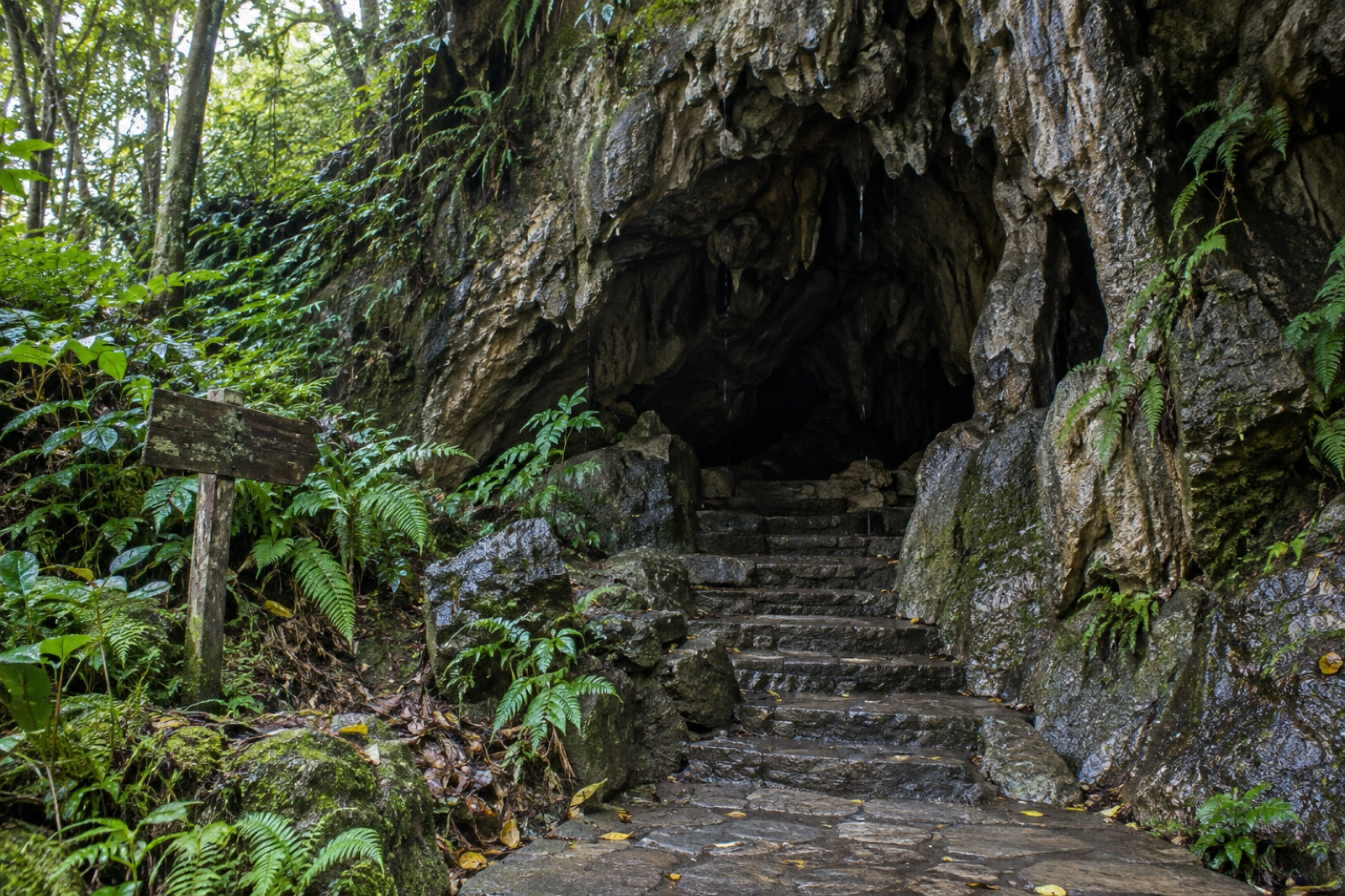
Pokhara sits on soft limestone laid down by Himalayan rivers, and water has hollowed it into caverns. The northern pair — Mahendra Cave, a lit walk past stalactites, and the darker, bat-filled Chamero (Bat) Cave — are almost always visited together. On the southern side, Gupteshwor Mahadev Cave is both a pilgrimage site and a geological wonder, running several hundred metres underground to a viewpoint over the hidden waters of Davis Falls. For the national picture, see the caves of Nepal guide.
The Seti River gorge
Few visitors realise that a river canyon runs right through Pokhara. The milky-grey Seti River gorge narrows to just a couple of metres wide in places, the water roaring far below street level beneath bridges and buildings. The best free viewpoints are at the K.I. Singh bridge and Mahendra Pul, near the old bazaar — an easy add-on to the northern temple circuit.
Temples and the old bazaar
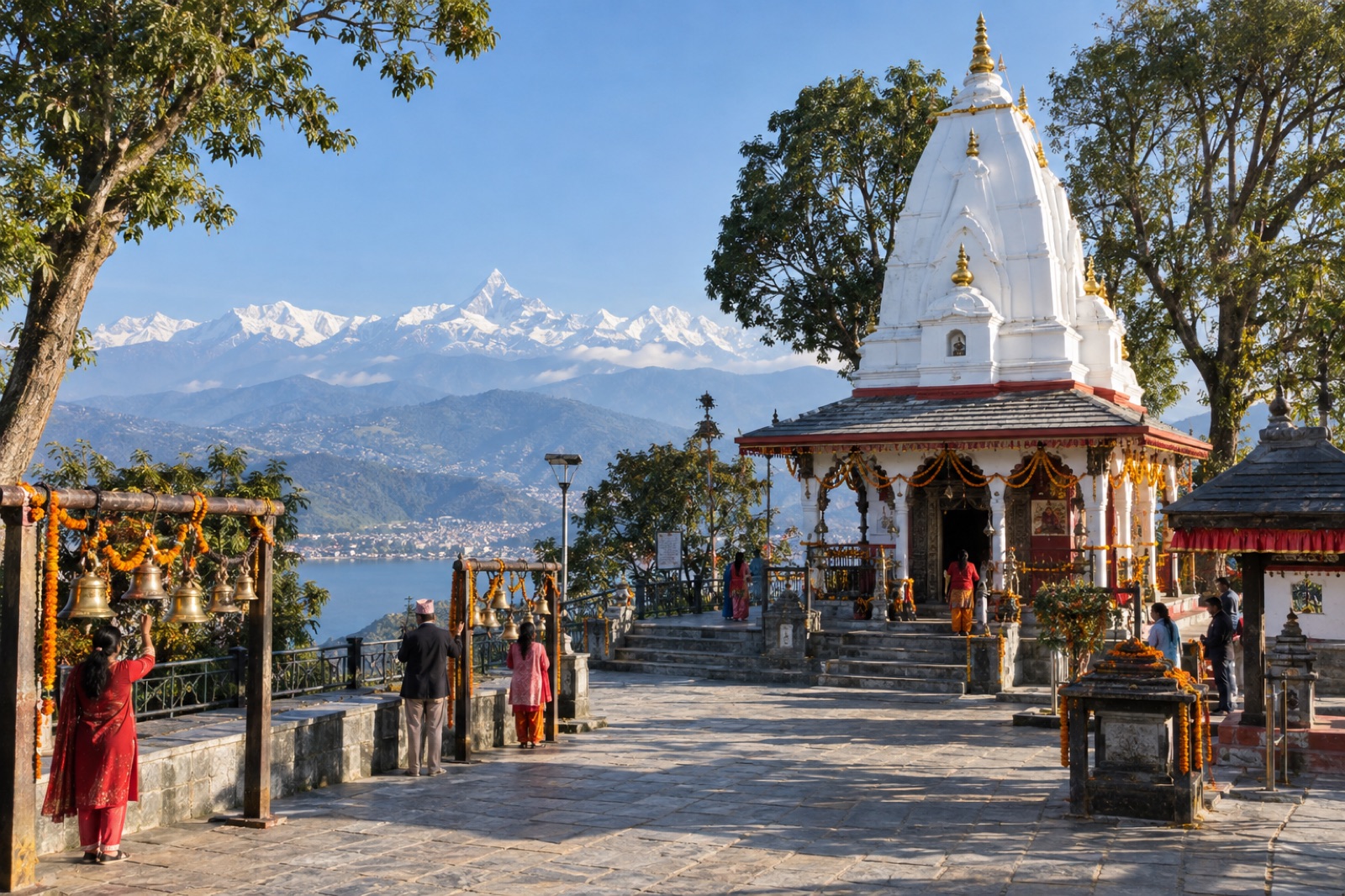
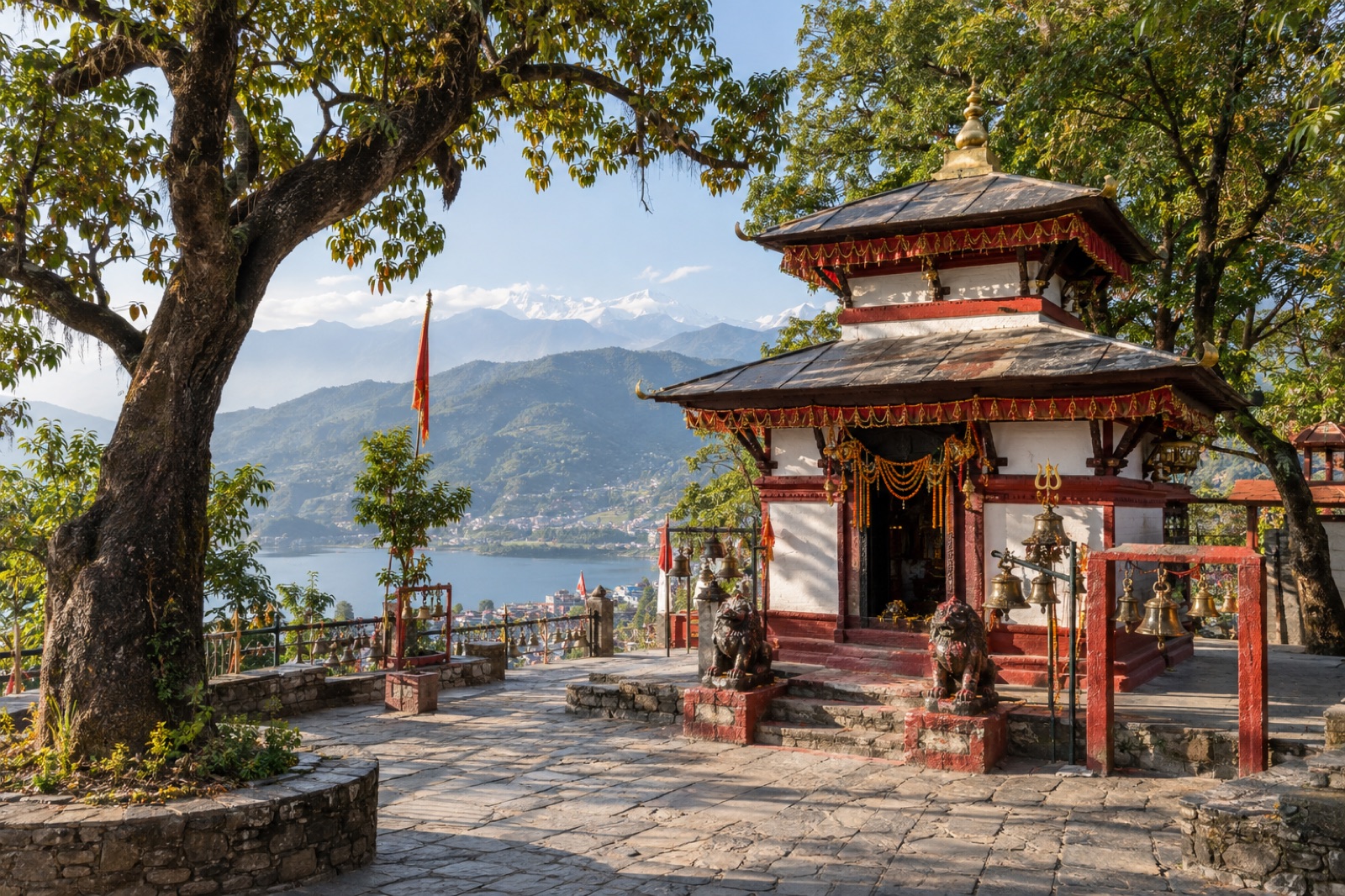
The historic core of Pokhara lies well north of Lakeside, around the old bazaar with its tiered Newari shopfronts. Its spiritual anchor is Bindhyabasini Temple, a white-domed hilltop shrine to the goddess Durga and the guardian deity of the city. Nearby, the smaller Bhadrakali Temple draws Saturday worshippers, while a wander through Pokhara Old Bazaar reveals a working town the lakefront hides. South of the city, Pumdikot adds a modern Shiva statue with the full Annapurna panorama behind it. These shrines sit within the broader tradition of Hindu temples of Nepal.
How it all fits together
Base yourself at Lakeside and tackle the two clusters on separate halves of the day. Spend a morning north — Mahendra and Chamero caves, the Seti gorge at Mahendra Pul, then Bindhyabasini and Bhadrakali in the old bazaar — and an afternoon south at Gupteshwor Cave and Davis Falls, finishing with sunset at Pumdikot. To slot the cluster into a longer stay, see the Pokhara itinerary and the wider Pokhara day trips. Tap any sight above for full visiting details, hours and tips.
Our top picks


Frequently asked questions
What caves and temples should I see in Pokhara?+
On the southern edge of the city, pair Davis Falls with the sacred Gupteshwor Mahadev Cave and the giant Shiva statue at Pumdikot. To the north, visit Mahendra Cave and the neighbouring Chamero (Bat) Cave, then the old-bazaar shrines of Bindhyabasini and Bhadrakali. The Seti River gorge cuts through the city centre.
Are Pokhara's caves and temples free to enter?+
The temples — Bindhyabasini and Bhadrakali — are free, as is wandering the old bazaar and the K.I. Singh bridge over the Seti gorge. The caves at Mahendra, Chamero and Gupteshwor each charge a small entry fee in cash at the gate, usually a little more for foreign visitors.
How are these sights spread out?+
They split into two clusters. The southern group — Gupteshwor Cave, Davis Falls and Pumdikot — lies 15 to 40 minutes south of Lakeside. The northern group — Mahendra and Chamero caves, the old bazaar, Bindhyabasini and Bhadrakali — sits around the historic centre, 15 to 35 minutes north. The Seti gorge runs between them.
How long do you need for the caves and temples of Pokhara?+
A full day covers both clusters comfortably: a morning around the northern caves and old-town temples, an afternoon at the southern cave-and-falls cluster and Pumdikot for sunset. With only a half day, pick one cluster.
