Things to do · Pokhara
Sarangkot Sunrise
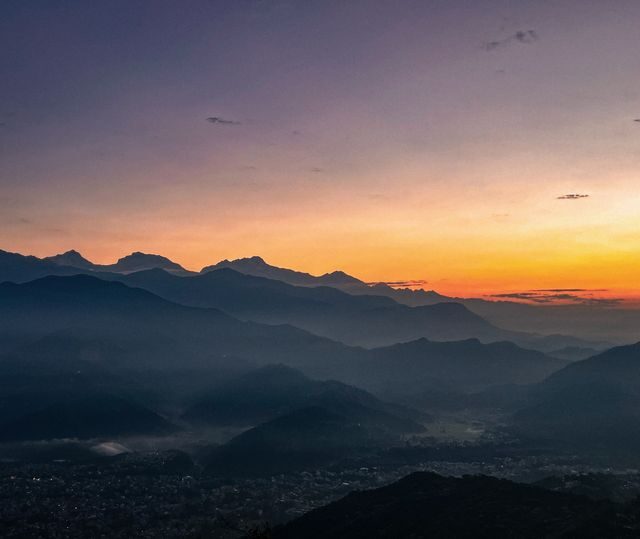
The classic dawn panorama of the Annapurnas and Machhapuchhre from a hilltop viewpoint.
- Rating
- ★ 4.6 (3800)
- Price
- $
- Address
- Sarangkot, Pokhara 33700
Sarangkot is the most famous viewpoint above Pokhara, perched on a ridge to the northwest. At dawn, the Annapurna range and the unmistakable fishtail of Machhapuchhre glow pink and gold — the city's signature sight.
Why Sarangkot
The hill sits high above Phewa Lake, giving it an open, unobstructed line to the mountains. On a clear morning you can pick out Annapurna South, Annapurna I, Hiunchuli and Machhapuchhre, with Dhaulagiri off to the west and, on the sharpest days, distant Manaslu to the east. The show starts before the sun is even up: the highest snow catches the first light and turns rose-pink, then gold, while the valley below stays in shadow.
The name itself hints at the past — kot means fort, and the ridge was once a hilltop stronghold of the old Kaski kingdom that ruled this valley. Today it's better known for its sunrises and as one of Nepal's premier paragliding launch sites, but the summit still rewards anyone who wanders past the viewpoint to the higher ground behind it.
How to get there
Most visitors take a pre-dawn taxi from Lakeside — roughly a 30–40 minute drive up a winding road, followed by a short walk up steps to the viewpoint. Arrange the taxi the night before and agree a pickup time, as you'll want to be moving well before first light.
If you'd rather earn the view, you can hike up from Lakeside in a few hours; it's a steady climb through village terraces and forest. Many people walk up in the afternoon, stay overnight in a Sarangkot guesthouse, and simply step outside for sunrise. There's a small entry fee collected near the viewpoint.
Best time to go
The clearest skies come in the dry season, roughly October to April. Autumn (October–November) after the monsoon and spring (March–April) are the classic windows, with crisp mornings and reliable mountain views. During the monsoon (June–September) the peaks are often wrapped in cloud, so sunrise can be a gamble — though the low mist over the valley has its own appeal. Whatever the season, cloud can roll in quickly, so an early arrival gives you the best odds.
Sarangkot sunrise time by month
Sunrise shifts through the year, from around 5:10 am in midsummer to about 7:00 am in midwinter. The times below are approximate for Pokhara — they drift a few minutes across each month — so treat the "be in position" column as your target, and check the exact time for your date the evening before.
| Month | Sunrise (approx.) | Be in position by |
|---|---|---|
| January | 6:55–7:00 am | 6:30 am |
| February | 6:40–6:55 am | 6:15 am |
| March | 6:10–6:40 am | 5:45 am |
| April | 5:40–6:10 am | 5:15 am |
| May | 5:20–5:40 am | 4:55 am |
| June | 5:10–5:20 am | 4:45 am |
| July | 5:15–5:25 am | 4:50 am |
| August | 5:25–5:40 am | 5:00 am |
| September | 5:40–5:55 am | 5:15 am |
| October | 5:55–6:10 am | 5:30 am |
| November | 6:15–6:40 am | 5:50 am |
| December | 6:40–6:55 am | 6:15 am |
Being in position 20–30 minutes before sunrise matters more than the exact minute: the best colour often comes in the alpenglow phase, when the summits turn pink before the sun clears the eastern ridge. Photographers should stay 20–30 minutes after, too — the light on the valley and Phewa Lake keeps improving as the mist burns off.
What else is nearby
Sarangkot pairs naturally with the rest of Pokhara's greatest hits. Back down by the water, a morning boat trip on Phewa Lake and the World Peace Pagoda on the opposite hill make an easy follow-up to an early start. Thrill-seekers can turn the descent into a flight — Sarangkot is the main launch for paragliding in Pokhara, usually taking off once the morning thermals build. For more ideas across the valley, see the full Pokhara guide.
Good to know
- Bring a warm layer — it's genuinely cold before sunrise, even when the days are mild.
- Wear shoes with grip; the steps and paths can be slick with dew.
- Carry some cash for the entry fee, tea and snacks; simple stalls and cafés cluster near the top.
- If you're staying overnight, ask for a mountain-facing room so you can watch from your own window.
Featured in
More what to do in Pokhara

Frequently asked questions
How do you get to Sarangkot for sunrise?+
Most visitors take a taxi up before dawn (about a 30–40 minute drive from Lakeside) and walk the last few minutes to the viewpoint. You can also hike up the evening before and stay overnight.
What time is sunrise at Sarangkot?+
Between about 5:10 am in midsummer and 7:00 am in midwinter. In the peak October–November season expect roughly 6:00–6:30 am, and in March–April roughly 5:45–6:15 am. Arrive 20–30 minutes early — the peaks catch colour before the sun itself clears the horizon.
What time should I leave Pokhara for Sarangkot sunrise?+
Leave Lakeside about an hour before sunrise: the drive up takes 30–40 minutes and the final walk to the viewpoint another 10–15. In autumn that usually means a 5:00–5:30 am pickup — agree the time with your taxi driver the night before.
Is Sarangkot good for sunset?+
Yes — the ridge faces the Annapurnas all day, and on a clear evening the peaks glow gold much as they do at dawn. Sunrise remains the classic choice because mornings are more reliably clear; by late afternoon haze and cloud tend to build over the valley, especially outside the October–April dry season. Staying overnight on the ridge lets you try both.
What is the height of the Sarangkot sunrise point?+
The viewpoint sits at roughly 1,600 m above sea level — about 800 m higher than Pokhara's lakeside — which is what gives it that open, unobstructed line to the Annapurnas. The altitude is modest, so no acclimatisation is needed, but mornings up there are noticeably colder than in town.
What is Sarangkot famous for?+
Two things: the sunrise panorama of the Annapurna range and Machhapuchhre, Pokhara's signature view, and paragliding — the ridge is the main launch site for tandem flights over Phewa Lake. The hill was once a fort (kot) of the old Kaski kingdom, and traces of the stronghold remain above the viewpoint.


