Wildlife · Nepal
Chitwan National Park
Nepal's first national park and a UNESCO site — one-horned rhinos, tigers and gharials in the lowland Terai jungle.
Chitwan National Park is Nepal's first national park and its most famous wildlife destination — a sweep of riverine jungle, sal forest and tall grassland in the central Terai where one-horned rhinos wallow in the rivers and Bengal tigers move through the trees. Established in 1973 and made a UNESCO World Heritage Site in 1984, it remains the easiest place in the country to swap mountains for a classic jungle safari.
Location and landscape
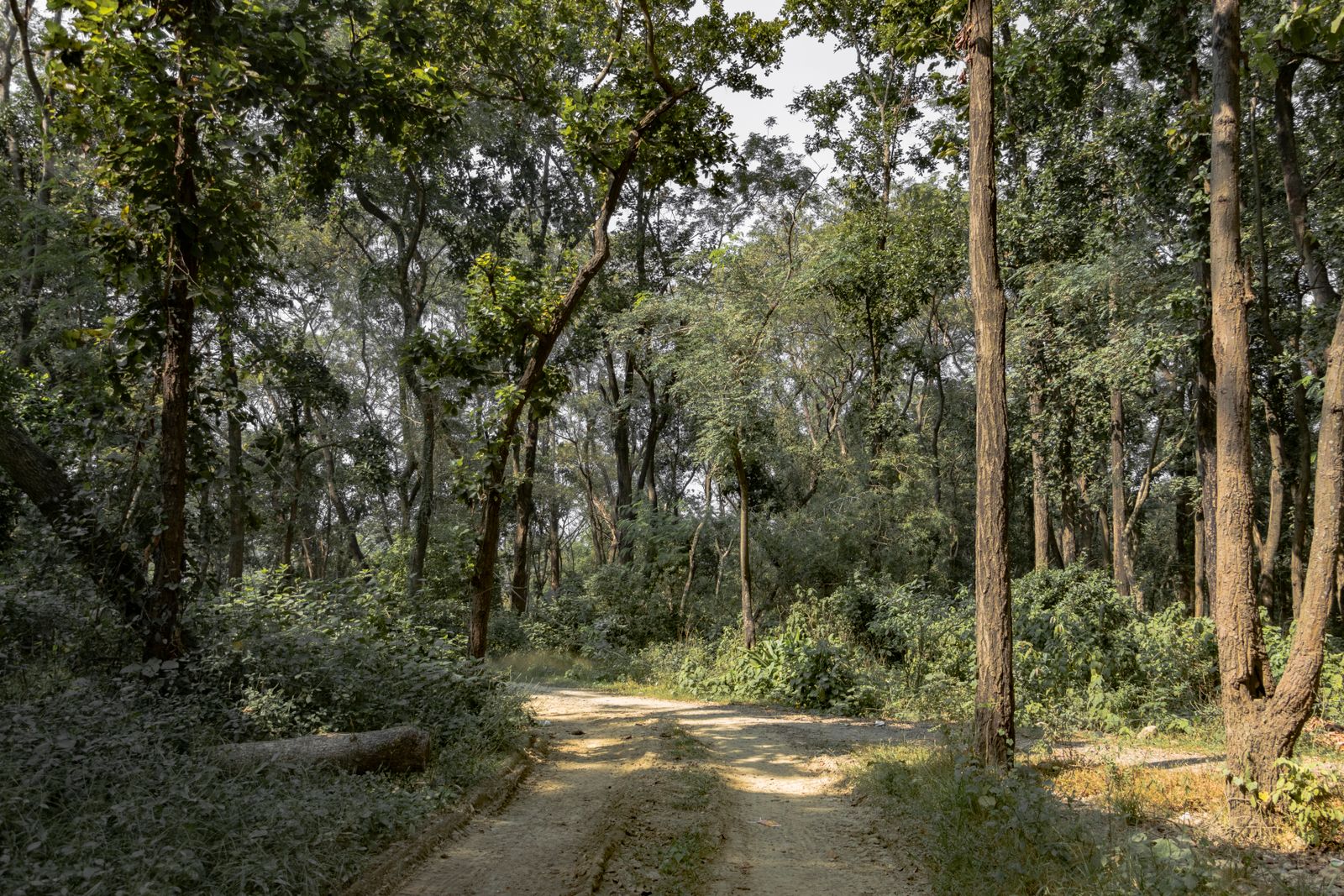
The park covers roughly 950 square kilometres in south-central Nepal, in the subtropical lowlands along the Indian border. It sits on the floodplains of the Rapti, Reu and Narayani rivers, a mosaic of grassland, sal forest, oxbow lakes and dense riverine jungle. The main tourist hub is Sauraha on the park's northern edge, while the headquarters lies at Kasara inside the park.
Chitwan the district vs the park
A quick clarification, because the name does double duty: Chitwan district is an administrative unit of Bagmati Province, home to around 700,000 people and centred on Bharatpur, one of Nepal's biggest cities. Chitwan National Park is the protected area along the district's southern edge — and it actually extends beyond the district, into neighbouring Nawalpur, Parsa and Makwanpur. In everyday travel talk, "going to Chitwan" means the park and its gateway village of Sauraha, not the city; everything on this page is about the park.
Wildlife and scenery
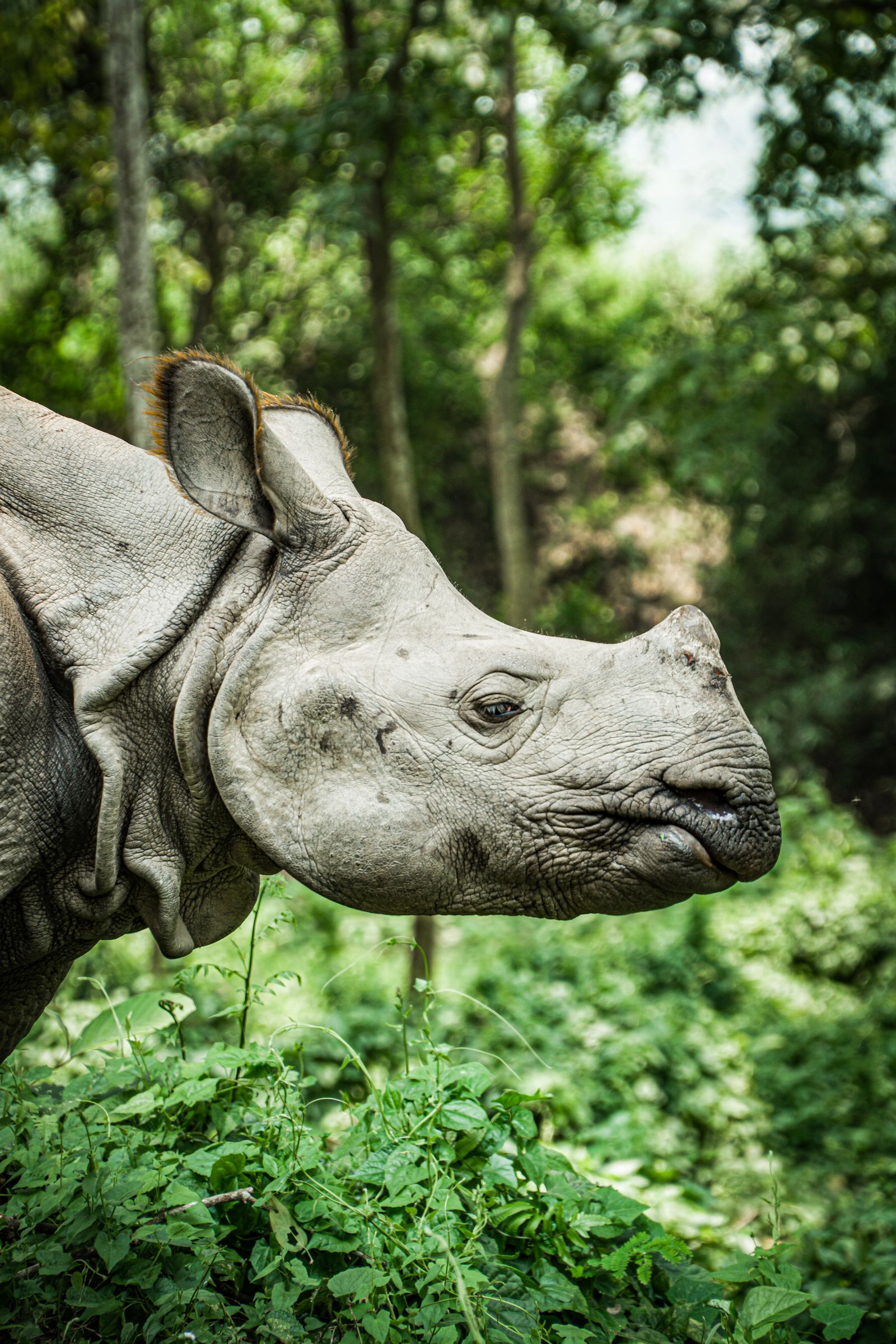
Chitwan's headline species is the greater one-horned rhinoceros, and its recovery is the park's defining story: from roughly 100 animals in the late 1960s, after poaching and habitat loss had nearly wiped them out, sustained protection has rebuilt the population to around 700 today — the world's largest outside India's Kaziranga. The park also shelters one of Nepal's biggest populations of Bengal tigers, estimated at around 130 adults in recent surveys, along with wild elephants, sloth bears, leopards, gaur and several deer species such as spotted, sambar and barking deer. The rivers hold the critically endangered gharial crocodile, alongside mugger crocodiles and Gangetic dolphins in places. With more than 500 recorded bird species, it is also one of Asia's great birding sites.
Safari types: jeep, walking or canoe?
Three classic ways to enter the jungle, each with a different flavour:
- Jeep safari — the default choice. Half- or full-day drives cover the most ground and give the best odds of rhinos and, with luck, a tiger; full-day trips reach quieter grasslands deep inside the park. See our Chitwan jeep safari guide.
- Guided jungle walk — on foot with two licensed naturalist guides, slower and far more intense: fresh tracks, birdlife and the real possibility of meeting a rhino at ground level. Details in the guided jungle walk guide.
- Canoe trip — a silent dugout drift down the Rapti past basking gharials and kingfishers, usually an hour or so and often combined with a short walk back. See the Rapti River canoe trip.
Most visitors mix two or three over a two-night stay. Fees, timings and how to book each safari in Chitwan National Park from Sauraha are in our full safari guide, and the Chitwan safari activities roundup compares them all in one place.
Why visit
It is the most accessible serious wildlife experience in Nepal, with a strong chance of seeing rhinos and a real possibility of tigers. Beyond the wildlife, the resident Tharu communities add a rich cultural layer through their villages, cuisine and stick dances. For the full range of activities, lodges and itineraries based in the gateway village, see the dedicated Chitwan destination hub.
How to get there
From Kathmandu or Pokhara it is a five-to-six-hour drive by tourist bus or private vehicle to Sauraha, or a short flight to Bharatpur airport followed by a half-hour transfer — our Kathmandu to Chitwan and Pokhara to Chitwan guides compare every option. The park is well linked to the East–West Highway, making it a natural stop between the capital and Lumbini or Pokhara — which is why it forms the middle leg of our 8-day Kathmandu–Pokhara–Chitwan tour, with the safari activities pre-arranged. For lodges, restaurants and the layout of the gateway village itself, see where to stay in Sauraha.
Best time to visit
The cool, dry season from October to March is most comfortable and reliable. February to April often gives the clearest sightings, as the seasonal grass cutting opens up views across the grasslands. Avoid the hot, flood-prone monsoon months of June to September, when many trails and river crossings are difficult. There is a month-by-month breakdown in our best time to visit Chitwan guide.
Permits and fees
All visitors need a national park entry permit, bought at the park office in Sauraha, with daily rates that are highest for foreign nationals and lower for SAARC and Nepali citizens. Jeep safaris, canoe trips, guides and elephant-related activities are charged separately. Always carry your passport, and book licensed guides through registered operators.
Conservation note
Chitwan is a flagship for Nepal's conservation success: sustained anti-poaching patrols and community engagement have helped rhino numbers recover strongly, and the country has recorded multiple years of zero rhino poaching. Visitors can support this by choosing ethical, non-elephant-back safaris, respecting buffer-zone communities and never buying wildlife products.
Chitwan anchors the lowland end of Nepal's protected-area network. Compare it with the wilder, tiger-rich Bardia National Park in the far west — our Chitwan vs Bardia guide weighs the two — visit the neighbouring Parsa National Park, or browse the full national parks of Nepal collection.
Frequently asked questions
Where is Chitwan National Park?+
Chitwan National Park lies in the central lowland Terai of southern Nepal, in Chitwan district, on the floodplains of the Rapti, Reu and Narayani rivers. The main gateway is the village of Sauraha, a few hours by road from Kathmandu and Pokhara.
What animals can you see in Chitwan?+
Chitwan is famous for the greater one-horned rhinoceros and Bengal tiger, along with wild elephants, sloth bears, gharial and mugger crocodiles, gaur, leopards, several deer species and more than five hundred bird species.
How much is the Chitwan National Park entry fee?+
Foreign visitors pay a daily park entry permit, with lower rates for SAARC nationals and Nepali citizens, plus separate charges for jeep, canoe and guide hire. Buy permits at the National Park office in Sauraha; carry your passport.
What is the best time to visit Chitwan?+
October to March is ideal, with cool, dry weather and good wildlife viewing. February to April brings the best sightings as the grass is cut and shorter, while the monsoon from June to September is hot, humid and prone to flooding.
Is Chitwan a UNESCO World Heritage Site?+
Yes. Chitwan National Park was inscribed as a UNESCO World Heritage Site in 1984, recognised for its outstanding lowland ecosystems and its populations of rhinoceros, tiger and gharial crocodile.
Is Chitwan district the same as Chitwan National Park?+
No. Chitwan is a district of Bagmati Province with the busy city of Bharatpur as its headquarters; the national park protects the jungle belt along the district's southern edge and spills into neighbouring districts. When travellers say Chitwan they almost always mean the park and its gateway village, Sauraha.
How many rhinos are in Chitwan National Park?+
The most recent national count put around 700 greater one-horned rhinos in Chitwan — one of the largest populations anywhere, second only to Kaziranga in India — recovered from roughly 100 animals in the late 1960s thanks to decades of anti-poaching work.
How many tigers live in Chitwan National Park?+
Recent surveys estimate around 130 adult Bengal tigers in Chitwan, one of the largest populations in Nepal. They are shy and rarely seen, so treat a sighting as a bonus rather than a plan; the park's roughly 700 greater one-horned rhinos are the reliable draw.
How big is Chitwan National Park?+
Chitwan National Park covers roughly 950 square kilometres of grassland, sal forest, oxbow lakes and riverine jungle on the floodplains of the Rapti, Reu and Narayani rivers in south-central Nepal. Although named for Chitwan district, it extends into neighbouring Nawalpur, Parsa and Makwanpur.
Which rivers run through Chitwan National Park?+
Three rivers shape the park: the Rapti, which forms the northern boundary beside the gateway village of Sauraha, the Reu and the larger Narayani. They hold the critically endangered gharial crocodile alongside mugger crocodiles and, in places, Gangetic dolphins, and canoe trips from Sauraha drift past crocodiles basking on the Rapti's sandbars.