Wildlife · Nepal
Gharial Crocodile in Nepal
A critically endangered, fish-eating river crocodile — where to spot the gharial along Nepal's Terai rivers.
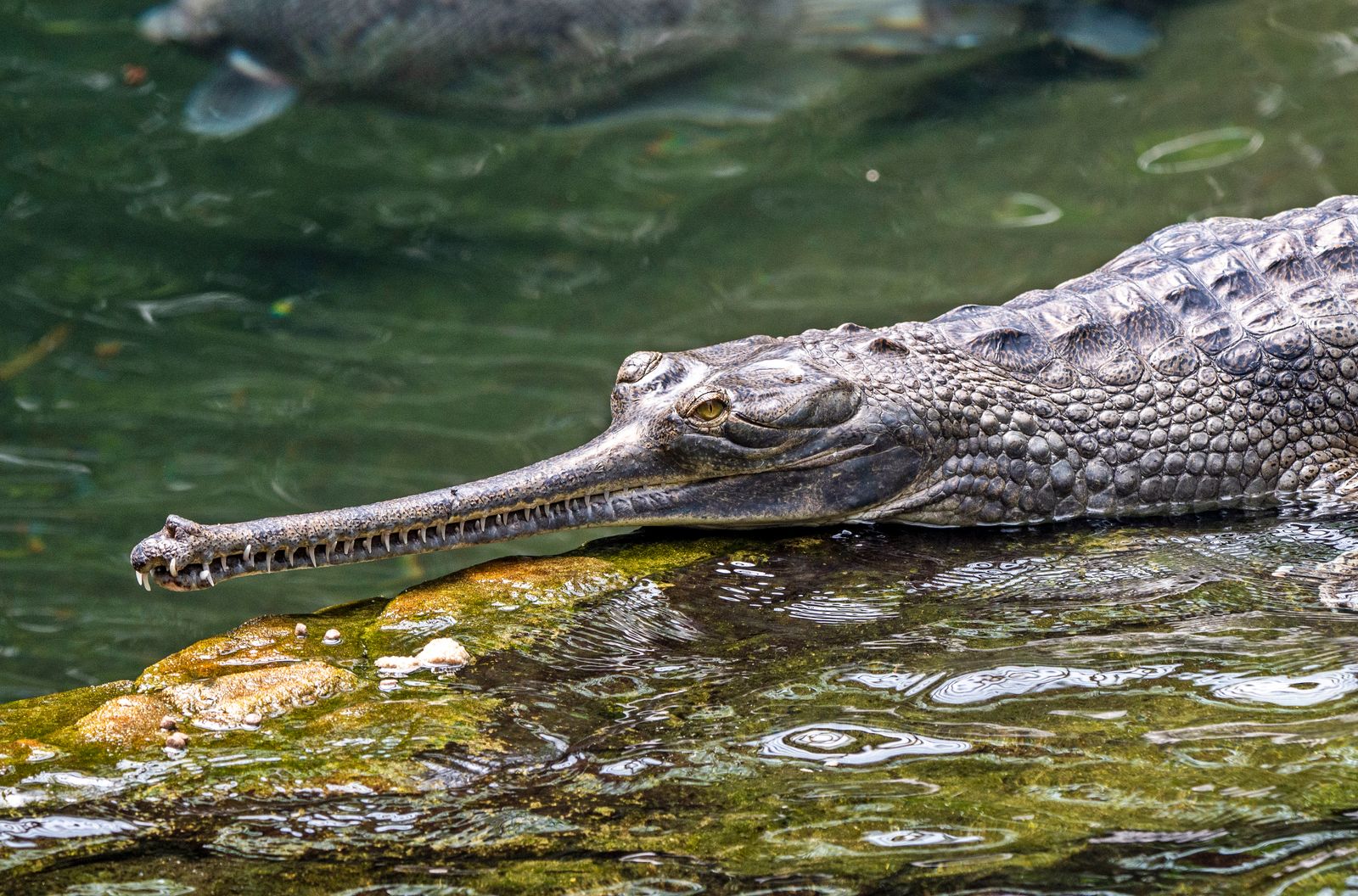
The gharial (Gavialis gangeticus) is one of the most distinctive and gravely threatened reptiles in Asia — a fish-eating crocodilian with an extraordinarily long, slender snout, found in Nepal's larger lowland rivers. Harmless to people and exquisitely adapted to hunting fish, it is a flagship for river conservation in the Terai.
Description
The gharial is a large crocodilian, reaching several metres in length, instantly recognised by its thin, elongated snout lined with sharp interlocking teeth ideal for snapping up fish. Mature males develop a bulbous growth, the ghara, on the snout tip. Olive to grey in colour, gharials spend much of the day basking on sandbanks and are far more aquatic and less agile on land than other crocodiles.
Where to see it in Nepal
The best place is Chitwan National Park, along the Rapti and Narayani rivers, where gharials bask on sandbanks and dugout-canoe trips offer close views. They also live in Bardia National Park along the Karnali and in Koshi Tappu in the east. Chitwan's gharial breeding centre at Kasara rears hatchlings and releases young crocodiles to bolster wild numbers, and it is open to visitors. For trip planning, see the Chitwan destination hub and the Bardia destination hub.
Conservation status
The gharial is listed as Critically Endangered on the IUCN Red List, among the most imperilled crocodilians on the planet. Nepal's wild population is small and fragile. The principal threats are habitat loss and river damming, drowning in fishing nets, sand and gravel mining that destroys nesting banks, and reduced fish stocks. Captive breeding and release, river protection and community awareness are central to recovery efforts.
Best parks and season
Visit Chitwan first for the most reliable viewing, then Bardia for a wilder setting. The dry season from October to April is ideal, when low, clear water exposes the sandbanks where gharials haul out to bask. Cool-morning canoe trips on the Rapti are the classic way to see them, often alongside mugger crocodiles and waterbirds.
Behaviour and ecology
The gharial is the most aquatic of the crocodilians, with weak legs that make it awkward on land, so it rarely strays far from water except to bask and nest. Its slender, sensitive snout sweeps sideways through the water to snap up fish, its sole prey as an adult, which is why it poses no danger to people. Females nest communally on sandy riverbanks in the dry season, burying their eggs in the warm sand, and a dominant male may guard a stretch of river and a group of females. The hatchlings are tiny and vulnerable, which is why protecting undisturbed sandbanks and clean, fish-rich rivers is so important. As a top river predator that needs flowing, healthy water, the gharial is a living indicator of the condition of Nepal's great rivers.
Viewing notes
Gharials are shy and not dangerous to humans, but keep a calm distance so they remain on their basking banks. Choose licensed canoe operators, avoid disturbing nesting areas, and never buy products made from any crocodilian. Visiting the Kasara breeding centre is a good way to learn how Nepal is working to bring this remarkable reptile back from the edge.
The gharial shares Nepal's Terai rivers with the Gangetic river dolphin and the wallowing one-horned rhino. Explore the full wildlife of Nepal collection and the national parks and wildlife overview.
Frequently asked questions
Where can you see gharials in Nepal?+
Gharials live in Nepal's larger Terai rivers, best seen in Chitwan National Park along the Rapti and Narayani rivers, and in Bardia along the Karnali. Chitwan runs a gharial breeding centre at Kasara that releases young crocodiles into the wild.
What is the conservation status of the gharial?+
The gharial is listed as Critically Endangered on the IUCN Red List, one of the most threatened crocodilians in the world. Habitat loss, river damming, fishing nets and sand mining are the main threats to its survival.
Are gharials dangerous to humans?+
No. The gharial has a long, narrow snout adapted to catching fish and is not a threat to people. Unlike the bulkier mugger crocodile that shares its rivers, the gharial does not attack humans.
When is the best time to see gharials in Nepal?+
The dry season from October to April is best, when low, clear water exposes sandbanks where gharials bask. Canoe trips on the Rapti in Chitwan during cool mornings offer good chances of seeing them out of the water.
How can you tell a gharial from a mugger crocodile?+
The gharial has a very long, thin snout for catching fish, and males develop a bulbous growth on the snout tip. The mugger crocodile is heavier with a broad, blunt snout. The two often share the same Terai rivers.


